
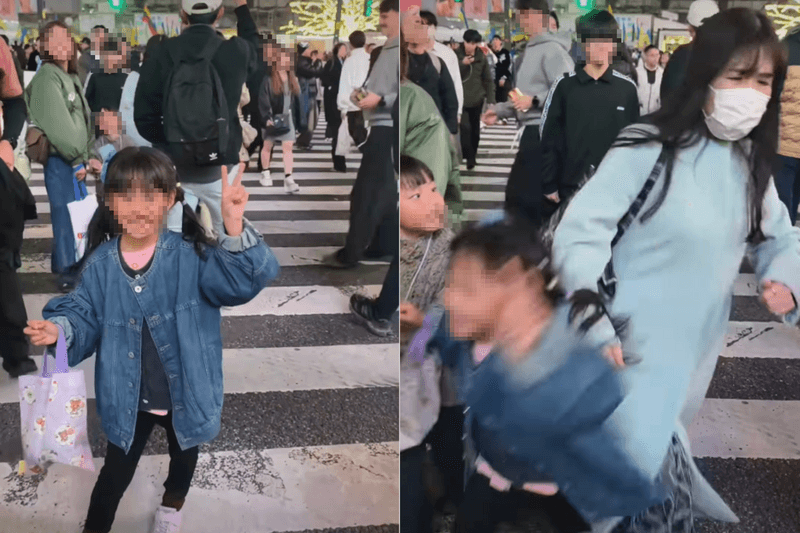
日本東京澀谷著名的十字路口,近日發生一起令人憤慨的惡意傷人事件。一名來自台灣的國小女童與母親正在斑馬線上拍照留念,卻突遭一名陌生女子從後方蓄意衝撞,女童當場重摔倒地。事件影片流出後,迅速在網路上引爆討論,不僅再度喚起外界對日本「撞人族」現象的關注,更令許多計劃赴日旅遊的民眾感到憂慮不安。
A deeply disturbing incident has emerged from one of Tokyo's most iconic landmarks. A young Taiwanese elementary school girl visiting Shibuya Crossing with her mother was deliberately shoved from behind by a passing woman while posing for a photo on the pedestrian crossing. The girl was sent crashing violently to the ground. After footage of the attack circulated online, it reignited public discussion about Japan's so-called "bumping people" phenomenon — and prompted widespread concern among tourists planning trips to Japan.
撞人事件經過——前有空間卻仍「鎖定目標」
根據曝光的監視器畫面,事發當時澀谷路口人潮洶湧。小女孩正興奮地蹦蹦跳跳、準備擺姿勢拍照,渾然不知危險正在靠近。影片中,一名身穿天藍色長版大衣的女子從後方快速逼近,並在接近女童的瞬間突然加速,從背後用力衝撞,導致女童失去重心、重摔在地。
Security footage showed the incident unfolding in the midst of the crossing's characteristic crowds. The young girl was happily jumping up and down, excitedly preparing to take a photo, when a woman in a long light-blue coat approached rapidly from behind. As she drew close, the woman suddenly accelerated, slamming into the child from behind with significant force and sending her sprawling across the ground.
細心的網友逐格分析畫面後指出,該女子前方明明有充裕的行走空間,卻似乎從遠處便已「鎖定目標」,刻意繞路接近。更有人指出,衝撞瞬間疑似伴隨「用腳猛踢」的動作,顯示這並非意外碰撞,而是蓄意為之的攻擊行為,手法囂張,令人髮指。
Observant netizens who analyzed the footage frame by frame noted that the woman had ample open space ahead of her, and yet appeared to have singled out the child as a target from some distance away — deliberately altering her path to close in. Some viewers also pointed out what appeared to be a deliberate kicking motion at the moment of impact, suggesting this was no accidental collision but a calculated and brazen attack.
關於撞人行為法律解析——日本刑法下的暴行與傷害

(資料來源:diamond.jp)
日本法律顧問網站「弁護士ドットコム」(Bengo4.com)訪問熟悉日本刑法的律師富本和男,請他分析影片中撞人的女子可能有哪些法律責任。
The Japanese legal advice website "Bengo4.com" interviewed Kazuo Tomimoto, a lawyer familiar with Japanese criminal law, asking him to analyze the potential legal liabilities of the woman seen bumping into people in the video.
針對在路上或交叉路口等地,蓄意推倒他人並使他人跌倒的行為,富本分析,若施暴的結果並未造成傷害,則可能構成日本的「暴行罪」。而這邊所說的「暴行」則是指向他人身體施加有形力。故意推倒他人使其跌倒的行為,顯然屬於對身體施加有形力,符合暴行罪中的「暴行」。而一旦構成暴行罪,恐面臨2年以下徒刑、30萬日圓以下罰金、拘留等刑責。即使對方沒有受傷,暴行罪仍可能成立。
Regarding the act of deliberately pushing someone and causing them to fall on a street or at an intersection, Tomimoto explained that if the act of violence does not result in an injury, it may constitute the crime of "assault" (Boko-zai) under Japanese law. The term "assault" here refers to the application of physical force against another person's body. The act of intentionally pushing someone to make them fall clearly involves applying physical force to the body, which meets the definition of "assault" under this law. Once an assault charge is established, the offender could face penalties of up to 2 years in prison, a fine of up to 300,000 yen, or detention. Even if the victim is not injured, the crime of assault can still be established.
若被撞倒的人受傷,富本指出,這就可能構成傷害罪。所謂「傷害」,是指損害他人的生理機能,而使人受傷是典型例子。
However, if the person who is knocked down gets injured, Tomimoto pointed out that this could constitute the crime of "injury" (Shogai-zai). "Injury" is defined as impairing the physiological functions of another person, and causing physical harm is a typical example.
而日本的傷害罪比暴行罪更為嚴重,可能面臨15年以下徒刑或50萬日圓以下罰金等刑責。另外,在社群媒體上有網友認為女童「擋住通行」、撞人女子「因擁擠才想避開」,然而從影片看來,撞人女在接觸女童之前,疑似曾經用手肘或身體碰撞其他人。
In Japan, the crime of injury is considered much more serious than the crime of assault, and the offender could face up to 15 years in prison or a fine of up to 500,000 yen. Additionally, some netizens on social media argued that the little girl was "blocking the way" and that the woman "was just trying to avoid the crowd." However, judging from the video, the woman appeared to have already bumped into other people with her elbows or body before coming into contact with the little girl.
富本分析,構成正當防衛,必須是為了防衛自己或他人的權利,對於急迫且不正當的侵害不得已而採取的行為。若在撞到女童前就已積極接觸周遭的人,則難以滿足「為了防衛」或「不得已(必要且相當)」的要件。
Tomimoto analyzed that for "self-defense" to be established, the act must be an unavoidable response taken to defend one's own or another's rights against an imminent and unjust infringement. If the woman was already actively coming into physical contact with people around her before bumping into the little girl, it would be difficult to satisfy the requirements of acting "for defense" or out of "unavoidable necessity" (meaning the action was both necessary and proportional).
隨機撞人現象觀察——日本「撞人族」的病態心理
(資料來源:times.abema.tv)
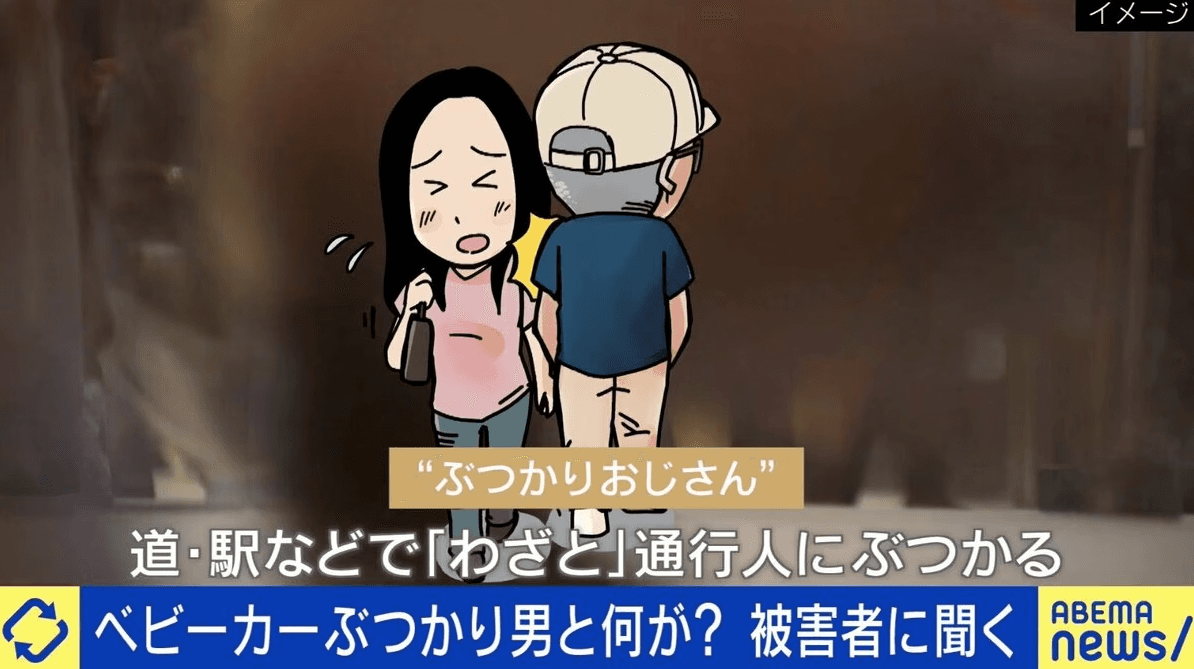
事實上,「撞人族」在日本並非新興現象,過去便已有旅遊論壇的網友對此提出警示。這群人通常刻意挑選女性、老人及兒童等相對弱勢的對象下手,藉由蓄意衝撞路人,達到某種扭曲的心理宣洩。
The phenomenon is far from new. Taiwanese travel forums have flagged it for years. These individuals tend to specifically target women, the elderly, and children — groups perceived as less likely to retaliate or report.
分析其動機,往往是積累了職場或生活上的巨大壓力,透過「霉運移轉」的病態邏輯,將負面情緒發洩在無辜路人身上。看到遊客玩得開心、笑聲不斷,反而成為他們出手的觸發點——藉由破壞他人的快樂,獲得一種「我才是主角」的扭曲快感。
The underlying motivation is often a disturbing form of stress relief: unable to cope with workplace pressures or personal frustrations, they seek an outlet through deliberate physical aggression against strangers. For some, the sight of tourists laughing and enjoying themselves acts as a trigger. Disrupting that happiness gives them a warped sense of power — a fleeting feeling of being "the one in control."
日本大城市人潮密集、行人規矩嚴謹,恰好為這類行為提供了近乎完美的掩護:加害者可以輕易消失在人群中,幾乎不留任何痕跡,事後追究的風險趨近於零。正是這種「背德的刺激感」加上低風險的逃脫條件,讓部分人一犯再犯。
Japan's densely crowded urban environments and highly rule-abiding pedestrian culture create an almost ideal cover: offenders can vanish into the crowd within seconds, with virtually no risk of identification or consequence. It is precisely this combination of perverse gratification and near-zero accountability that causes some to repeat the behavior.
(資料來源:Youtube - 鏡新聞,台灣女童在澀谷「遭撞飛」)