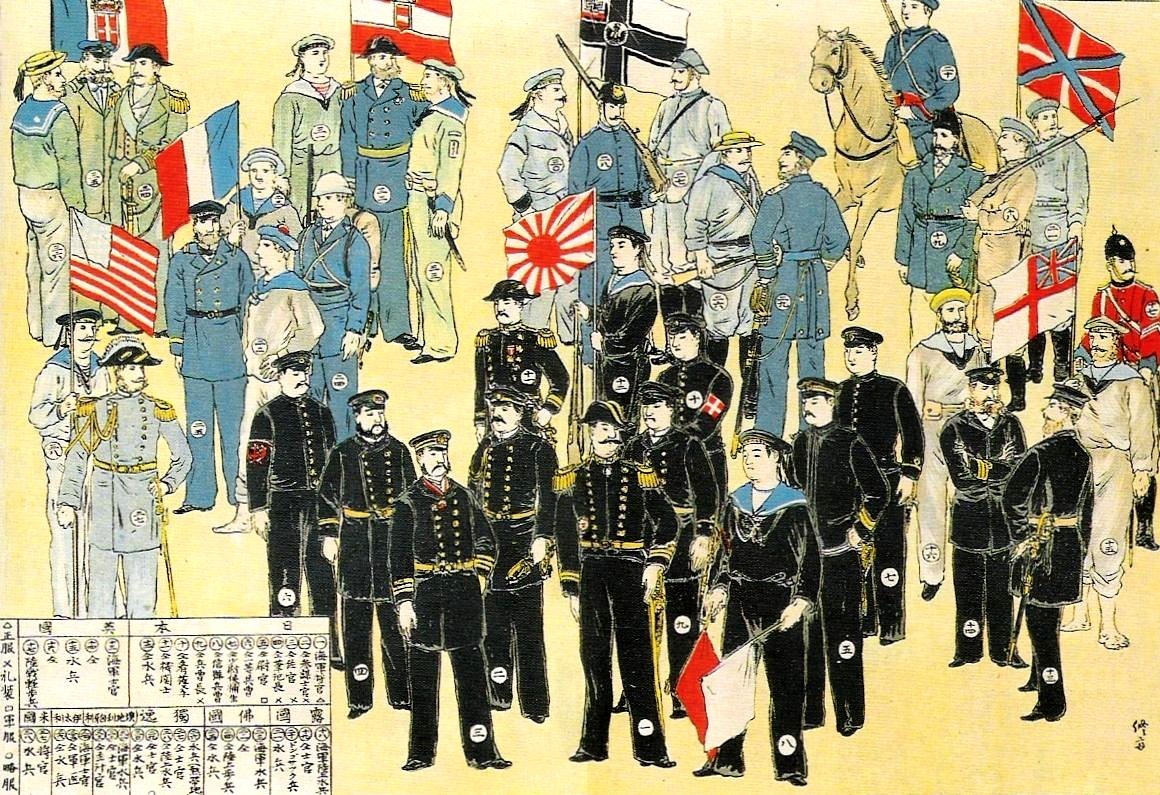
1900年8月,北京,紫禁城。一個宮女跪在慈禧太后的腳邊,低聲報告:「洋人的軍隊已經進城了。」慈禧沉默了很長的時間。她不是沒見過危機——她一生見過太多了。但這一次不同。
In August 1900, in Beijing's Forbidden City, a palace maid knelt before Empress Dowager Cixi and whispered: "The foreign armies have entered the city." Cixi was silent for a long time. She was no stranger to crisis — she had seen too many in her lifetime. But this time was different.
這一次,那些她從來沒有正眼看過的「洋夷」,踏進了連漢人皇帝都要跪拜的地方。她站起身,整了整朝服,然後做了一個她這一生最難開口的決定:逃。她換下了龍袍,穿上了農婦的衣服,帶著光緒皇帝,從紫禁城的後門悄悄出走。
This time, the "foreign barbarians" she had never deigned to look at directly had walked into the place where even Han emperors once knelt in reverence. She stood, straightened her court robes, and made the most difficult decision of her life: to run. She changed out of her dragon robe and into the clothes of a peasant woman, took the Guangxu Emperor with her, and slipped quietly out through the back gate of the Forbidden City.
這個統治了中國將近半個世紀的女人,在那一天早晨,只是一個逃命的老婆婆。城裡,八個國家的軍隊正在搶劫那座她以為永遠不會被人踐踏的宮殿。窗外的砲聲,是一個時代的終結,也是另一個時代最殘酷的開場白。
The woman who had ruled China for nearly half a century was, on that morning, simply an old woman fleeing for her life. Inside the city, the armies of eight nations were looting the palace she had believed could never be violated. The sound of cannon fire outside the window was the end of one era — and the most brutal opening line of another.
八國聯軍歷史背景
1842年,南京。一個清廷官員坐在談判桌前,面對著英國代表遞來的那份文件。他不懂英文,翻譯在他耳邊低聲念著那些條款:割讓香港、開放五個通商口岸、賠款兩千一百萬銀元......他的手在微微顫抖,但他的臉上沒有表情,因為他已經被告知,他只需要簽名,不需要說話。他提起毛筆,在那份文件上留下了自己的名字。那份文件的名字,叫做《南京條約》,後來被中國人稱為「百年屈辱」的第一頁。他簽完之後,把毛筆放回硯台,然後靜靜地坐在那裡,望著窗外的長江,心裡想的是什麼,沒有人知道。也許他什麼都沒想。有些事情,是太重了,沉到心底之後就再也浮不起來的。
In 1842, in Nanjing, a Qing official sat at a negotiating table, facing a document passed to him by a British representative. He could not read English. A translator whispered the terms into his ear: cede Hong Kong, open five treaty ports, pay an indemnity of twenty-one million silver dollars. His hands trembled slightly, but his face showed nothing — he had been told he only needed to sign, not to speak. He picked up his brush and left his name on the document. That document was called the Treaty of Nanjing. The Chinese would later call it the first page of "a century of humiliation." When he finished, he set the brush back in the inkstone and sat quietly, staring at the Yangtze River through the window. What he was thinking, no one knows. Perhaps nothing at all. Some things are too heavy — they sink to the bottom of the heart and never rise again.
要理解八國聯軍,必須先理解19世紀的中國如何一步步走向那個時刻。
To understand the Eight-Nation Alliance, we must first understand how China reached that moment step by step through the 19th century.
清朝在18世紀末仍是世界上最龐大、最富庶的帝國之一。然而,從19世紀初開始,這個帝國開始面臨西方列強前所未有的衝擊。1840年,英國以中國禁止鴉片貿易為由,發動了第一次鴉片戰爭,清廷一敗塗地。1842年簽訂的《南京條約》,是中國近代史上第一個「不平等條約」:香港割讓給英國,五個通商口岸被迫開放,中國喪失了關稅自主權。
In the late 18th century, the Qing Dynasty was still one of the world's largest and wealthiest empires. But from the early 19th century onward, it began to face an unprecedented onslaught from Western powers. In 1840, Britain launched the First Opium War, using China's ban on the opium trade as a pretext. The Qing court was defeated decisively. The Treaty of Nanjing, signed in 1842, was the first "unequal treaty" in modern Chinese history: Hong Kong was ceded to Britain, five treaty ports were forced open, and China lost control of its own tariffs.
這只是開始。此後數十年,中國在一系列戰爭與條約中不斷喪失主權——1856至1860年的第二次鴉片戰爭、1884至1885年的中法戰爭、1894至1895年令舉國震驚的中日甲午戰爭。甲午戰爭的失敗尤其具有毀滅性:清廷敗給了它歷來輕視的「小國」日本,被迫割讓台灣,賠款兩億三千萬兩白銀。這場失敗徹底動搖了清廷在國人心中最後的威信。
This was only the beginning. Over the following decades, China lost sovereignty piece by piece through a series of wars and treaties — the Second Opium War of 1856–1860, the Sino-French War of 1884–1885, and the Sino-Japanese War of 1894–1895, which shocked the entire nation. The defeat in the Sino-Japanese War was especially devastating: the Qing court was beaten by Japan, a country it had long looked down upon as a minor nation. Taiwan was ceded, and an indemnity of 230 million taels of silver was imposed. This defeat completely shattered the last of the Qing court's credibility in the eyes of its people.
甲午戰敗之後,列強掀起了「瓜分中國」的狂潮。德國強佔膠州灣,俄國佔據旅順,法國擴張在南方的勢力範圍,英國鞏固長江流域的控制,日本在台灣與朝鮮建立殖民統治。中國就像一塊被切開的蛋糕,每一個有刀的人都想割一塊。這種從外部施加的巨大壓力,在中國社會內部積累了一股岩漿般滾燙的憤怒,等待爆發的時機。
After the defeat in the Sino-Japanese War, the foreign powers launched a frenzy of carving up China's territory and influence. Germany seized Jiaozhou Bay, Russia occupied Lüshun, France expanded its sphere of influence in the south, Britain consolidated control over the Yangtze River valley, and Japan established colonial rule over Taiwan and Korea. China was like a cake being cut open — everyone with a knife wanted a piece. This enormous pressure from outside was building inside Chinese society like volcanic magma, waiting for a moment to erupt.
引發八國聯軍的導火線——義和團運動
1899年,山東省,一個村子。一個十六歲的農村少年站在曬穀場上,跟著師父學拳法。他已經跟著練了三個月了,師父說,只要練夠了,洋人的子彈打不進身體。他信了,因為他見過太多東西被洋人毀掉——他父親的田地被教堂圈走了,他的鄰居因為信了天主教跟村裡人打架,縣官卻站在教民那邊。他唯一有的,就是這雙拳頭,和師父說的那個承諾:「中國人的拳頭,有神明護佑。」後來,他跟著師兄弟們走進了北京,高喊「扶清滅洋」,他的拳頭砸向了他所能夠砸到的所有洋人的東西。再後來,他遇上了真正的洋槍,倒在北京城外的土地上。那時候,他才十七歲,還沒來得及明白,為什麼神明沒有來。
In 1899, in a village in Shandong Province, a sixteen-year-old farm boy stood on the threshing ground, practicing martial arts under his master's instruction. He had been training for three months. His master said that once trained enough, foreign bullets could not enter the body. He believed it — because he had seen too many things destroyed by foreigners. His father's fields had been enclosed by a church. His neighbor had converted to Catholicism and fought with villagers, and the county magistrate had sided with the converts. All he had were his fists, and his master's promise: "The fists of the Chinese are protected by the gods." Later, he marched with his fellow disciples into Beijing, shouting "Support the Qing, destroy the foreigners." His fists smashed everything belonging to foreigners that he could reach. Later still, he met real foreign guns, and fell on the soil outside Beijing. He was seventeen years old. He never had time to understand why the gods never came.
義和團運動是19世紀末在中國北方興起的一場反外國勢力的民間運動,因其成員習練拳術而得名「義和拳」,西方人稱之為「Boxers」(拳師)。
The Boxer Uprising was a popular anti-foreign movement that emerged in northern China in the late 19th century. Its members practiced martial arts — known as "yihequan" (Righteous Harmony Fists) — which is why Westerners called them "Boxers."

(資料來源:gettyimages.com)
義和團的興起,根植於中國農村對外國勢力入侵的深切憤怒。隨著天主教與基督新教傳教士大量進入中國農村,傳教活動與地方社會的衝突日益激烈。許多教民(入教的中國人)在外國傳教士的保護下,在地方糾紛中佔盡優勢,激起了非教民的強烈怨恨。與此同時,外國商品的大量湧入,重創了中國傳統手工業,大批農民與工匠失業,生計無著。
The rise of the Boxers was rooted in deep rural anger at the intrusion of foreign forces. As Catholic and Protestant missionaries poured into the Chinese countryside in large numbers, conflicts between missionary activities and local society intensified. Many Chinese converts, protected by foreign missionaries, gained advantages in local disputes, provoking intense resentment among non-converts. At the same time, the flood of foreign goods into China had severely damaged traditional handicraft industries, leaving large numbers of farmers and craftsmen unemployed and without livelihoods.
義和團成員相信自己習練的拳術能使身體刀槍不入,並在儀式中召喚神明附身,以「扶清滅洋」為口號,開始攻擊教堂、殺害外國傳教士與中國教民,並破壞外國修建的鐵路與電報線。他們的行動,代表著幾十年來壓抑已久的民族憤怒以最粗暴的方式爆發出來。
Boxer members believed that their martial arts practice made their bodies invulnerable to swords and bullets, and they performed rituals to invite gods to possess them. Under the slogan "Support the Qing, destroy the foreigners," they began attacking churches, killing foreign missionaries and Chinese converts, and destroying the railways and telegraph lines built by foreigners. Their actions represented decades of suppressed national anger erupting in the most violent way possible.
清廷在面對義和團時,犯下了它歷史上最致命的誤判之一。慈禧太后在1900年宣布支持義和團,並正式向十一個外國列強同時「宣戰」。這個決定,是無知、憤怒與政治算計的混合物,也直接導致了八國聯軍的入侵。
The Qing court, in dealing with the Boxers, made one of the most fatal miscalculations in its history. Empress Dowager Cixi declared support for the Boxers in 1900 and formally "declared war" on eleven foreign powers simultaneously. This decision was a combination of ignorance, anger, and political miscalculation — and it directly triggered the invasion of the Eight-Nation Alliance.
八國聯軍攻入北京
1900年8月14日清晨,北京城牆外。一個英國士兵站在城牆下,仰頭看著那座他在教科書裡從來沒有看見過的城市。他的連隊已經走了三十公里,沿途看見了被燒毀的村莊和路邊的屍體。他不太清楚自己為什麼在這裡——長官說是要「解救被圍困的使館人員」,但他看見的那些義和團的男孩,不少看起來比他還小。城牆上的守軍已經逃走了,大門被撬開了。他跟著隊伍走進城,石板路在靴子下發出清脆的聲響。
On the morning of August 14, 1900, outside the walls of Beijing, a British soldier stood at the base of the city wall, looking up at a city he had never seen in any textbook. His unit had marched thirty kilometers, past burned villages and bodies along the road. He wasn't entirely sure why he was here — the officers said it was to "relieve the besieged legations," but many of the Boxer boys he had seen along the way looked younger than him. The garrison on the walls had already fled. The gates were forced open. He followed the column inside, the cobblestones making sharp sounds under his boots.
巷子裡有老人,有小孩,都躲在門縫後面看著他們。他感覺到那些眼睛,但他沒有停下來。後來,他在寄回英國的信裡寫道:「那座城市很美,但那種被人注視的感覺,讓我這輩子都沒有忘記。」他沒有說那是什麼感覺。也許他自己也說不清楚。
In the alleyways, old people and children watched through gaps in doorways. He felt those eyes but did not stop. Later, in a letter home to England, he wrote: "The city was beautiful, but the feeling of being watched — I have never forgotten it my whole life." He didn't say what that feeling was. Perhaps he couldn't say it himself.
1900年6月,北京的外國使館區進入了戒備狀態。義和團與清軍開始圍攻東交民巷的外國使館,史稱「使館圍城」,長達五十五天。使館區內的數百名外國人與數千名中國基督教信徒在炮火下苦撐。
In June 1900, Beijing's foreign legation quarter went into a state of emergency. Boxer fighters and Qing troops began besieging the foreign legations in the Dongjiaomin Lane area — an event known as the Siege of the Legations, which lasted fifty-five days. Hundreds of foreigners and thousands of Chinese Christians held out under artillery fire.

(資料來源:wikipedia.org)
以「解救使館人員」為名,八個國家——英國、美國、法國、德國、俄國、日本、義大利、奧匈帝國——組成聯軍,從天津出發向北京推進。1900年8月14日,聯軍攻破北京城門,結束了使館圍城。慈禧太后攜光緒皇帝倉皇出走,逃往西安。
In the name of "rescuing the legation staff," eight nations — Britain, the United States, France, Germany, Russia, Japan, Italy, and Austria-Hungary — formed a combined force and advanced on Beijing from Tianjin. On August 14, 1900, the Alliance broke through Beijing's city gates, ending the siege of the legations. Empress Dowager Cixi and the Guangxu Emperor fled in panic to Xi'an.
聯軍進入北京後,發生了大規模的燒殺搶掠。紫禁城、頤和園、各大寺廟與民宅均遭洗劫。無數珍貴的文物、書籍、藝術品被帶走或銷毀,許多至今散落在世界各地的博物館與私人收藏中。北京的平民百姓在這場浩劫中死傷慘重。那些高喊「文明」與「秩序」而來的軍隊,在中國的土地上所做的事,與他們所譴責的義和團暴行,在性質上並無二致——只是規模更大,工具更精良。
After entering Beijing, the Alliance forces engaged in widespread looting, burning, and killing. The Forbidden City, the Summer Palace, major temples, and ordinary homes were all ransacked. Countless treasures, books, and works of art were taken away or destroyed — many are scattered today across museums and private collections around the world. Ordinary Beijing civilians suffered terrible casualties in this catastrophe. The armies that had come proclaiming "civilization" and "order" did things on Chinese soil that were, in nature, no different from the Boxer violence they had condemned — only on a larger scale, with better tools.
《辛丑條約》——八國聯軍後被迫簽定的屈辱帳單
1901年9月,北京,談判桌上。清廷全權代表李鴻章坐在那裡,面前是一份列強擬好的條約草案。他已經七十八歲了,一生代表清廷簽過太多條約,每一份都割走了什麼。他的幕僚低聲說:「中堂大人,這份條款,是歷來最重的。」李鴻章沉默地讀完那份文件,然後提起筆。他的手不再顫抖了——也許是太老了,也許是已經沒有什麼東西可以再讓他顫抖的了。他簽完名,把筆放下,然後低聲說了一句沒有人記得、卻也許是他一生中最誠實的話:「我這一生,裱糊匠而已。」兩個月後,李鴻章去世。有人說,他是帶著那份條約死的。
In September 1901, in Beijing, at the negotiating table, Li Hongzhang — the Qing court's chief negotiator — sat facing a draft treaty prepared by the foreign powers. He was seventy-eight years old. In his lifetime, he had signed too many treaties on behalf of the Qing court, each one giving something away. His aide whispered: "Your Excellency, the terms of this treaty are the heaviest yet." Li Hongzhang read through the document in silence, then picked up his pen. His hand no longer trembled — perhaps because he was too old, or perhaps because there was nothing left that could make it tremble. He signed his name, put down the pen, and said quietly, in a sentence that no one remembered but which may have been the most honest of his life: "I have been nothing but a paperer of walls." Two months later, Li Hongzhang died. Some said he died with that treaty in his hands.
1901年9月,清廷與十一個外國列強簽訂了《辛丑條約》(Boxer Protocol),這是中國近代史上條款最苛刻的不平等條約之一,也是「百年屈辱」的最低谷。
In September 1901, the Qing court signed the Boxer Protocol with eleven foreign powers. It was one of the most punishing unequal treaties in modern Chinese history, and the lowest point of the "century of humiliation."

(資料來源:wikipedia.org)
條約的主要條款包括:清廷須向列強賠償四億五千萬兩白銀(以當時利息計算,總金額超過九億八千萬兩),分三十九年還清;北京至出海口的軍事要地由列強駐軍控制;清廷不得在條約規定的地區組建或訓練武裝力量;參與義和團的官員受到嚴懲,多人被處決;東交民巷使館區由各國自行駐守,中國人不得居住。
The main terms of the treaty included: the Qing court was required to pay an indemnity of 450 million taels of silver to the foreign powers (totaling nearly 980 million taels when calculated with interest), to be repaid over 39 years; key military positions between Beijing and the coast were to be garrisoned by foreign forces; the Qing court was forbidden to organize or train armed forces in specified areas; officials who had supported the Boxers were severely punished, with many executed; and the Dongjiaomin Lane legation quarter was to be garrisoned by the foreign nations themselves, with Chinese people forbidden to reside there.
四億五千萬兩白銀這個數字,是列強特意計算過的——那是當時中國人口的數量。也就是說,每一個中國人,欠外國人一兩銀子。這個數字,不只是經濟懲罰,更是一種刻意的羞辱:整個中國,每一個人,都必須為這場「冒犯」付出代價。這筆賠款嚴重拖垮了清廷的財政,加速了它的崩潰。1911年,清朝滅亡。《辛丑條約》簽訂後,距清朝終結,只剩下十年。
The figure of 450 million taels was deliberately calculated — it matched the estimated population of China at the time. In other words, every single Chinese person owed one tael of silver to the foreigners. This number was not just an economic punishment; it was a calculated humiliation: all of China, every person, must pay for this "offense." The indemnity severely crippled the Qing court's finances and accelerated its collapse. The Qing Dynasty fell in 1911. From the signing of the Boxer Protocol to the dynasty's end, only ten years remained.
八國聯軍與帝國主義——以「文明」之名

(資料來源:wikipedia.org)
1900年,一位德國士兵在寫給家人的信裡說:「我們來到這裡,是為了給這個黑暗的帝國帶來文明的光芒。」同一年,一位中國老人站在被燒毀的村莊前,望著他一生積累的一切變成灰燼,沒有說任何話。這兩個人,在同一年,看著同一件事,卻活在兩個完全不同的現實裡。歷史,是這樣被書寫的:那個拿著槍的人,有時間寫信;那個失去一切的人,只能沉默。
In 1900, a German soldier wrote home to his family: "We have come here to bring the light of civilization to this dark empire." That same year, a Chinese elder stood before his burned village, watching everything he had accumulated over a lifetime turn to ash, saying nothing. These two people, in the same year, looking at the same event, lived in two completely different realities. This is how history gets written: the one holding the gun had time to write letters; the one who lost everything could only be silent.
但沉默,不是不存在。
But silence is not the same as not existing.
八國聯軍事件,是19世紀西方帝國主義在亞洲最赤裸裸的展示之一,也提供了一個理解「帝國主義」本質的絕佳視角。
The Eight-Nation Alliance was one of the most naked displays of 19th-century Western imperialism in Asia, and provides a clear window into the nature of imperialism itself.
「帝國主義」(Imperialism)的官方語言,永遠是「文明」、「秩序」、「保護」。英法聯軍在1860年第二次鴉片戰爭中燒毀圓明園,理由是「懲罰野蠻的清廷」;德皇威廉二世在1900年派兵出征前發表著名的「匈人演說」,要求士兵「不留俘虜」,讓「中國人對德國人的畏懼,延續一千年」;美國以「保護在華利益」為名參與聯軍,卻同時在菲律賓進行殖民鎮壓。這套話語的邏輯,是將入侵者塑造為「秩序的帶來者」,將被入侵者塑造為「需要被教化的野蠻人」。
The official language of imperialism is always "civilization," "order," and "protection." The Anglo-French forces burned the Old Summer Palace (Yuanmingyuan) in the Second Opium War of 1860, on the pretext of "punishing the barbaric Qing court." Kaiser Wilhelm II of Germany, sending troops to China in 1900, gave his famous "Hun Speech," ordering his soldiers to take no prisoners and ensure that "Chinese fear of Germans would last a thousand years." The United States joined the Alliance in the name of "protecting American interests in China," while simultaneously conducting colonial suppression in the Philippines. The logic of this language was to portray the invaders as "bringers of order" and the invaded as "savages in need of civilization."
然而,「文明」這塊招牌,在北京城內徹底破碎了。聯軍進城後,英國、德國、俄國、日本的士兵在北京各自劃定「佔領區」,進行系統性的搶劫。頤和園被英軍洗劫,無數文物被裝箱運走;德軍在北京城內以「搜查義和團」為名,挨家挨戶強行搜查和搶奪;俄軍的暴行在北方農村尤為殘酷。這場以「文明」之名發動的軍事行動,實質上是一場有組織的搶劫。
Yet the banner of "civilization" shattered completely inside the walls of Beijing. After the Alliance entered the city, British, German, Russian, and Japanese troops each demarcated their own "occupation zones" and conducted systematic looting. The Summer Palace was ransacked by British forces, and countless cultural relics were boxed up and shipped away. German troops went door to door through Beijing in the name of "searching for Boxers," conducting forced searches and theft. Russian atrocities in the northern countryside were especially brutal. The military operation launched in the name of "civilization" was, in substance, an organized act of plunder.
值得注意的是,美國國務卿海約翰(John Hay)在事後提出了「門戶開放政策」(Open Door Policy),主張列強應尊重中國的領土完整、平等開放貿易機會。這個政策聽起來更加文明,但它的實質,是美國用外交語言確保自己在中國的商業利益不被其他列強獨佔。帝國主義不一定需要正式的殖民統治——經濟控制,同樣是一種入侵。
It is worth noting that U.S. Secretary of State John Hay later proposed the "Open Door Policy," arguing that the foreign powers should respect China's territorial integrity and ensure equal trading opportunities. This policy sounded more civilized — but its substance was that the United States was using diplomatic language to ensure that its own commercial interests in China were not monopolized by other powers. Imperialism does not necessarily require formal colonial rule — economic control is also a form of invasion.
八國聯軍的影響與遺產
多年以後,那位老教授站在台灣大學的講台上,在黑板上寫下了八個國家的名字:英、美、法、德、俄、日、義、奧。
Many years later, the old professor stood at the front of a university classroom in Taiwan, writing eight country names on the blackboard: Britain, America, France, Germany, Russia, Japan, Italy, Austria-Hungary.
然後他問台下的學生:「這八個國家今天還存在嗎?」學生們一一確認,都還存在。教授點點頭,然後說:「中國也還在。」他停頓了一下,繼續說:「八國聯軍進北京的時候,有人認為那是中華文明的終點。一百二十年後,我們站在這裡,重新讀這段歷史。這說明了什麼?」台下一片沉默,然後一個學生慢慢舉起手,說:「也許說明,一個民族,是可以從最深的屈辱裡站起來的。」教授沒有說這個答案是對還是錯,只是在黑板上寫下了最後一行字:「歷史不是終點,是起點。」
Then he asked the students: "Do all eight of these countries still exist today?" The students confirmed, one by one: yes, all of them. The professor nodded, then said: "China still exists too." He paused, then continued: "When the Eight-Nation Alliance entered Beijing, some believed it was the end of Chinese civilization. One hundred and twenty years later, we are standing here, reading this history again. What does that tell us?" The classroom fell silent. Then a student slowly raised her hand and said: "Maybe it means that a people can rise from the deepest humiliation." The professor did not say whether this answer was right or wrong. He simply wrote one final line on the blackboard: "History is not an ending. It is a beginning."
八國聯軍事件對中國與世界歷史產生了深遠的影響,這些影響至今仍未完全消散。對中國而言,八國聯軍的入侵與《辛丑條約》的簽訂,是壓垮清朝的最後幾根稻草之一。條約所規定的巨額賠款徹底掏空了清廷財政,也深深刺激了中國知識分子與青年的民族意識。「百年屈辱」的集體記憶,成為此後整個20世紀中國政治動員最有力的情感資源——從1919年的五四運動、1949年的中華人民共和國成立,到今天中國外交話語中反覆出現的「民族復興」與「不容外辱」,都與這段歷史有著直接的情感連結。
For China, the Eight-Nation Alliance invasion and the signing of the Boxer Protocol were among the final straws that broke the Qing Dynasty. The enormous indemnity completely hollowed out the Qing court's finances, while simultaneously deeply inflaming the national consciousness of Chinese intellectuals and young people. The collective memory of the "century of humiliation" became the most powerful emotional resource for political mobilization throughout 20th-century China — from the May Fourth Movement of 1919 and the founding of the People's Republic in 1949, to the repeated themes of "national rejuvenation" and "never again allowing foreign humiliation" in today's Chinese diplomatic language. All of these are directly emotionally connected to this history.
對世界而言,八國聯軍事件是帝國主義體系走向崩潰的一個預兆。它集中展示了歐洲列強帝國主義擴張的極端面貌,也激起了被殖民地與半殖民地世界各地的民族主義浪潮。印度、越南、朝鮮、菲律賓——20世紀上半葉席捲亞洲的民族獨立運動,都多少從中國的屈辱與反抗中汲取了力量。
For the world, the Eight-Nation Alliance was a foreshadowing of the collapse of the imperialist system. It provided an extreme demonstration of European imperialist expansion at its most naked, and ignited waves of nationalism across the colonized and semi-colonized world. India, Vietnam, Korea, the Philippines — the independence movements that swept Asia in the first half of the 20th century all drew strength, in one way or another, from China's humiliation and resistance.
此外,值得特別提及的是:美國日後將部分「庚子賠款」(即《辛丑條約》賠款的美國部分)退還給中國,條件是用這筆錢資助中國學生赴美留學。清華大學的前身,正是用這筆退款設立的「清華留美預備學校」。歷史的諷刺有時令人啞然失笑:那個因為帝國主義入侵而被迫付出的賠款,最終部分地轉化成了中國現代高等教育的起點之一。
Additionally worth noting: the United States later returned a portion of the Boxer Indemnity — the American share of the Boxer Protocol reparations — to China, on the condition that it be used to fund Chinese students studying in America. Tsinghua University traces its origins to the "Tsinghua School for Students Preparing to Study in America," established with these returned funds. History's irony can sometimes be startling: the indemnity extracted through imperialist invasion was partially transformed into one of the starting points of modern Chinese higher education.
對台灣的大學生而言,八國聯軍這段歷史,不只是一段關於中國的故事,也是一段關於「強權與弱國之間,究竟誰說了算」的故事。一個小國或弱國,在面對強大外力時的選擇與應對,從來不是純粹的軍事問題,也是外交、認同、尊嚴與長遠利益的複雜拉鋸。這個問題,對今天的台灣而言,依然不是抽象的歷史課題。