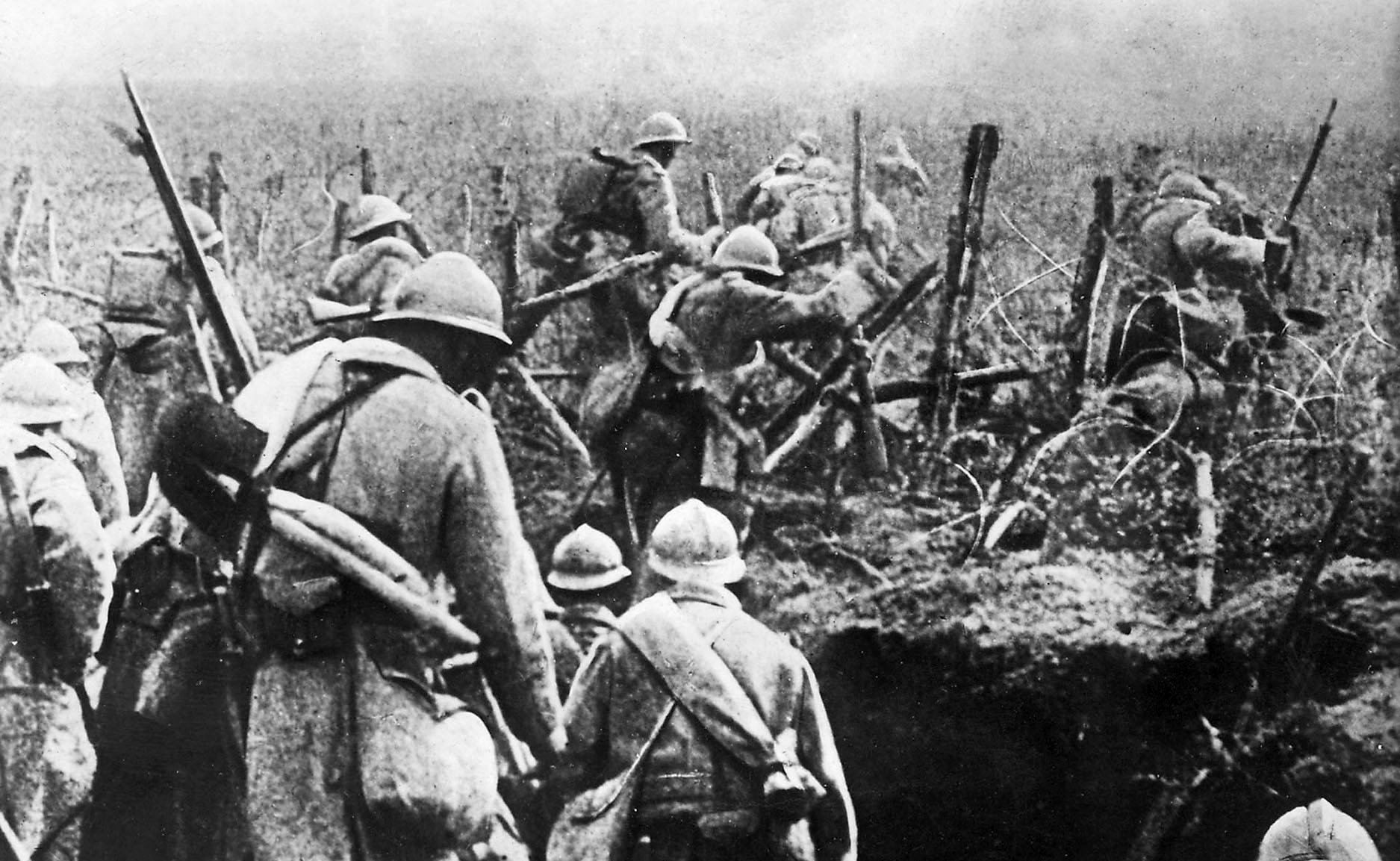
第一次世界大戰發生在一百年前,從1914年7月延續至1918年11月,總共歷時四年三個月又兩週。這是人類歷史上首次真正意義上的全球規模戰爭,雖然主要戰場集中在歐洲,但戰火卻延燒至非洲、中東、亞洲太平洋地區,乃至大西洋與印度洋的海域。根據不完全統計,全世界共有將近七千萬人投入戰爭,死亡人數高達一千八百萬人,其中一半是軍人,一半是普通平民。若加上因戰爭間接引發的飢荒、疾病和難民潮所造成的死亡,總死亡人數估計遠超過兩千萬人。
World War I took place one hundred years ago, lasting from July 1914 to November 1918 — a total of four years, three months, and two weeks. It was the first truly global war in human history. Although the main battlefields were in Europe, the fighting spread to Africa, the Middle East, the Asia-Pacific region, and even the Atlantic and Indian Oceans. According to incomplete statistics, nearly 70 million people around the world were drawn into the war, and the death toll reached 18 million — half of them soldiers, half of them ordinary civilians. If we include deaths caused by the famines, diseases, and refugee crises that the war triggered, the total number of deaths is estimated to have been well over 20 million.
究竟為什麼全世界的人會在短短幾週內相繼捲入戰爭?這場戰爭的爆發並非偶然,而是多年來各種矛盾積累的總爆發。要真正理解這場戰爭,必須先回到那個時代的大背景去看。
Why did the whole world get pulled into a war in just a matter of weeks? The outbreak was not an accident. It was the result of many years of accumulated tensions finally exploding all at once. To truly understand this war, we must first look at the broader background of that era.
第一次世界大戰前的社會樣貌
19世紀末至20世紀初,是人類歷史上變化速度最快的時代之一。短短幾十年間,蒸汽機、電力、內燃機相繼出現,鐵路網絡覆蓋了整個歐洲大陸,輪船縮短了各大洲之間的距離,電報和電話讓資訊傳遞不再受限於人力。城市急速擴張,工廠林立,大量農村人口湧入都市成為工人。人類第一次感受到「世界正在快速縮小」。
The late 19th and early 20th centuries were one of the fastest-changing periods in human history. Within just a few decades, the steam engine, electricity, and the internal combustion engine appeared one after another. Railway networks covered the entire European continent. Steamships shortened the distances between continents. The telegraph and telephone allowed information to travel without the limitations of human speed. Cities expanded rapidly, factories rose everywhere, and large numbers of rural people poured into cities to become factory workers. For the first time, people felt that "the world was getting smaller."
這個時代,有一個名字叫「美好年代」(Belle Époque)——至少對當時的歐洲上層社會來說是如此。巴黎的咖啡館燈火通明,維也納的音樂廳座無虛席,倫敦的百貨公司擠滿了購物的中產階級。電影剛剛誕生,汽車開始在街頭出現,人們對科技進步充滿了樂觀的期待。1900年巴黎萬國博覽會吸引了近五千萬人參觀,展示了人類工業文明的輝煌成就,那座象徵進步的艾菲爾鐵塔正是在這個時代背景下建造的。
This era had a name: the "Belle Époque," or the "Beautiful Age" — at least for the upper classes of European society. The cafés of Paris were brightly lit. The concert halls of Vienna were packed. The department stores of London were filled with middle-class shoppers. Cinema had just been invented. Automobiles were beginning to appear on the streets. People were full of optimism about technological progress. The 1900 World's Fair in Paris attracted nearly 50 million visitors and showcased the glorious achievements of human industrial civilization. The Eiffel Tower, a symbol of progress, was built in this very era.

(資料來源:wikipedia.org)
然而,在這片繁榮的表面之下,社會的裂縫卻在不斷加深。貧富差距極為懸殊,工廠工人每天工作十四個小時,卻仍然難以餬口;工業污染讓城市空氣惡臭難聞;兒童在礦坑和紡織廠中做工的現象十分普遍。馬克思的《資本論》在這個年代廣泛流傳,工人運動和社會主義思潮在歐洲各地蓬勃發展,讓各國統治階層深感不安。與此同時,婦女參政運動也在這個時代開始興起,英國的「婦女選舉權運動者」走上街頭示威,向社會既有秩序發起挑戰。
However, beneath this prosperous surface, the cracks in society were deepening. The gap between the rich and the poor was enormous. Factory workers labored 14 hours a day and still struggled to make ends meet. Industrial pollution made the air in cities foul and unpleasant. Children working in mines and textile factories was a common sight. Karl Marx's Das Kapital was widely read during this period. The labor movement and socialist ideas were growing rapidly across Europe, making the ruling classes deeply uneasy. At the same time, the women's suffrage movement was also rising. In Britain, the "Suffragettes" took to the streets to demand voting rights, challenging the existing social order.
整個歐洲社會表面上平靜繁榮,底層卻充滿了緊張與不安,各種矛盾正在悄悄積累,等待著一個爆發的時機。
All across Europe, the surface appeared calm and prosperous, but beneath it was full of tension and anxiety. Various contradictions were quietly building up, waiting for a moment to explode.
第二次工業革命
理解第一次世界大戰,必須先理解第二次工業革命(約1870年至1914年)帶來的深遠影響。
To understand World War I, we must first understand the profound impact of the Second Industrial Revolution, which lasted from roughly 1870 to 1914.
第一次工業革命以蒸汽機和煤炭為核心,讓英國率先成為工業強國。而第二次工業革命則以電力和石油為核心動力,在更廣泛的國家同時展開。電燈、電話、無線電報、內燃機、汽車、飛機……這些改變人類生活方式的發明,幾乎都集中在這短短幾十年內出現。
The First Industrial Revolution was driven by steam engines and coal, and it allowed Britain to become the world's first industrial power. The Second Industrial Revolution, however, was powered by electricity and oil, and it unfolded across a much wider range of countries at the same time. Electric lights, telephones, wireless telegraphs, internal combustion engines, automobiles, airplanes — almost all of the inventions that transformed the way humans lived appeared within this short period of a few decades.
德國是第二次工業革命最大的受益者之一。普法戰爭勝利後,德意志帝國於1871年正式成立,統一後的德國集中力量發展工業,在化學、電氣、機械製造等領域迅速崛起。克魯伯(Krupp)鋼鐵公司生產的大砲聞名全球,西門子(Siemens)和拜耳(Bayer)等企業成為世界級的工業巨頭。到1900年,德國的工業產值已超過法國,並開始追趕英國,成為歐洲成長最快的經濟體。
Germany was one of the biggest beneficiaries of the Second Industrial Revolution. After winning the Franco-Prussian War, the German Empire was officially founded in 1871. A unified Germany concentrated its energy on developing industry and quickly rose to the top in fields such as chemistry, electrical engineering, and mechanical manufacturing. The Krupp steel company became world-famous for its cannons. Companies like Siemens and Bayer grew into global industrial giants. By 1900, Germany's industrial output had surpassed France's and was beginning to catch up with Britain's. Germany had become the fastest-growing economy in Europe.

(資料來源:wikipedia.org)
然而,工業的高速發展也帶來了新的問題:工廠要持續運轉,就需要源源不斷的原材料——鐵礦、銅礦、橡膠、棉花、石油。這些原材料,大多在歐洲本土找不到,必須從海外獲取。這就直接推動了歐洲列強瘋狂向外擴張殖民地的浪潮,也成了一戰爆發的深層經濟根源之一。
However, rapid industrial development brought new problems. For factories to keep running, they needed a constant supply of raw materials — iron ore, copper, rubber, cotton, and oil. Most of these materials could not be found in Europe itself and had to be obtained from overseas. This directly pushed European powers into a frantic race to expand their colonies, and it became one of the deep economic roots of World War I.
石油在這個時代的地位尤為關鍵。內燃機的發明讓石油從一種用途有限的燃料,一夕之間成為了驅動現代文明的核心能源。汽車需要石油,軍艦需要石油,飛機需要石油。誰能掌控石油的來源,誰就掌控了未來。中東地區的阿拉伯半島,正是當時已知最豐富的石油產地,英國、德國、俄羅斯都對這塊土地虎視眈眈,在這裡的利益衝突也成了一戰前歐洲緊張局勢的重要原因之一。
Oil played a particularly crucial role in this era. The invention of the internal combustion engine turned oil from a fuel with limited uses into the core energy source powering modern civilization almost overnight. Automobiles needed oil. Warships needed oil. Airplanes needed oil. Whoever could control the source of oil would control the future. The Arabian Peninsula in the Middle East was at that time the richest known oil-producing region. Britain, Germany, and Russia all had their eyes on this land, and the conflict of interests there became one of the important causes of the tension in pre-war Europe.
民族主義的烈火
若說工業革命提供了戰爭的「物質條件」,那麼民族主義(Nationalism)就提供了戰爭的「精神燃料」。19世紀是民族主義在歐洲全面覺醒的時代。所謂民族主義,簡單來說就是:「我們是同一個民族,我們應該擁有自己的國家,我們的民族利益高於一切。」這個想法聽起來很自然,但在當時的歐洲,它卻是一顆威力無窮的炸彈。
If the Industrial Revolution provided the "material conditions" for war, then nationalism provided the "spiritual fuel." The 19th century was the age when nationalism fully awakened across Europe. Simply put, nationalism is the idea that "we are the same people, we should have our own country, and our national interests come above everything else." This idea sounds natural enough, but in the Europe of that time, it was a bomb of enormous power.
為什麼?因為19世紀的歐洲,許多統治疆域廣大的帝國,例如奧匈帝國和鄂圖曼帝國,其內部都住著數十個不同的民族。奧匈帝國境內有德意志人、匈牙利人、捷克人、斯洛伐克人、波蘭人、克羅埃西亞人、斯洛維尼亞人和塞爾維亞人等十幾個民族,彼此語言不同、文化各異,卻被迫生活在同一個帝國的統治下。當民族主義的思想蔓延開來,每一個民族都開始問同一個問題:「為什麼我們要被別的民族統治?我們為什麼不能有自己的國家?」
Why? Because the large empires of 19th-century Europe — such as the Austro-Hungarian Empire and the Ottoman Empire — each contained dozens of different ethnic groups within their borders. The Austro-Hungarian Empire was home to Germans, Hungarians, Czechs, Slovaks, Poles, Croatians, Slovenians, Serbians, and more than ten other groups, all with different languages and cultures, all forced to live under the same imperial rule. As nationalist ideas spread, every group began asking the same question: "Why should we be ruled by another people? Why can't we have our own country?"

(資料來源:wikipedia.org)
這種思想在巴爾幹半島表現得最為激烈。巴爾幹半島地處歐洲東南角,長期是鄂圖曼帝國和奧匈帝國的角力場,境內有塞爾維亞人、保加利亞人、希臘人、阿爾巴尼亞人、羅馬尼亞人等眾多民族雜居。19世紀後半葉,這裡一個接一個地爆發民族獨立運動,也一場接一場地爆發小規模戰爭。巴爾幹半島因此被歐洲外交家稱為「歐洲的火藥桶」(Powder Keg of Europe)——在第一次世界大戰正式爆發之前,這個形容已流傳了數十年。
This feeling was most intense in the Balkan Peninsula, located in southeastern Europe. The Balkans had long been a battleground between the Ottoman Empire and the Austro-Hungarian Empire, and the region was home to many different ethnic groups living side by side — Serbians, Bulgarians, Greeks, Albanians, Romanians, and others. In the second half of the 19th century, nationalist independence movements broke out one after another across the region, and small-scale wars followed. European diplomats called the Balkans the "Powder Keg of Europe" — a phrase that had been in use for decades before World War I actually began.
塞爾維亞是這股民族主義浪潮中最具代表性的國家之一。塞爾維亞人是斯拉夫民族的一支,長期在鄂圖曼帝國和奧匈帝國的統治與壓迫下掙扎求存。1878年塞爾維亞正式獨立後,境內民族主義情緒高漲,「大塞爾維亞主義」開始在知識分子和軍人圈中廣泛流傳,夢想建立一個統一所有南斯拉夫民族的大國。這個夢想直接衝撞了奧匈帝國對巴爾幹地區的控制野心,雙方的仇恨日積月累。
Serbia was one of the most representative countries of this nationalist wave. Serbians are a Slavic people who had long struggled for survival under the rule of the Ottoman and Austro-Hungarian Empires. After Serbia officially gained independence in 1878, nationalist sentiment surged within the country. "Greater Serbian" ideology began spreading widely among intellectuals and military officers — the dream of building a unified state for all South Slavic peoples. This dream directly clashed with the Austro-Hungarian Empire's ambitions to control the Balkans, and the hatred between the two sides grew deeper with every passing year.
民族主義不只在弱小民族中燃燒,也在強大帝國中膨脹。德意志帝國自1871年統一後,民族優越感急速膨脹,「泛日耳曼主義」思潮認為日耳曼民族天生優越,理應主宰歐洲。法國則在普法戰爭慘敗後,以「復仇主義」(Revanchism)凝聚民心,奪回阿爾薩斯-洛林的執念幾乎成為全國共識。俄羅斯帝國則以「泛斯拉夫主義」為旗幟,自命為所有斯拉夫民族的保護者,以此作為向巴爾幹地區擴張影響力的理由。
Nationalism did not only burn among smaller peoples — it also swelled within powerful empires. After unifying in 1871, the German Empire quickly developed an intense sense of ethnic pride. "Pan-Germanism" held that the Germanic people were naturally superior and destined to dominate Europe. France, deeply humiliated by its defeat in the Franco-Prussian War, used "Revanchism" — the desire for revenge — to unite its people. The goal of taking back Alsace-Lorraine became something close to a national obsession. Russia, for its part, used "Pan-Slavism" as a banner, declaring itself the protector of all Slavic peoples and using this idea to justify expanding its influence into the Balkans.
民族主義讓每個國家都深信自己是正義的一方,都相信「為國犧牲是最崇高的榮耀」。正是這種狂熱的民族情緒,讓原本也許能以外交手段解決的危機,最終演變成一場全面的世界大戰。
Nationalism made every country deeply convinced that it was on the side of justice, and that "dying for one's country is the highest honor." It was precisely this kind of intense national feeling that turned crises which might otherwise have been resolved through diplomacy into full-scale world war.
帝國主義──殖民地的爭奪
與民族主義並駕齊驅的另一股力量,是帝國主義(Imperialism)——也就是強國競相向外擴張、建立殖民地的衝動。
Running alongside nationalism was another powerful force: imperialism — the drive by powerful nations to expand outward and establish colonies.
19世紀末,歐洲列強掀起了一場瓜分世界的狂潮。英國是當時最大的殖民帝國,「日不落帝國」的版圖涵蓋了全球約四分之一的土地和人口,包括印度、澳大利亞、加拿大、南非和大量非洲領土。法國是第二大殖民帝國,擁有北非、西非、中南半島和太平洋島嶼等廣大殖民地。這兩個老牌帝國已經佔據了最肥沃的土地,後來統一的德國卻只能撿剩下的。
In the late 19th century, European powers launched a frantic race to divide up the world. Britain was the largest colonial empire of the time. The "empire on which the sun never sets" covered about one-quarter of the world's land and population, including India, Australia, Canada, South Africa, and vast territories across Africa. France was the second-largest colonial empire, controlling North Africa, West Africa, Indochina, and Pacific islands. These two established empires had already seized the most valuable lands. Germany, which had only recently unified, was left to pick up the rest.
德國在非洲佔了幾塊條件相對貧瘠的土地(今坦尚尼亞、奈米比亞、喀麥隆等地),在太平洋佔了幾個島嶼,還趁機佔領了中國的青島作為東亞的戰略據點。儘管如此,德國的殖民地總面積仍遠遜於英法,這讓德國的統治者和知識分子極為不滿。德國人認為:「我們的工業實力和人口規模都足以與英法相提並論,為什麼在全球版圖上卻只能分到這麼小的一塊?」這種「遲到的不公平感」,深深刺激了德國的帝國野心。
Germany occupied several relatively poor territories in Africa — what is now Tanzania, Namibia, and Cameroon — along with a few Pacific islands, and it also took control of Qingdao in China as a strategic base in East Asia. Even so, Germany's total colonial territory was far smaller than Britain's or France's. This made Germany's rulers and intellectuals extremely resentful. Germans felt: "Our industrial strength and population are comparable to Britain and France — so why do we get such a small piece of the world?" This sense of "arriving too late to get a fair share" deeply fueled Germany's imperial ambitions.

(資料來源:wikipedia.org)
1884至1885年的「柏林西非會議」(Berlin Conference)是帝國主義最赤裸裸的一次展示。十四個歐洲國家的代表在德國柏林聚會,在地圖上用直線劃分非洲大陸,完全無視非洲本地的部族邊界、語言和文化。短短幾年內,非洲幾乎所有土地都落入歐洲列強手中,只有衣索比亞和賴比瑞亞保持獨立。整個非洲大陸的命運,就這樣被一群從未踏上非洲土地的歐洲外交官在會議桌上決定了。
The Berlin Conference of 1884–1885 was imperialism at its most naked. Representatives from fourteen European countries gathered in Berlin and drew straight lines across a map of Africa, dividing up the continent with no regard for the tribal boundaries, languages, or cultures of the African people. Within a few years, almost all of Africa had fallen under European control, with only Ethiopia and Liberia remaining independent. The fate of an entire continent was decided by European diplomats who had never even set foot in Africa.
這場瓜分狂潮並不只限於非洲。中東、南亞、東南亞、太平洋諸島,都成了列強爭奪的對象。英國在中東佈局,法國控制北非和中南半島,俄羅斯向中亞和遠東擴張,日本也於1895年擊敗清朝、1905年擊敗俄羅斯,躋身亞洲的帝國主義強國行列。
This race for territory was not limited to Africa. The Middle East, South Asia, Southeast Asia, and the Pacific islands all became targets of the great powers. Britain positioned itself in the Middle East. France controlled North Africa and Indochina. Russia pushed into Central Asia and the Far East. Japan, after defeating China in 1895 and Russia in 1905, also joined the ranks of imperialist powers in Asia.
殖民地的重要性在於三點:第一是原材料來源(礦產、橡膠、棉花、石油);第二是產品的銷售市場;第三是戰略軍事基地,控制了海上交通要道。誰佔領的殖民地越多,誰就擁有越強的工業生產能力,也就擁有越強的軍事實力。這個邏輯讓帝國主義的擴張成為不可阻擋的浪潮,也讓列強之間的競爭越來越激烈,越來越危險。
The value of colonies came down to three things: first, a source of raw materials such as minerals, rubber, cotton, and oil; second, a market for selling manufactured goods; and third, strategic military bases that controlled key sea routes. The more colonies a country held, the stronger its industrial capacity, and the stronger its military power. This logic made imperial expansion an unstoppable force — and made the competition between the powers ever more intense and ever more dangerous.
軍備競賽──和平的幻覺
在這個時代,還有一件讓整個歐洲陷入瘋狂的事情,那就是軍備競賽(Arms Race)。
There was one more thing driving the whole of Europe toward madness in this era: the arms race.
每個大國都相信:「只要我的軍隊夠強大,別人就不敢打我。」這個邏輯本身並沒有錯,但當所有國家同時這樣想,每個國家都開始瘋狂擴軍,結果就是整個歐洲的軍備水準以驚人的速度上升,各國之間的緊張感也同步飆升。
Every major power believed that "as long as my military is strong enough, no one will dare attack me." This logic is not necessarily wrong, but when every country thinks the same way at the same time and begins building up its military at full speed, the result is that the overall level of armaments across Europe rises at a frightening pace — and the level of tension between nations rises just as fast.
英德之間的海軍競賽是這個時代最具代表性的例子。英國長期稱霸海洋,皇家海軍是維護大英帝國全球版圖的核心力量。德國皇帝威廉二世(Kaiser Wilhelm II)對海洋霸權充滿野心,在海軍大臣提爾皮茨(Alfred von Tirpitz)的規劃下,德國開始大規模建造戰艦。英國的回應是推出「無畏艦」(HMS Dreadnought)——這艘在1906年下水的巨型戰艦,搭載了當時最先進的重型砲塔,單艦火力就超過了任何現有的戰艦,讓所有舊式戰艦一夕之間淪為廢鐵。德國立刻開始仿製無畏艦,英國緊接著再推出更大、更快、砲火更猛的「超無畏艦」(Super-Dreadnought)。兩國就這樣你追我趕,在短短十年間造出了數十艘巨型戰艦,耗資天文數字。
The naval race between Britain and Germany is the most representative example of this era. Britain had long ruled the seas. The Royal Navy was the backbone of the British Empire's global power. German Emperor Kaiser Wilhelm II had strong ambitions for naval dominance, and under the leadership of Admiral Alfred von Tirpitz, Germany began building warships on a massive scale. Britain's response was to develop the HMS Dreadnought — a giant battleship launched in 1906 that carried the most advanced heavy gun turrets of the time. A single Dreadnought had more firepower than any existing warship, making all older vessels obsolete overnight. Germany immediately began building its own dreadnoughts. Britain then pushed out even larger, faster, and more heavily armed "super-dreadnoughts." The two countries chased each other like this for a decade, building dozens of giant warships at an astronomical cost.

(資料來源:wikipedia.org)
陸軍的競賽同樣激烈。德國的陸軍規模在1870年普法戰爭後就已令人生畏,此後繼續擴充。法國在普法戰爭慘敗後,幾乎把整個國家的財政都投入到重建軍隊上,引入全民義務兵役制度,訓練出一支龐大的後備軍。俄羅斯帝國疆域廣大,人口眾多,雖然工業落後,但動員起來的兵力卻讓德國寢食難安。奧匈帝國和鄂圖曼帝國也在各自的財力範圍內努力維持軍事規模。
The arms race on land was just as fierce. Germany's army had been fearsome since its victory in the Franco-Prussian War and continued to grow. France, after its humiliating defeat, poured nearly all of its national finances into rebuilding its military, introducing universal conscription and training a massive reserve army. Russia, with its enormous territory and huge population, was industrially behind but could mobilize a force that kept Germany awake at night.
軍備競賽帶來了一個危險的心態轉變:既然已經花了這麼多錢建軍,如果不打仗,這些軍備就白費了。更有不少軍事將領和政治人物私下認為,「遲打不如早打」——趁現在軍力相對佔優,打一場決定性的戰爭,徹底解決問題,比讓對手慢慢追上來要划算得多。這種危險的思維,在戰爭爆發的關鍵時刻,讓許多本可以保持冷靜的人選擇了推波助瀾。
The arms race brought with it a dangerous shift in thinking. Since so much money had already been spent building up these militaries, some felt that if war never came, all that preparation would have been wasted. Worse still, many military commanders and politicians privately believed that "striking sooner is better than striking later" — using current military advantages to fight a decisive war now, rather than waiting for rivals to catch up. This kind of dangerous thinking, at the critical moment when war broke out, pushed many people who might have kept their heads cool to instead add fuel to the fire.
第一次世界大戰爆發前夕
在第一次世界大戰爆發之前,歐洲各國之間的戰爭從未真正停止過。從中世紀起,歐洲大陸就一直處於分裂、征戰的狀態。進入19世紀,拿破崙戰爭雖然重塑了歐洲版圖,但也留下了無數的領土糾紛與民族仇恨。經過多年的征戰整合,這些小國家打來打去,最終形成了幾個較大的帝國,分別是英國、法國、義大利、德意志帝國、奧匈帝國、鄂圖曼帝國和俄羅斯帝國。必須說明的是,這幾個國家是一百年前的國家,和現在的國家版圖並不完全相同。這些國家之間大多存在矛盾,只要是接壤的,一般就有領土爭端;就算沒有接壤,關係也好不到哪裡去。
Before World War I broke out, war between European nations had never truly stopped. From the Middle Ages onward, the European continent had always been in a state of fragmentation and conflict. In the 19th century, the Napoleonic Wars reshaped the map of Europe but also left behind countless territorial disputes and ethnic hatreds. After years of fighting and merging, these smaller states gradually formed several larger empires: Britain, France, Italy, the German Empire, the Austro-Hungarian Empire, the Ottoman Empire, and the Russian Empire. It is worth noting that these were the countries of one hundred years ago — their borders were quite different from the countries we know today. Most of these nations had conflicts with one another. If two countries shared a border, there was almost always a territorial dispute. Even countries that did not share a border generally did not have good relations.
其中矛盾最大的是英、法、德三國。為什麼這三國矛盾特別突出?最根本的原因在於這三個國家的工業實力和海軍都比較強大,紛紛向外擴張殖民地,在爭奪殖民地的過程中彼此衝突,尤其是在瓜分非洲的時候。進入第二次工業革命後,英國、法國和德國率先成為工業強國。他們到非洲一看,發現當地礦產資源極為豐富,當地原住民卻沒有足夠的武力抵抗,於是爭相前往佔領。英國要縱著切、法國要橫著切、德國要斜著切,這樣一來彼此就撞在一起了,衝突自然難以避免。因此這三國的糾紛,不僅僅是因為地緣相近,更主要是殖民利益上的衝突。
The most serious tensions existed among Britain, France, and Germany. Why were these three countries in particular so much at odds? The fundamental reason was that all three had strong navies and were aggressively expanding their colonial empires, which brought them into conflict with one another — especially when it came to dividing up Africa. After entering the Second Industrial Revolution, Britain, France, and Germany became the leading industrial powers. When they looked at Africa, they saw enormous natural resources and local populations with little military power to resist. So they all rushed in to grab what they could. Britain wanted to cut from north to south. France wanted to cut from east to west. Germany wanted to cut diagonally. They inevitably ran into each other, and conflict was impossible to avoid. The tensions among these three nations were not only about geography — they were mainly about competing economic interests.
錯綜複雜的結盟體系
德國和法國關係長期不佳——1870年的普法戰爭中,德國打敗了法國,奪走了阿爾薩斯-洛林地區,這個傷痛讓法國人念念不忘、誓言復仇。德國便一直擔心法國趁機報復。與此同時,德國的東邊還有俄羅斯帝國,這個龐大的帝國幅員遼闊、實力非常強大,德國很擔心俄羅斯與法國聯手從東西兩側夾擊自己。為了打破這個困局,德國首先和俄羅斯達成《再保險條約》,承諾互不開戰,這樣德國就能安心應對西邊法國的威脅。隨後德國又向南方的奧匈帝國提議結盟,就此形成了德國、奧匈帝國與俄羅斯帝國的「三皇同盟」。
Germany and France had long had a troubled relationship. In the Franco-Prussian War of 1870, Germany defeated France and took away the region of Alsace-Lorraine. This wound was something the French people never forgot and swore to avenge. Germany, in turn, was constantly worried that France would one day seek revenge. At the same time, to Germany's east sat the Russian Empire — a vast, powerful country that always seemed to be watching and waiting. Germany feared that Russia and France might team up and attack from both sides at once. To break out of this trap, Germany first reached a secret agreement with Russia — the Reinsurance Treaty — promising not to go to war with each other. This allowed Germany to focus its attention on the French threat to the west. Germany then proposed an alliance with the Austro-Hungarian Empire to the south, forming the "Three Emperors' Alliance" among Germany, Austria-Hungary, and Russia.
三國結盟之後,德國安心發展工業。此時正值第二次工業革命,代表能源是電能和石油,代表技術是無線電技術與內燃機技術,代表產物則是汽車、飛機、冰箱和電話,這些都是在那個時期陸續出現的。歷史上最早的汽車,就是1885年在德國由工程師卡爾·賓士(Karl Benz)製造出來的。德國在沒有外患的環境下安心發展,工業產值迅速超越法國,甚至開始追上英國,讓周邊各國倍感壓力。
After this alliance was formed, Germany focused on developing its industry. At that time, the Second Industrial Revolution was in full swing. The key energy sources were electricity and oil. The key technologies were wireless radio and the internal combustion engine. The key products were automobiles, airplanes, refrigerators, and telephones — all of which appeared during this period. The world's first automobile was built in Germany in 1885 by engineer Karl Benz. Free from the threat of war, Germany developed rapidly. Its industrial output quickly surpassed France's and began to approach Britain's, making neighboring countries increasingly uneasy.
那麼,德國高速發展的同時,俄羅斯帝國又在做什麼呢?德國南邊有奧匈帝國,奧匈帝國南邊有鄂圖曼帝國,也就是現在土耳其的前身,但當時的鄂圖曼帝國版圖比今天的土耳其大得多,涵蓋了整個中東、北非部分地區以及巴爾幹半島。當時鄂圖曼帝國發生了嚴重內亂,因為帝國內部有許多不同民族,這些民族紛紛要求自治,引發動盪。俄羅斯帝國趁其內亂,以支持斯拉夫民族為由介入其中,協助分裂鄂圖曼帝國,並趁機奪取了南方的土地。鄂圖曼帝國北部就此分裂出幾個小國,例如塞爾維亞、羅馬尼亞和保加利亞,這些都是在俄羅斯帝國的資助與支持下獨立出來的。
So what was the Russian Empire doing while Germany was growing so fast? To Germany's south was Austria-Hungary, and to Austria-Hungary's south was the Ottoman Empire — the predecessor of modern-day Turkey, though far larger than Turkey is today, covering the entire Middle East, parts of North Africa, and the Balkan Peninsula. At that time, the Ottoman Empire was suffering from serious internal unrest. With so many different ethnic groups within its borders, all demanding self-rule, the empire was in chaos. The Russian Empire took advantage of this turmoil, using the excuse of supporting Slavic peoples to intervene and help break the empire apart, while also seizing territory in the south. From the northern part of the Ottoman Empire, several small countries broke away — including Serbia, Romania, and Bulgaria — all of them supported and funded by the Russian Empire.
俄羅斯這種藉口支援分裂他國的擴張行為,讓德國開始感到不安,認為俄羅斯仍有意繼續向西擴張。其實不只德國緊張,周圍所有國家都感到憂慮。於是在1878年,各國在德國柏林召開了「柏林會議」,目的就是限制俄羅斯繼續向西擴張。在這次會議上,俄羅斯帝國在外交壓力下同意不再向西擴張,但俄羅斯內心非常不滿,尤其對德國憤憤不平:「我們明明是盟友,我擴張的地方又不是你的領土,你憑什麼跳出來反對我?」這股怒氣讓俄德關係急轉直下。
Russia's pattern of expanding influence by helping other countries break apart alarmed Germany, which began to fear that Russia still intended to push further westward. In fact, it was not just Germany that was worried — all the surrounding countries felt uneasy. In 1878, the major powers held the Congress of Berlin in Germany, with the goal of limiting Russia's continued westward expansion. Under diplomatic pressure, Russia agreed not to expand further west — but the Russians were deeply resentful, especially toward Germany. "We are supposed to be allies," they felt. "I haven't attacked you. I let you develop in peace. The territory I expanded into wasn't even yours — so why are you opposing me?" This anger caused relations between Russia and Germany to deteriorate rapidly.
德國見俄羅斯帝國怒了,立刻與奧匈帝國達成更緊密的軍事同盟。原先的同盟只是消極的「如果法國來打我,你保持中立就行」,而新的同盟則升級為積極的「如果任何國家來打我,咱們就一起去反擊」——主要針對的就是俄羅斯。後來,由於仍不放心,德國和奧匈帝國又把義大利拉了進來,於1882年正式形成「德義奧三國同盟」(Triple Alliance),相當於把俄羅斯踢出聯盟、換上了義大利。義大利之所以願意加入,是因為它跟法國關係不好,在北非的突尼西亞問題上與法國有衝突——敵人的敵人就是朋友。
When Germany saw that Russia was furious, it immediately moved to form a tighter military alliance with Austria-Hungary. The old alliance had been passive — "If France attacks me, just stay neutral." The new alliance was much more active — "If anyone attacks me, we both fight back together" — with Russia clearly in mind. Still not feeling fully secure, Germany and Austria-Hungary then brought Italy into the alliance as well, forming the "Triple Alliance" of Germany, Austria-Hungary, and Italy in 1882. This effectively pushed Russia out and replaced it with Italy. Italy was willing to join because it had a troubled relationship with France — specifically over Tunisia in North Africa. As the saying goes, the enemy of my enemy is my friend.
然而,義大利的立場從來都不是真正忠誠的。它既和德國結了盟,同時又在背地裡和法國秘密結盟,約定若法德開戰,義大利不介入幫助德國。更有趣的是,義大利還與奧匈帝國存在領土糾紛,對義大利北部的「未收復土地」(Terra Irredenta)——特里斯特、的里雅斯特等地——耿耿於懷。因此義大利在外交上始終搖擺,哪邊對自己有利就倒向哪邊。所謂此一時彼一時,國際上沒有永遠的朋友,也沒有永遠的敵人,義大利把這句話詮釋得淋漓盡致。
However, Italy's loyalty was never truly dependable. While it was allied with Germany, it also secretly agreed with France that it would not help Germany if France and Germany went to war. On top of that, Italy had territorial disputes with Austria-Hungary over the "unredeemed lands" — areas in northern Italy like Trieste — and held a lasting grudge. As a result, Italy constantly shifted its position in foreign affairs, leaning toward whichever side was more advantageous at any given moment. There are no permanent friends and no permanent enemies in international relations — Italy embodied this idea perfectly.
這個時間點大約是19世紀80年代,歐洲工業實力最強的三個國家分別是英國、法國和德國。這些國家為了銷售大量工業產品,不斷在海外擴張殖民地——工廠生產需要原材料從殖民地輸入,製成品再賣回殖民地。英國當時較大的殖民地有印度、澳大利亞和南非;德國佔了非洲幾塊土地,還佔了青島和新幾內亞;法國也佔了非洲幾塊地,以及越南。
By the 1880s, the three most powerful industrial nations in Europe were Britain, France, and Germany. These countries constantly expanded their overseas colonies in order to sell their industrial goods — factories needed raw materials from the colonies, and the finished products were sold back to the colonies. Britain's major colonies at the time included India, Australia, and South Africa. Germany held several territories in Africa and also controlled Qingdao and New Guinea. France held several African territories as well as Vietnam.
在這個海外擴張的過程中,法國注意到德國的成長速度越來越快,不論是掠奪土地的速度還是工業發展,都讓法國感到威脅日益加大。於是法國積極行動,暗中與俄羅斯帝國簽訂了「法俄同盟」,約定若德國繼續擴張就聯手對付它。隨後英國也以「英法協約」和「英俄協約」的形式,將三國連結在一起,形成「三國協約」(Triple Entente),也就是歷史上所稱的「協約國」。
During this period of overseas expansion, France noticed that Germany was growing faster and faster — both in seizing territory and in industrial development. Feeling increasingly threatened, France secretly formed the "Franco-Russian Alliance" with Russia, agreeing that if Germany continued to expand, the two countries would act together against it. Britain then formalized its own relationships with both France and Russia through a series of agreements, creating the "Triple Entente" — what history calls the Allied Powers or the Entente.
德國的高速發展也讓英國非常不自在。英國不喜歡德國的原因是多方面的:第一,德國開始大力建設海軍,讓長期稱霸海洋的英國感到強烈威脅;第二,德國利用其盟國奧匈帝國以及鄂圖曼帝國的關係,在中東地區修建了一條「柏林—巴格達鐵路」,一路延伸到產油豐富的阿拉伯地區,讓德國得以穩定獲取石油資源。英國同樣覬覦中東的石油,雙方利益因此直接衝突。
Germany's rapid growth made Britain deeply uncomfortable as well. Britain disliked Germany for several reasons. First, Germany was building a powerful navy that threatened Britain's centuries-long dominance of the seas. Second, Germany was using its alliances with Austria-Hungary and the Ottoman Empire to build the "Berlin-Baghdad Railway" through the Middle East, giving Germany reliable access to the rich oil fields of the Arabian Peninsula. Britain also had its eyes on Middle Eastern oil, so a direct conflict of interests was inevitable.
歸根究柢,這些矛盾要麼是領土之爭,要麼是資源之爭,要麼是市場之爭。在那個年代,歐洲各國都把對方的強大視為對自己的威脅:你搶到的石油多了、發展快了,我就覺得你遲早會打過來,所以要搶先一步擴張自己的實力。這並非無中生有的偏執,而是因為歐洲幾百年來戰爭從未停歇,各國相互廝殺早已是家常便飯,自然每天都如坐針氈。
At the root of all these tensions was competition — over territory, resources, and markets. In that era, every European nation saw its neighbor's growth as a threat: "If you grab more oil and develop faster than me, I start to worry that you'll eventually attack me — so I need to expand my own power first." This was not paranoia without reason. Europe had been a continent of near-constant warfare for hundreds of years. The idea that any country might attack at any time was simply part of everyday reality.
就這樣,19世紀末至20世紀初的歐洲,形成了針鋒相對的兩大軍事集團:一方是英國、法國和俄羅斯帝國組成的協約國;另一方是德國、奧匈帝國和義大利組成的同盟國。整個歐洲就像一個裝滿火藥的房間,只需要一點火花,就會引發驚天大爆炸。
In this way, Europe gradually divided into two opposing military blocs: on one side, the Triple Entente of Britain, France, and Russia; on the other, the Triple Alliance of Germany, Austria-Hungary, and Italy. The whole of Europe was like a room full of gunpowder. All it needed was a single spark.
戰爭導火線──塞拉耶佛暗殺事件
還有一個重要角色尚未登場,那就是鄂圖曼帝國轄下的巴爾幹地區。鄂圖曼帝國一直忙於內亂,就在它焦頭爛額之際,奧匈帝國趁機於1908年正式吞併了鄂圖曼帝國北部、靠近塞爾維亞的一塊土地,名叫波士尼亞(Bosnia)。這塊土地上居住的大多是塞爾維亞族人,塞爾維亞這個剛剛獨立的小國一直覬覦這塊土地,本想趁鄂圖曼帝國大亂時將其納入版圖,沒想到被強大的奧匈帝國捷足先登。塞爾維亞對此憤恨不已,境內的民族主義情緒更是急速高漲。
There was one more important piece of the story that had not yet fully come together — the Balkan region under Ottoman control. While the Ottoman Empire was struggling with its own internal crises, Austria-Hungary seized the opportunity in 1908 to formally annex a territory in the empire's north called Bosnia. Most of the people living in Bosnia were ethnic Serbians. The small, newly independent country of Serbia had long had its eye on this land, hoping to absorb it while the Ottoman Empire was in chaos. Instead, the powerful Austro-Hungarian army got there first. Serbia was furious, and nationalist feeling within the country rose to a fever pitch.
就是在這樣的背景下,1914年6月28日,一名塞爾維亞族青年加夫里洛·普林西普(Gavrilo Princip),在波士尼亞首府塞拉耶佛,近距離開槍刺殺了正在視察的奧匈帝國皇位繼承人弗朗茨·斐迪南大公(Archduke Franz Ferdinand)及其妻子索菲亞,兩人當場身亡。普林西普是激進民族主義秘密組織「黑手社」的成員,他的刺殺行動其實是一個偶然中的偶然——當天早些時候,已有另一名刺客向大公的車隊投擲炸彈,但沒有成功。大公決定前往醫院探望受傷的隨從,車隊繞道時恰好在普林西普面前停下,普林西普把握住了這個千載難逢的機會。
It was against this backdrop that on June 28, 1914, a young Serbian man named Gavrilo Princip shot and killed Archduke Franz Ferdinand — the heir to the Austro-Hungarian throne — and his wife Sofia while they were on a visit to Sarajevo, the capital of Bosnia. Princip was a member of a radical nationalist secret organization called the "Black Hand." His assassination was actually the result of a remarkable chain of coincidences. Earlier that same day, another assassin had thrown a bomb at the Archduke's motorcade but failed to kill him. Franz Ferdinand decided to visit the hospital to check on an injured aide. When the motorcade took a different route, it happened to stop right in front of Princip, who seized the unexpected opportunity.

(資料來源:wikipedia.org)
奧匈帝國隨即向塞爾維亞發出最後通牒,要求交出或懲處肇事者。其實這個要求算不上特別過分,但塞爾維亞之所以強硬拒絕,是因為背後有俄羅斯帝國撐腰,俄羅斯一直以「斯拉夫民族的保護者」自居。而奧匈帝國也清楚俄羅斯是塞爾維亞的後盾,不過奧匈帝國背後也有德國力挺,德皇威廉二世甚至向奧匈帝國開出了一張「空白支票」,意思是不管你怎麼對付塞爾維亞,德國都支持你。雙方誰都不肯讓步,最終在暗殺事件發生整整一個月後的7月28日,奧匈帝國向塞爾維亞正式宣戰,史稱「塞拉耶佛暗殺事件」的引線就此點燃了第一次世界大戰的炸藥桶。
Austria-Hungary immediately issued an ultimatum to Serbia, demanding that the killers be handed over or punished. The demands were not entirely unreasonable, but Serbia refused to comply — because it had the Russian Empire standing behind it. Russia had long presented itself as the "protector of all Slavic peoples." Austria-Hungary was well aware that Russia was Serbia's backer, but Austria-Hungary itself had Germany firmly in its corner. Kaiser Wilhelm II had even given Austria-Hungary a "blank check," signaling that no matter what action it took against Serbia, Germany would support it fully. Neither side was willing to back down. Exactly one month after the assassination, on July 28, 1914, Austria-Hungary declared war on Serbia. The fuse had been lit.
第一次世界大戰爆發
戰爭爆發後,聯盟體系立刻發揮了骨牌效應。俄羅斯帝國第一時間宣布總動員,準備出兵支援塞爾維亞;德國隨即向俄羅斯帝國宣戰;法國因與俄羅斯有同盟關係,也被捲了進來。德國的如意算盤是先快速解決法國,再回頭對付俄羅斯,這個計畫被稱為「施里芬計畫」(Schlieffen Plan),設想在六週內打敗法國。
Once war began, the alliance system worked like a line of falling dominoes. Russia announced a general mobilization to support Serbia. Germany declared war on Russia. France, bound by its alliance with Russia, was drawn in as well. Germany's plan — known as the Schlieffen Plan — was to quickly defeat France in the west within six weeks, then turn east to deal with Russia.
然而德法邊境的法國防線極為堅固,難以正面突破。德國於是決定繞道而行,從軍事防守相對薄弱的比利時進入,再南下攻打法國。德國先佔領了中立國比利時,再從比利時進攻法國。比利時是受國際條約保障的中立國,英國是這個條約的保證國之一,眼見比利時遭到入侵,英國立刻以「保護中立國」為由向德國宣戰,正式捲入這場戰爭。
However, the French defensive line along the Franco-German border was extremely strong and difficult to break through head-on. Germany decided to go around it, entering through Belgium — a country with weaker defenses — and then pushing south into France. Belgium was a neutral country protected by an international treaty, and Britain was one of the guarantors of that treaty. When Belgium was invaded, Britain immediately declared war on Germany in order to "protect a neutral nation," formally entering the conflict.
德國對比利時的態度可謂強橫至極:「借道讓我打法國。」比利時說:「不行,你不能進來。」德國的回應是:「那我就先把你滅掉再說。」就這樣,比利時成了最無辜的受害者。
Germany's attitude toward Belgium was brutally straightforward: "Let us march through your country so we can attack France." Belgium said: "No, you cannot come in." Germany's response was: "Then we'll destroy you first." Belgium became the most innocent victim of the whole situation.

(資料來源:warfarehistorynetwork.com)
法國一度根本打不過德國,德軍以閃電般的速度推進,一度打到距離巴黎僅五十公里的地方,法國政府倉皇遷往波爾多。若非英軍及時馳援,加上法軍在「馬恩河戰役」(Battle of the Marne)中奮勇阻擋,巴黎幾乎就要淪陷。就這樣,歐洲各大小國家像骨牌一樣相繼捲入混戰——鄂圖曼帝國、保加利亞等相繼加入德奧陣營,希臘、羅馬尼亞等則加入了協約國一側。戰火不只在歐洲本土蔓延,各地殖民地也成了戰場,一場真正意義上的「世界大戰」就此全面展開。
France was initially no match for Germany. German forces advanced rapidly, pushing to within fifty kilometers of Paris. The French government fled to Bordeaux. Had British troops not arrived in time, and had the French army not made a desperate stand at the Battle of the Marne, Paris would almost certainly have fallen. From there, the nations of Europe fell like dominoes — the Ottoman Empire, Bulgaria, and others joined the German-Austrian side, while Greece, Romania, and others joined the Allied side. The war spread not only across the European continent but also to colonial territories around the world. A truly global war had begun.
值得一提的是,在整個過程中,義大利始終按兵不動,既沒有幫助德國,也沒有出手攻擊德國的敵人,顯然是遵守了它與法國之間的秘密協議——「如果德法開戰,義大利不介入幫助德國」。這完全出乎德國的意料之外。
It is worth noting that throughout this entire period, Italy did nothing — it neither helped Germany nor attacked Germany's enemies. It had clearly honored its secret agreement with France: "If Germany and France go to war, Italy will not help Germany." This completely surprised Germany.
殘酷的壕溝戰與新式武器
戰爭剛爆發時,雙方都以為能在幾個月內分出勝負,但事實遠比預料的殘酷。「施里芬計畫」遭到阻截後,德國無法快速打敗法國,戰爭在西線陷入了長期的「壕溝戰」(Trench Warfare)僵局。雙方士兵在歐洲大地上挖掘了綿延數百公里的戰壕,彼此對峙,有時只相距幾十公尺。士兵們長年累月地在泥濘、潮濕、佈滿老鼠和跳蚤的戰壕中生活,疾病、凍傷和砲擊日夜折磨著每一個人。壕溝戰的戰術特點是「進攻容易死亡、防守容易僵持」——任何一方試圖衝出戰壕發動正面攻擊,迎接他們的都是密集的機關槍掃射,傷亡往往慘烈到令人難以置信。1916年的索姆河戰役第一天,英軍就死傷了六萬人,而前進的距離還不到一公里。
When the war broke out, both sides expected it to be over within a few months. The reality was far more brutal. After the Schlieffen Plan was stopped, Germany could not quickly defeat France. The war on the Western Front sank into a long, grinding "trench warfare" stalemate. Both sides dug trenches that stretched for hundreds of kilometers across Europe. Soldiers faced each other from just a few dozen meters apart. For months and years, men lived in muddy, damp trenches crawling with rats and lice, constantly tormented by illness, frostbite, and artillery fire. The key feature of trench warfare was this: attacking was almost certain death, and defending led to an endless stalemate. Any time soldiers tried to charge out of their trenches and attack the enemy head-on, they were cut down by machine gun fire in horrifying numbers. On the first day of the Battle of the Somme in 1916, the British army suffered 60,000 casualties while advancing less than one kilometer.
戰事不只在陸地上進行,海上和空中也爆發了大規模的戰鬥。英國皇家海軍實力強大,德國則以潛艇技術聞名,雙方在大西洋和北海展開了激烈的海上博弈。德國啟動了「無限制潛艇戰」,宣布對所有駛入戰區的船隻實施攻擊,不論軍民。此外,第一次世界大戰也是人類歷史上第一次大規模出現空軍作戰的戰爭——萊特兄弟1903年才完成了人類首次動力飛行,而一戰期間雙方已經在天空中展開激烈的空中對決,有了專業的戰鬥機飛行員,甚至出現了擊落敵機數量最多的「王牌飛行員」(Ace Pilot)。
The fighting was not only on land. Massive battles also took place at sea and in the air. The British Royal Navy was powerful, but Germany excelled in submarine technology. The two sides fought a fierce naval struggle in the Atlantic Ocean and the North Sea. Germany launched "unrestricted submarine warfare," declaring that it would attack any ship entering the war zone, whether military or civilian. In addition, World War I was the first time in history that air warfare was used on a large scale. The Wright Brothers had only completed the world's first powered flight in 1903, yet by the time of World War I, both sides were already fighting intense battles in the sky, with professional fighter pilots competing for air supremacy. The best pilots were known as "aces."
德國工程師齊柏林(Count von Zeppelin)設計的「齊柏林飛艇」更是一時之絕——這種龐大的硬式飛艇在戰前已用於商業航空運輸,戰爭爆發後被德軍轉作偵察和轟炸之用,曾對倫敦進行多達五十次的空中轟炸,讓英國民眾大為恐慌。
Germany's airpower was particularly impressive — not only for its aircraft performance, but also for the famous "Zeppelin airships" designed by Count von Zeppelin. These enormous rigid airships had been used for commercial air travel before the war. After the war began, the German military used them for reconnaissance and bombing missions. They carried out as many as fifty bombing raids over London, causing widespread fear among the British public.

(資料來源:wikipedia.org)
在武器方面,一戰是軍事史上武器大爆炸式發展的時代。機關槍的大量使用讓正面衝鋒變成了自殺行為;1916年英國率先在索姆河戰役中使用坦克,以鋼鐵裝甲衝破壕溝防線;德國更首次大規模使用化學武器——毒氣(包括氯氣和芥子氣),讓士兵在痛苦中窒息而死,是人類歷史上最殘忍的殺傷方式之一。這些新式武器的殺傷效率遠超歷史上任何一場戰爭,卻並沒有讓戰爭更快結束,只是讓死亡的規模更加龐大。
In terms of weapons technology, World War I was an era of explosive military development. The widespread use of the machine gun made frontal charges suicidal. In 1916, Britain introduced the tank at the Battle of the Somme, using steel-armored vehicles to break through trench defenses. Germany was the first to use chemical weapons on a large scale — poison gases including chlorine and mustard gas — causing soldiers to suffocate in agony. It was one of the most cruel methods of killing in human history. These new weapons killed with far greater efficiency than any war before, yet they did not bring the war to a faster end. They only made the scale of death larger and more terrible.
盧西塔尼亞號沉沒事件
在戰局仍未分出高下之際,一個大事件讓全世界的目光都聚焦到了大西洋上。1915年5月7日,英國皇家郵輪「盧西塔尼亞號」(RMS Lusitania)在愛爾蘭附近海域被德國U-20號潛艇擊沉。這艘郵輪曾是世界上最大、最快的客輪,採用了當時最先進的蒸汽輪機技術,速度之快讓一般潛艇根本追不上。然而當天下午,船長因能見度不佳而減慢航速,卻不幸被伺機埋伏的德國潛艇發現,一枚魚雷命中船身,十八分鐘內這艘巨輪便沉入大海。
While the war showed no sign of ending, one major event drew the attention of the entire world to the Atlantic Ocean. On May 7, 1915, the British ocean liner RMS Lusitania was sunk by the German submarine U-20 in waters near Ireland. This ship had once been the world's largest and fastest passenger liner, equipped with the most advanced steam turbine technology of the time. It was so fast that ordinary submarines could not catch up with it. However, that afternoon the captain slowed the ship down because of poor visibility, and an alert German submarine spotted it. One torpedo was enough — the giant liner sank within eighteen minutes.
船上共有近兩千名乘客和船員,死亡將近一千兩百人,包括許多婦女和兒童,其中有198名美國乘客。美國政府因本國公民大量罹難,向德國提出強烈抗議,國際輿論也開始猛烈譴責德國不分軍民、濫殺平民的無限制潛艇戰策略。從這時起,美國雖然表面上維持中立,但民間反德情緒急速升溫,政府也開始秘密籌備軍事動員。
There were nearly 2,000 passengers and crew on board. Close to 1,200 people died, including many women and children, among them 198 Americans. The ship had been sailing from New York to Liverpool in England. Why would people travel to Britain during a war? In reality, the ship was secretly carrying supplies. Germany had already warned that any ship entering the war zone would be attacked regardless of its nationality. Britain had believed the Lusitania's speed would protect it from submarines — and indeed, under normal conditions a submarine could not catch it. But that afternoon, with the ship slowed down, it became a target. The American government protested strongly to Germany over the deaths of 198 of its citizens. International opinion began to loudly condemn Germany's policy of attacking civilian ships. From this point on, while America officially maintained its neutral position, anti-German feeling in the country rose sharply, and the government began quietly preparing for military action.
齊默爾曼電報──美國參戰

(資料來源:cfr.org)
隨著戰局的推進,德國陷入了嚴重的補給困境。由於被英法俄三面包圍,海外殖民地又幾乎全被英法佔領,德國幾乎完全斷絕了外部資源。1917年1月,德國外交部長阿瑟·齊默爾曼(Arthur Zimmermann)秘密向墨西哥發出一份電報,史稱「齊默爾曼電報」(Zimmermann Telegram),提議若美國加入協約國,德國將向墨西哥提供財政和軍事援助,協助墨西哥從美國手中奪回德克薩斯州、新墨西哥州和亞利桑那州——這三個州原本確實是墨西哥的領土,在1848年的美墨戰爭後才割讓給美國。 然而這份電報被英國海軍情報部門截獲並解碼,隨即告知了美國政府。美國民眾和國會的憤怒徹底爆發。墨西哥政府察覺美國的備戰行動,擔心電報已遭洩露,立刻拒絕了德國的提議。
As the war dragged on, Germany found itself in a severe supply crisis. Surrounded on three sides by Britain, France, and Russia, and with its overseas colonies almost entirely captured by Britain and France, Germany was almost completely cut off from outside resources. Meanwhile, Britain was receiving a steady flow of food, weapons, and loans from the United States. In January 1917, German Foreign Minister Arthur Zimmermann secretly sent a telegram to Mexico — known in history as the "Zimmermann Telegram." The message proposed that if the United States joined the Allied side, Germany would provide Mexico with financial and military support to help it take back Texas, New Mexico, and Arizona from the United States. These three states had in fact originally been Mexican territory, ceded to the United States after the Mexican-American War in 1848. Germany's plan was to keep the United States occupied at home so it could not intervene in Europe. However, the telegram was intercepted and decoded by British naval intelligence, which immediately informed the American government. The reaction in the United States was one of complete outrage: "First you sink our ships and kill our people, and now you want to team up with Mexico to stab us in the back!" The Mexican government, sensing that the United States was mobilizing, guessed that the telegram had been discovered and quickly turned down Germany's proposal.
就在這時,俄羅斯帝國也發生了重大變局。1917年2月,俄羅斯因長年征戰、經濟瀕臨崩潰、民不聊生,爆發了「二月革命」,沙皇尼古拉二世被迫退位,延續三百餘年的羅曼諾夫王朝就此終結。僅僅九個月後,列寧領導的布爾什維克黨發動「十月革命」,推翻臨時政府,建立了蘇俄政府,並於1918年3月與德國簽訂《布列斯特—立陶夫斯克條約》,以割讓大片領土為代價換取和平,正式退出一戰。
At almost the same time, a major upheaval was happening in Russia. In February 1917, after years of devastating warfare, economic collapse, and widespread suffering among ordinary people, Russia erupted in the "February Revolution." Tsar Nicholas II was forced to abdicate, ending the Romanov dynasty, which had ruled for over three hundred years. Just nine months later, Lenin and the Bolshevik Party launched the "October Revolution," overthrew the temporary government, and established the Soviet Russian government. One of their first priorities was to withdraw from the war. In March 1918, they signed the Treaty of Brest-Litovsk with Germany, giving up large amounts of territory in exchange for peace, and formally exited World War I.
俄羅斯的退出讓德國得以將東線兵力全部調往西線,進行了一次規模空前的「春季攻勢」(Spring Offensive)。然而此時美國的力量已經大規模湧入歐洲戰場。1917年4月,美國正式向德國宣戰,數十萬訓練有素的美國士兵陸續登陸歐洲,為精疲力竭的英法軍隊注入了強大的生力軍。德國的春季攻勢雖然初期取得了突破,卻後繼無力,最終在1918年夏天被協約國的反攻徹底擊退。
Russia's withdrawal allowed Germany to move all of its Eastern Front forces to the Western Front for a massive "Spring Offensive." But by this point, American forces had already begun arriving in Europe in large numbers. In April 1917, the United States formally declared war on Germany. Hundreds of thousands of fresh American soldiers landed in Europe, providing new strength to the exhausted British and French armies. Although Germany's Spring Offensive made initial breakthroughs, it ran out of momentum and was finally pushed back by the Allied counteroffensive in the summer of 1918.
第一次世界大戰的終結與漣漪
1918年秋天,同盟國各方相繼崩潰。保加利亞首先投降,鄂圖曼帝國緊隨其後。奧匈帝國因內部各民族紛紛宣布獨立而土崩瓦解——捷克斯洛伐克、南斯拉夫等國家相繼宣告成立,皇帝的命令無人理會,帝國已名存實亡。1918年11月,奧匈帝國正式向協約國提出停戰協議。
In the autumn of 1918, the Central Powers collapsed one by one. Bulgaria surrendered first, followed by the Ottoman Empire. The Austro-Hungarian Empire fell apart as its various ethnic groups declared independence — Czechoslovakia, Yugoslavia, and other nations announced their formation. The emperor's orders went unheeded. The empire existed in name only. In November 1918, Austria-Hungary formally requested a ceasefire from the Allied Powers.
見奧匈帝國退出,德國海軍在基爾港(Kiel)發生了水兵嘩變,士兵拒絕執行自殺式出擊命令,革命浪潮很快蔓延到德國各大城市。德皇威廉二世被迫退位,流亡荷蘭。1918年11月11日上午11時,德國代表在法國貢比涅森林的一節火車廂內,正式簽署停戰協定,第一次世界大戰宣告結束。這個日期與時間被特意選定,象徵「11月11日11時」——然而這個象徵性的終結,卻只是下一場更大悲劇的序幕。
When Germany saw that Austria-Hungary had dropped out, a mutiny broke out among German naval sailors at Kiel, who refused to carry out what they saw as suicidal orders. The revolutionary wave quickly spread to major German cities. Kaiser Wilhelm II was forced to abdicate and fled to the Netherlands. At 11 o'clock on the morning of November 11, 1918, German representatives signed the armistice agreement in a railway carriage in the Compiègne Forest in France. World War I was officially over.
巴黎和會與《凡爾賽條約》
戰爭結束後,戰勝國代表齊聚巴黎召開「巴黎和會」,商議如何重塑戰後世界秩序。主導和會的是英國首相勞合·喬治、法國總理克里孟梭和美國總統威爾遜,三人又被稱為「三巨頭」。日本雖幾乎沒有直接參與大規模戰鬥,卻趁機佔領了德國在東亞和太平洋的殖民地,也以戰勝國身份出席。戰敗國——德國、奧匈帝國、鄂圖曼帝國——則完全沒有發言的機會,只能被動接受戰勝國的安排。
After the war, representatives of the victorious nations gathered in Paris for the "Paris Peace Conference" to decide how to rebuild the post-war world order. The conference was dominated by three men who became known as the "Big Three": British Prime Minister David Lloyd George, French Prime Minister Georges Clemenceau, and American President Woodrow Wilson. Japan, which had played almost no direct role in the fighting, attended as a victor after having taken over Germany's colonies in East Asia and the Pacific. The defeated nations — Germany, Austria-Hungary, and the Ottoman Empire — had no voice in the negotiations. They could only passively accept whatever the victors decided.
最終在1919年6月28日,在凡爾賽宮的鏡廳,德國代表簽署了《凡爾賽條約》。這個地點充滿了象徵意義:1871年普法戰爭後,德國就是在這同一個廳宣布德意志帝國成立,法國人此刻在這裡讓德國簽署屈辱條約,是徹底的以牙還牙。
On June 28, 1919 — exactly five years after the Sarajevo assassination — German representatives signed the Treaty of Versailles in the Hall of Mirrors at the Palace of Versailles. The choice of location was deeply symbolic. It was in this same hall in 1871 that Germany had declared the founding of the German Empire after defeating France. Now France was forcing Germany to sign a humiliating treaty in the very same room. It was a complete reversal.
《凡爾賽條約》的條款極為苛刻:德國被迫承認對一戰負「全部責任」,並承擔所有戰爭賠償。德國被迫割讓了約13%的領土,失去了約10%的人口;戰爭賠款定為1,320億德國馬克,相當於今天約兩兆美元,是一個幾乎無法償還的天文數字。德國整整還了92年,直到2010年10月才還清最後一筆,向法國支付了超過六千萬歐元。
The terms of the Treaty of Versailles were extremely harsh. Germany was forced to accept full responsibility for causing the war — a clause known as the "War Guilt Clause" — and to pay for all war damages accordingly. Germany was forced to give up about 13 percent of its territory and about 10 percent of its population. The war reparations were set at 132 billion German marks — roughly equivalent to two trillion US dollars in today's money — an almost impossibly large sum. Germany paid off this debt over a period of 92 years, making its final payment in October 2010 — over 60 million euros to France. This is not a figure of speech. It is historical fact.
德國在海外的所有殖民地被全部瓜分,軍事力量受到嚴格限制:陸軍不得超過十萬人,不得擁有空軍,海軍艦艇也受到嚴格約束。
All of Germany's overseas colonies were divided among other nations. Germany's military was subject to extremely strict limits: the army could not exceed 100,000 men, Germany was not allowed to have an air force, and its naval ships were severely restricted as well.

(資料來源:wikipedia.org)
除德國之外,奧匈帝國被完全解體,分裂為奧地利、匈牙利、捷克斯洛伐克、斯洛維尼亞和克羅埃西亞等多個國家。鄂圖曼帝國此後也走向解體,形成了今天的土耳其、敘利亞和伊拉克等國。
Beyond Germany, the Austro-Hungarian Empire was completely dismantled, breaking up into Austria, Hungary, Czechoslovakia, Slovenia, Croatia, and other states. The Ottoman Empire also eventually dissolved, giving rise to the nations of Turkey, Syria, Iraq, and others.
中東的版圖從此由英法兩國按自身利益重新劃定,留下了延續至今仍未解決的地區亂局——巴勒斯坦問題、庫德族問題、伊拉克亂局,許多根源都可以追溯到這個時期的英法秘密協議。
The map of the Middle East was redrawn by Britain and France according to their own interests — a division known as the Sykes-Picot Agreement — leaving behind a tangled web of problems that the region has never fully resolved, including the Palestinian issue, the Kurdish question, and the instability of Iraq. Many of these issues can be traced back to the secret deals made by Britain and France during this period.
至於阿拉伯人民,英國曾承諾給予他們獨立,以換取他們從內部協助對抗鄂圖曼帝國。然而,這項承諾並未完全兌現。英國早已與法國就如何瓜分中東達成了秘密協議,阿拉伯人發現自己遭到了背叛——這是一道至今仍未完全癒合的傷口。
As for the Arab peoples, Britain had promised them independence in exchange for their help in fighting the Ottoman Empire from within. That promise was not fully kept. Britain had already secretly agreed with France on how to divide the Middle East, and the Arabs found themselves betrayed — a wound that has never fully healed.
戰爭的代價與教訓
一戰能夠結束,一個重要原因是許多國家爆發了內亂、打不下去了;另一個極為重要的原因,是一場毀滅性的全球瘟疫——西班牙流感(Spanish Flu)。這場流感在1918年至1919年間大規模爆發,估計最多奪走了五千萬至一億條生命,遠遠超過整個一戰的戰爭死亡人數。諷刺的是,戰爭中大量集中的士兵正是疾病最快速傳播的溫床,一戰在某種程度上加速了這場全球大流行。
One important reason the war finally ended was that many nations had been pushed to the point of collapse by internal unrest. Another critically important reason was a devastating global pandemic — the Spanish Flu. This flu broke out massively in 1918 and 1919, killing an estimated 50 million to 100 million people worldwide — far more than the entire war itself. Ironically, the large concentrations of soldiers during wartime were ideal conditions for the disease to spread rapidly. In a certain sense, World War I helped fuel this global pandemic.
一戰結束後許多年,歐洲大部分國家都難以從戰爭與瘟疫的雙重重創中復原。只有美國,因為本土未受戰火波及,戰後又透過向歐洲提供貸款和商品大賺了一筆,迅速崛起為世界第一大經濟體,取代了英國的霸主地位,進入了1920年代的繁榮黃金時代。
For many years after World War I ended, most European nations struggled to recover from the double blow of war and disease. Only the United States, whose homeland had never been touched by the fighting, emerged from the conflict in a strong position. America had made enormous profits by selling goods and loans to Europe during the war. It quickly rose to become the world's largest economy, replacing Britain as the dominant global power and entering the prosperous "Roaring Twenties."
在一戰中受到打擊最大的毫無疑問是德國:割地、巨額賠款、軍事限制,再加上戰後的通貨膨脹和經濟崩潰,令德國人倍感屈辱與憤恨。凡爾賽條約被許多德國人視為「不公正的強加懲罰」,這種深入骨髓的屈辱感,以及戰後德國社會的貧困與混亂,為一個名叫阿道夫·希特勒的人提供了政治崛起的土壤,也為第二次世界大戰埋下了最深的種子。歷史學家甚至說,1919年的《凡爾賽條約》實際上只是一次「二十年的休戰協定」,而不是真正的和平。
The country that suffered the most from World War I was, without question, Germany. Loss of territory, massive reparations, and strict military limitations — combined with runaway inflation and economic collapse — left the German people feeling deeply humiliated and resentful. Many Germans saw the Treaty of Versailles as a brutal injustice — a "stab in the back." This profound sense of national humiliation, combined with the poverty and chaos of post-war German society, provided fertile ground for a man named Adolf Hitler to rise to power. Historians have even argued that the Treaty of Versailles was effectively only "a twenty-year armistice" — not a real peace. It set the stage directly for World War II.
從傷亡數字來看,沒有哪個國家是真正的贏家:英國死了一百萬人,法國死了一百七十萬人,義大利死了一百二十四萬人,俄羅斯死了三百三十萬人,就連幾乎沒有直接參戰的美國也死了十二萬人。戰敗國更是慘烈:德國死了兩百五十萬人,鄂圖曼帝國死了三百萬人,奧匈帝國死了一百五十多萬人。不論戰勝還是戰敗,老百姓什麼實質的好處也沒有得到,得到的只有破碎的家庭、殘缺的身體、和積累的仇恨。
Looking at the casualty numbers, no country was a true winner. Britain lost one million people. France lost 1.7 million. Italy lost 1.24 million. Russia lost 3.3 million. Even the United States, which barely participated in direct combat, lost 120,000 people. The defeated nations suffered even more heavily: Germany lost 2.5 million, the Ottoman Empire lost 3 million, and Austria-Hungary lost over 1.5 million. Whether they won or lost, ordinary people gained nothing. War does not make people suddenly peaceful and happy once it is over. It only leaves behind more seeds of hatred, and those seeds eventually grow into more wars.
戰壕裡的聖誕奇蹟
在這場充滿悲劇的戰爭中,有一個故事卻讓後世的人反覆講述,因為它證明了一件事:那些互相殺戮的士兵,本來是可以成為朋友的。
In the middle of all this tragedy, one story has been told and retold by every generation since, because it proves something important: the soldiers who were killing each other could have been friends.
1914年12月,德英兩軍在西線壕溝中打得最為激烈。12月的冬天寒風刺骨,許多士兵凍死在戰壕裡,卻誰也不肯退讓半步。羅馬教宗本篤十五世向交戰雙方喊話,提議在聖誕節期間停戰休戰,卻遭到英德雙方政府的拒絕。
In December 1914, the fighting between German and British forces on the Western Front was at its most intense. Both sides had dug deep into their trenches, facing each other across a strip of frozen, shell-torn ground. December brought biting cold, and many soldiers froze to death in the trenches, yet no one was willing to take a single step back. Pope Benedict XV called out to both sides, asking them to declare a ceasefire for Christmas and observe the holiday. Both the British and German governments refused.
然而,就在1914年12月25日聖誕節這天清晨,一些德國士兵自發地在戰壕邊點上了蠟燭,並開始唱起聖誕歌謠。隨後一名德國士兵慢慢爬出戰壕,走向英軍陣地,高喊:「聖誕快樂!」英軍起初手握武器嚴陣以待,但在確認對方手無寸鐵後,英國士兵也紛紛爬出戰壕,雙方士兵在無人地帶握手交談,互贈配給的巧克力、香菸和餅乾,甚至有人交換了帽子和軍徽作為紀念。
Yet on the morning of Christmas Day, December 25, 1914, some German soldiers spontaneously lit candles along the edge of their trench and began singing Christmas carols. Then one German soldier slowly climbed out of the trench, walked toward the British lines, and shouted: "Merry Christmas!" The British soldiers gripped their weapons tightly at first, unsure of what was happening. But after confirming that the man was unarmed and harmless, British soldiers began climbing out of their own trenches as well. The two sides met in the middle — in the "No Man's Land" that separated them — and shook hands, exchanged their ration supplies of chocolate, cigarettes, and biscuits, swapped hats and military badges as souvenirs, and gestured and smiled through conversations they could barely understand.
最後,有人提議踢一場足球。雙方士兵用頭盔和背包擺出球門,在冰冷的曠野上踢了一場臨時的聖誕足球賽,據說最終以德國三比二戰勝英國收場。那片前一天還血流成河的土地,那一天成了一個臨時的球場。
Then someone suggested playing football. The soldiers used helmets and backpacks to set up goalposts and played an impromptu Christmas match on the frozen ground. According to accounts, Germany won three goals to two. The land that had been soaked in blood the day before became a football pitch for one afternoon.

(資料來源:history.com)
這場被後世稱為「聖誕休戰」(Christmas Truce)的事件,並非只在一個地點發生,而是沿著西線戰壕從北到南在多個陣地自發蔓延,估計有數萬名英德士兵參與其中。這件事證明了,那些互相廝殺的士兵之間,其實毫無個人仇恨——如果沒有這場戰爭,他們很可能是非常要好的朋友。
This event, now known as the "Christmas Truce," did not happen in just one place. It spread spontaneously along many sections of the Western Front, from north to south. It is estimated that tens of thousands of British and German soldiers took part. This story proves that the soldiers on both sides had no personal hatred for each other. Without this war, they might very well have been good friends.
然而這段短暫的友誼只維持了幾天,雙方士兵不得不重新回到戰壕,再一次端起武器對準對面的「朋友」。更令人唏噓的是,到了1915年的聖誕節,雙方高層下令嚴格禁止任何形式的非正式接觸,這樣的奇蹟再也沒有重演。
But this brief friendship lasted only a few days. The soldiers had to climb back into their trenches and once again point their rifles at the "friends" across from them. To make it even more heartbreaking, when Christmas 1915 arrived, commanders on both sides issued strict orders forbidding any unofficial contact with the enemy. The miracle was never repeated.
這樣的戰爭,整整持續了四年之久,帶走了一千八百萬條生命,卻什麼問題也沒有解決。不出二十年,更大的戰火再次點燃。
This kind of war went on for four full years, taking 18 million lives while solving none of the problems that had started it. Within twenty years, the world was on fire again.
這,就是第一次世界大戰——人類歷史上一個慘痛的教訓,也是一面至今仍應時刻照見的鏡子。