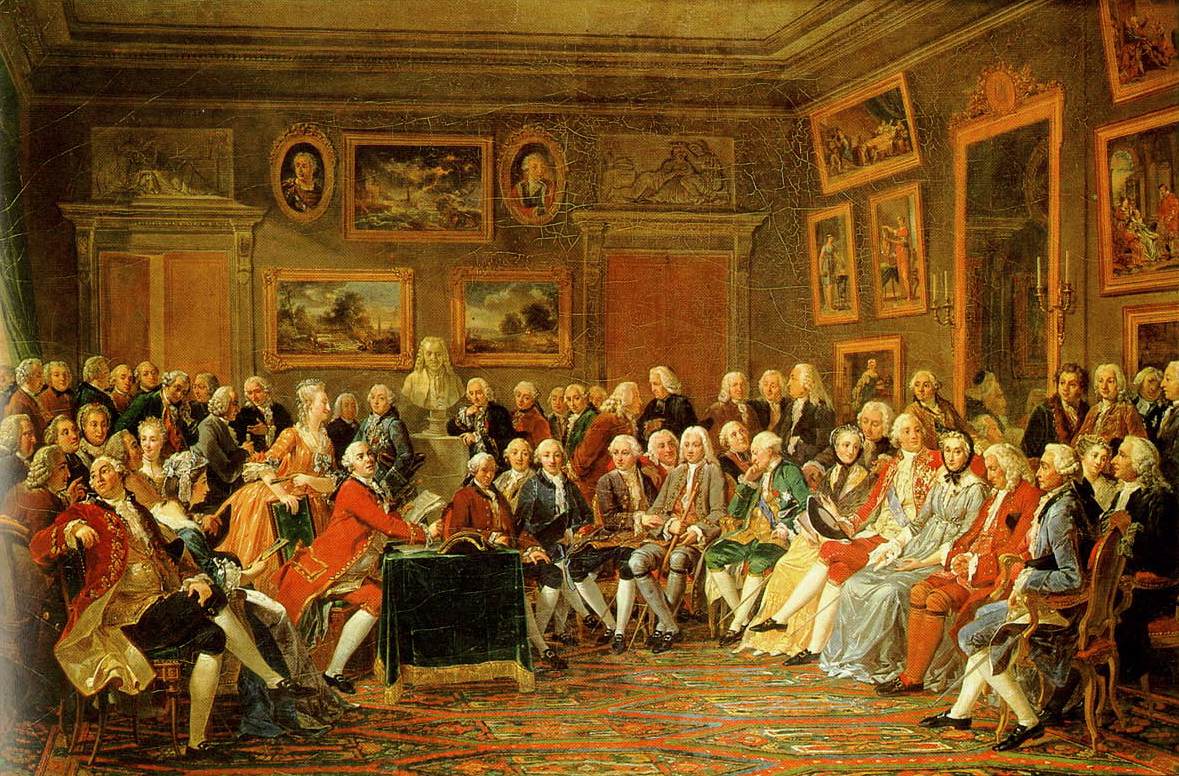
1730年,巴黎,一間富麗堂皇的沙龍裡,燭光將牆上的鏡子映得金光閃閃。十八歲的瑪格麗特坐在角落,她的母親要她來這裡找一門好親事,不是來聽那個瘦高的先生大聲嚷嚷的。那個人叫伏爾泰,他正在批評教會、批評國王、批評一切她從小被告知不可以批評的事物。「您怎麼敢?」她的表姐在她耳邊低聲問。瑪格麗特沒有回答,因為她的心裡突然升起一個她從來沒有想過的念頭:如果那些事情本來就不該是禁忌呢?那一夜,她沒有找到未婚夫,卻帶回家了一個問題,在此後的每一個夜晚折磨她、解放她:憑什麼?
In 1730, in a glittering Parisian salon, candlelight danced across the mirrors on the walls. Eighteen-year-old Marguerite sat in the corner. Her mother had brought her here to find a suitable husband, not to listen to that tall, thin gentleman making such a noise. His name was Voltaire, and he was criticizing the Church, criticizing the King, criticizing everything she had been told since childhood that one must never criticize. "How does he dare?" her cousin whispered in her ear. Marguerite did not answer. A thought had risen in her mind that she had never had before: what if those things were never supposed to be forbidden in the first place? That night, she went home without a husband — but with a question that would haunt and liberate her for the rest of her life: Why?
「啟蒙運動」(The Enlightenment),又稱「理性時代」(the Age of Reason),是一場從17世紀末延續至18世紀末的歐洲思想革命。它的核心主張只有一個,卻改變了一切:人類可以依靠自己的理性,而不是依靠宗教權威或君主的命令,來理解世界、改善社會、追求幸福。
The Enlightenment, also known as the Age of Reason, was a major intellectual revolution that spread across Europe from the late 17th century to the end of the 18th century. Its central idea was simple, yet it changed everything: human beings can rely on their own reason — not religious authority or royal commands — to understand the world, improve society, and pursue happiness.
啟蒙思想家們相信,就像牛頓用數學解開了天體運行的規律,人類也可以用同樣冷靜、系統的方式,來解開政治、道德、教育與社會的規律。這場運動催生了「自然權利」、「社會契約」、「三權分立」、「言論自由」等至今仍是現代民主政治基礎的觀念。沒有啟蒙運動,就不會有美國獨立宣言,不會有法國大革命,不會有現代人所熟悉的那個政治世界。
Enlightenment thinkers believed that just as Isaac Newton had used mathematics to unlock the laws of planetary motion, human beings could apply the same calm, systematic approach to unlock the rules governing politics, morality, education, and society. This movement gave birth to ideas such as natural rights, the social contract, the separation of powers, and freedom of speech — ideas that remain the foundation of modern democratic politics to this day. Without the Enlightenment, there would be no American Declaration of Independence, no French Revolution, and no political world as we know it today.
啟蒙運動的歷史背景與起源/Historical Background and Origins
(資料來源:Rocroi,elúltimo tercio, Augusto Ferrer-Dalmau)
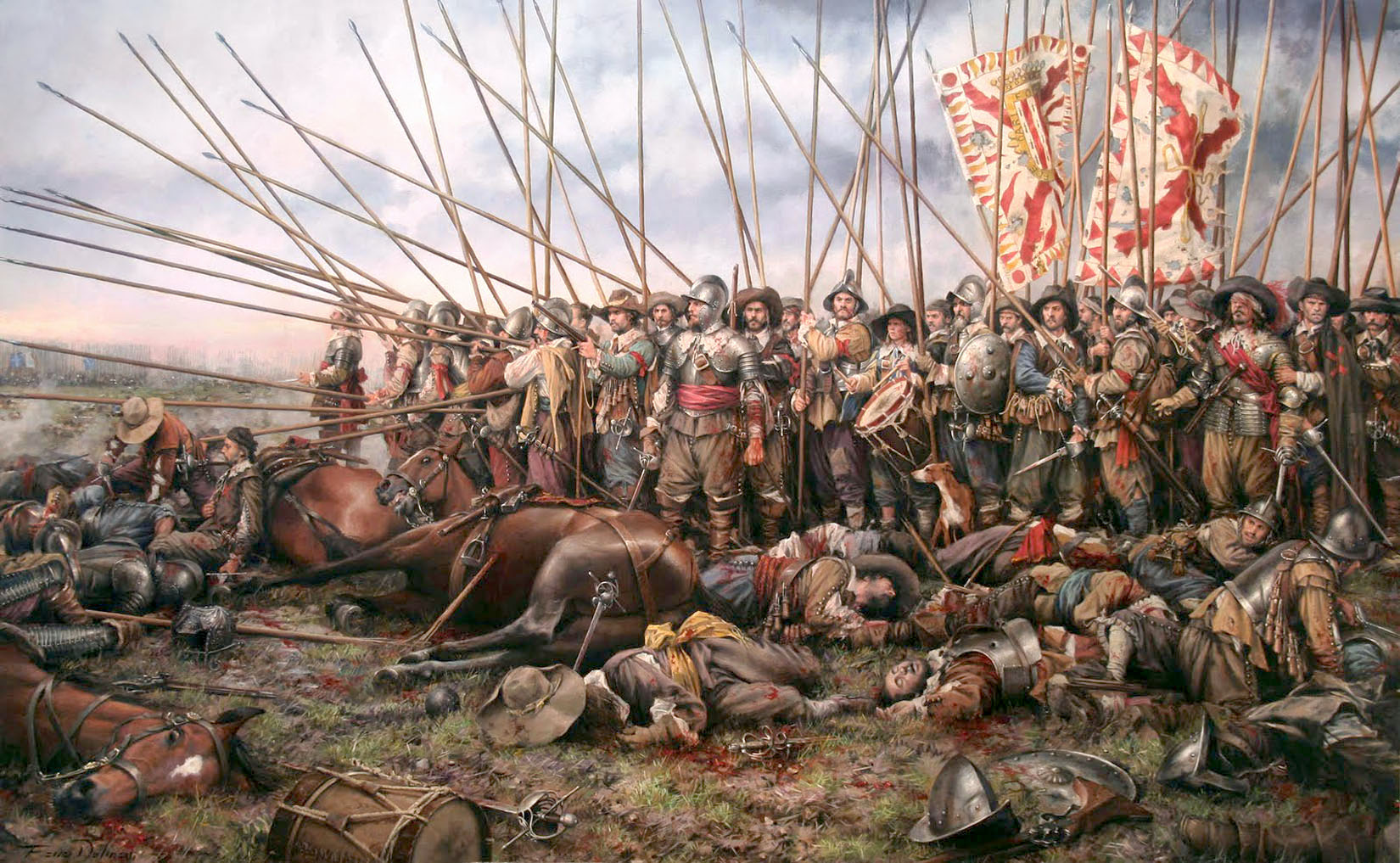
1648年,西發利亞條約剛剛簽署,三十年戰爭終於結束了。一個德意志小鎮的老鐵匠站在被戰火燒過的廢墟前,他的鐵舖已不復存在,他的兩個兒子死在不同的軍隊裡——一個為天主教打仗,一個為新教打仗,兩個都是奉上帝之名。他沒有眼淚,沒有憤怒,只是站在那裡,用沾滿灰塵的手慢慢撿起一塊破碎的十字架,然後輕輕地,把它放下了。那一刻,不是對上帝的背叛,而是一個疲憊的人,開始懷疑:如果上帝真的站在每一方,那麼上帝究竟站在哪一方?三十年後,那個老人的孫子成了一個哲學學生,他讀到了洛克的書,在頁邊寫下了三個字:「就是這個。」
In 1648, the Treaty of Westphalia had just been signed, and the Thirty Years' War was finally over. An old blacksmith stood before the ruins of a small German town burned by war. His forge was gone. His two sons were dead — one had fought for the Catholics, one for the Protestants, both in the name of God. He had no tears left, no anger. He simply stood there, slowly picking up a broken crucifix with ash-covered hands — and then quietly set it back down. It was not a rejection of God. It was the gesture of an exhausted man beginning to wonder: if God truly stood on every side, then whose side was God really on? Thirty years later, that old man's grandson became a philosophy student. When he read Locke's writings, he scrawled three words in the margin: "This is it."
要理解啟蒙運動為何在17至18世紀的歐洲興起,必須先理解那個時代的背景傷痕。在此之前的一百多年,歐洲被宗教戰爭撕裂。天主教與新教之間的衝突造成了無數的死亡與破壞,尤其是1618年至1648年的三十年戰爭,估計奪走了中歐將近三分之一的人口。當戰火平息,許多歐洲人開始問同一個問題:如果宗教是真理的唯一來源,為什麼它帶來的是如此巨大的殺戮?這個疑問,是啟蒙運動的心理起點。
To understand why the Enlightenment emerged in 17th and 18th century Europe, we must first understand the painful scars of that era. For more than a century before this period, Europe had been torn apart by religious wars. Conflicts between Catholics and Protestants caused enormous death and destruction — especially the Thirty Years' War of 1618–1648, which killed an estimated one-third of the population of Central Europe. When the fighting ended, many Europeans began asking the same question: if religion is the only source of truth, why has it produced such terrible slaughter? This question was the psychological starting point of the Enlightenment.
與此同時,科學革命正在悄悄改變人類看待世界的方式。哥白尼、伽利略、克卜勒已經用觀測與數學證明,宇宙的運作有其自然規律,不需要神的每日干預。1687年,牛頓出版《自然哲學的數學原理》,以三條運動定律和萬有引力理論,為整個物理世界提供了一套可以用理性推導的解釋。這本書給當時的知識分子帶來了巨大的震撼與鼓舞:如果自然世界的規律可以被人類理性所掌握,那麼社會、政治與道德的規律,是否也可以?
At the same time, the Scientific Revolution was quietly changing the way human beings understood the world. Copernicus, Galileo, and Kepler had used observation and mathematics to prove that the universe operates according to natural laws, without needing daily divine intervention. In 1687, Isaac Newton published his Principia Mathematica, providing a system of laws of motion and universal gravitation that offered a rational explanation for the entire physical world. This book had a tremendous impact on the intellectuals of the time: if the laws of the natural world could be understood by human reason, could the same be done for society, politics, and morality?
啟蒙運動最早的溫床,是17世紀末的英國與荷蘭——兩個當時歐洲相對寬容、商業繁榮的社會。在英國,光榮革命(1688年)確立了議會凌駕君權的原則,約翰·洛克在這樣的政治氛圍中寫下了他關於人的自然權利與政府合法性的哲學,點燃了啟蒙運動最初的火炬。到了18世紀,巴黎取代倫敦,成為啟蒙思想的世界中心。
The earliest cradle of the Enlightenment was late 17th-century England and the Netherlands — two of the relatively tolerant, commercially prosperous societies of Europe at the time. In England, the Glorious Revolution of 1688 established the principle that Parliament stood above royal power. In this political environment, John Locke wrote his philosophy of natural rights and the legitimacy of government, lighting the first torch of the Enlightenment. By the 18th century, Paris had replaced London as the world center of Enlightenment thought.
啟蒙運動的核心思想與理性主義/Core Ideas and Reason
(資料來源:Portret van René Descartes, Frans Hals)
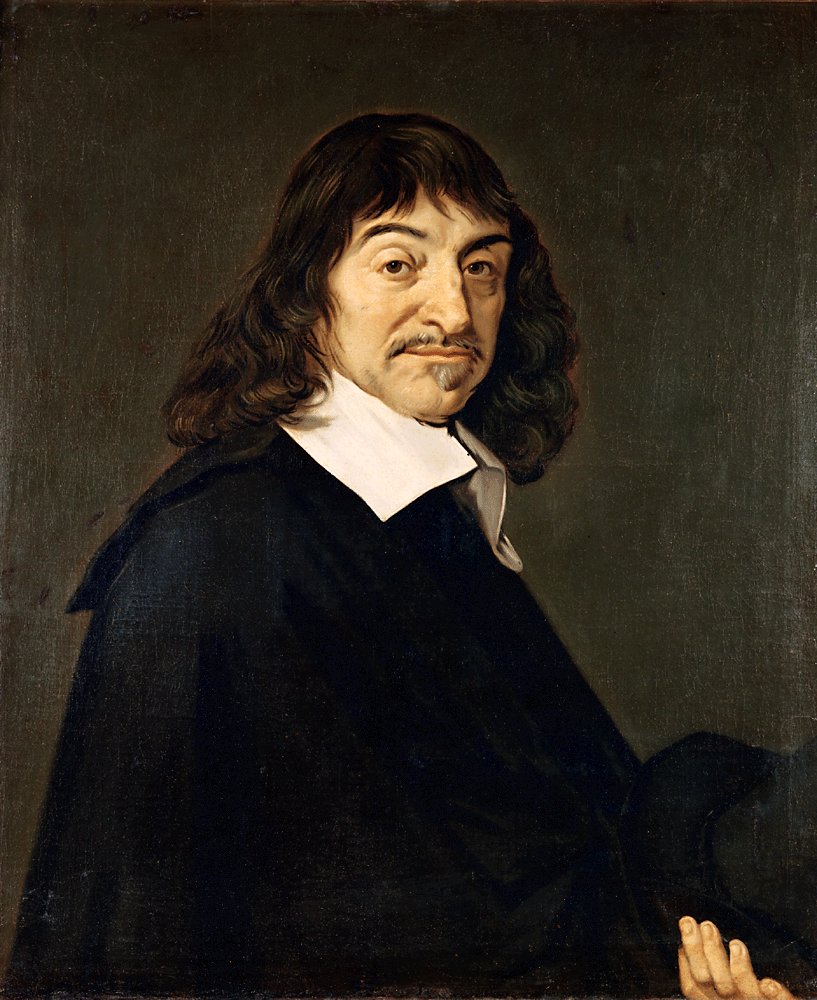
1619年冬天,德意志某個城鎮,一個年輕的法國軍官把自己關在一間有暖爐的小房間裡,決定做一件他這一生從未做過的事:懷疑所有他以為自己知道的事情。他的名字叫做笛卡兒,他正在問的問題是:有什麼東西,是我絕對無法懷疑的?他懷疑了感官,懷疑了記憶,懷疑了上帝,懷疑了整個外在世界——直到他發現了一件事:就算懷疑本身,也需要一個在懷疑的人。那個正在懷疑的我,是無法被懷疑的。他提起鵝毛筆,寫下了那個將改變西方哲學史的句子:「我思故我在。」窗外,雪還在下。但從那個暖爐旁的小房間裡,有一盞燈,亮起來了。
In the winter of 1619, in a small German town, a young French soldier locked himself in a tiny room with a heated stove and decided to do something he had never done before in his life: doubt everything he thought he knew. His name was Descartes, and the question he was asking was: is there anything that I absolutely cannot doubt? He doubted his senses, his memories, the existence of God, and the entire external world — until he discovered one thing he could not doubt: even doubt itself requires a person who is doing the doubting. That self who was doubting could not itself be doubted. He picked up his quill and wrote the sentence that would change the history of Western philosophy: "I think, therefore I am." Outside, snow was still falling. But from that small room beside the stove, a light had come on.
啟蒙運動的核心,是對「理性」(Reason)的近乎宗教式的信仰。啟蒙思想家們相信,人類生來就具備理性思考的能力,這種能力本身就是一種光——能夠照亮迷信、偏見與專制的黑暗角落。正是這種信念,賦予了這場運動它最常被提及的別稱:「光明時代」(the Age of Light)或「理性時代」(the Age of Reason)。啟蒙思想有幾個核心主張,形塑了此後數百年的西方思想與制度。
The core of the Enlightenment was an almost religious faith in Reason. Enlightenment thinkers believed that human beings are born with the ability to think rationally, and that this ability is itself a kind of light — capable of illuminating the dark corners of superstition, prejudice, and tyranny. This belief gave the movement its most familiar nickname: the Age of Light, or the Age of Reason. Enlightenment thought rested on several core principles that shaped Western thought and institutions for centuries to come.
理性優先:真理不應由宗教權威或傳統習俗決定,而應由人類理性的觀察與推理來確立,每一個主張都必須接受理性的檢驗。
Reason comes first: truth should not be decided by religious authority or tradition, but by human observation and logical thinking — every claim must be tested by reason.
自然法則:宇宙與人類社會都受自然規律所支配,這些規律是可以被發現和理解的,政治制度若違背這些自然法則,便沒有正當性。
Natural law: the universe and human society are both governed by natural laws that can be discovered and understood, and any political system that violates these laws has no legitimate authority.
進步的可能性:人類的處境不是固定不變的,透過教育、理性的制度設計與科學知識的累積,社會可以進步,人類的生活可以改善。
The possibility of progress: the human condition is not fixed, and through education, rational institutions, and the accumulation of scientific knowledge, society can improve and human life can get better.
個人尊嚴與自由:每個人天生擁有理性,因此天生擁有尊嚴,以及某些不可被剝奪的權利——包括生命、自由與追求幸福的權利。
Individual dignity and freedom: because every person is born with reason, every person is born with dignity and with certain rights that cannot be taken away — including the right to life, liberty, and the pursuit of happiness.
啟蒙運動專屬哲學家的時代/The Age of the Philosophers
1750年,巴黎,普羅科普咖啡館。一個來自瑞士的年輕人第一次走進這間咖啡館,他不知道在他坐下的這張桌旁,幾個月前伏爾泰和狄德羅剛剛為了百科全書大吵了一架。他只是要了一杯咖啡,拿出了稿紙,開始寫他的文章。隔壁桌,一個戴假髮的律師正在向朋友背誦孟德斯鳩的三權分立理論;角落裡,一個穿工人衣服的男人低著頭讀一本薄薄的小冊子,口唇翕動。那個來自瑞士的年輕人後來成為了盧梭。那間咖啡館,比那個時代任何一座大學,都更像一個改變世界的地方。
In 1750, at the Café de Procope in Paris, a young man from Switzerland walked in for the first time. He did not know that just a few months before, at the very table where he sat down, Voltaire and Diderot had argued furiously about the Encyclopédie. He simply ordered a coffee, took out his writing paper, and began. At the next table, a lawyer in a powdered wig was reciting Montesquieu's theory of the separation of powers to a friend. In the corner, a man in worker's clothing sat bent over a thin pamphlet, his lips moving silently. The young man from Switzerland later became Rousseau. That café was a place that changed the world more than any university of its age.
啟蒙運動的思想,主要由一群被後世稱為「哲士」(philosophes)的法國知識分子所推動與普及。這些人不是躲在象牙塔裡的純粹學者,而是積極介入公共生活、以筆桿對抗專制的思想鬥士。
The ideas of the Enlightenment were primarily promoted and spread by a group of French intellectuals later known as the philosophes. These were not pure scholars hiding in ivory towers — they were intellectual fighters who actively engaged with public life and used their writing as a weapon against tyranny.
(資料來源:portrait de Voltaire, Atelier de Nicolas de Largillière)
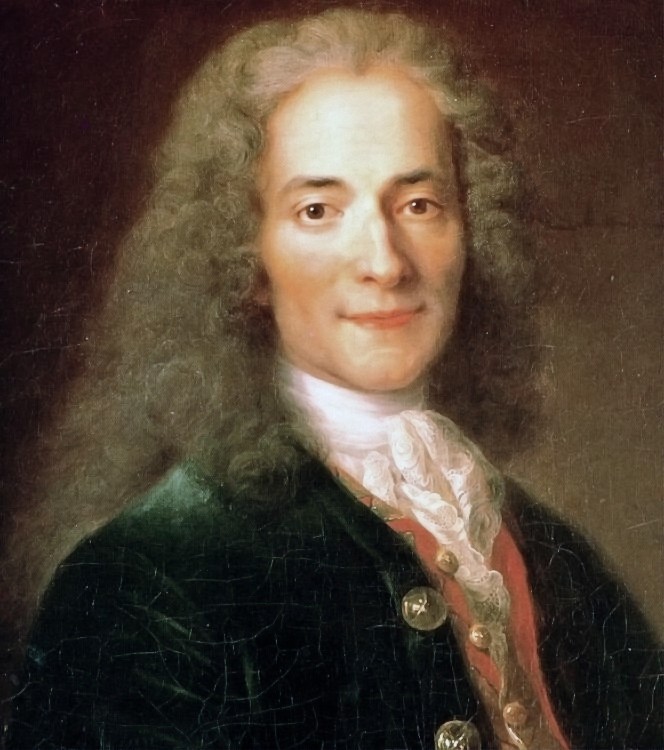
伏爾泰(Voltaire)是啟蒙運動最鮮明的代表人物。他以尖銳的諷刺與驚人的多產,批評教會的不寬容與封建制度的荒謬。他曾因言論被投入巴士底獄,被迫流亡英國,回來後反而把英國的相對自由與哲學思想帶回了法國。伏爾泰的一生本身,就是一場表演:他知道自己在做什麼,也知道代價,但他從未停筆。
Voltaire was the most recognizable figure of the Enlightenment. With sharp satire and extraordinary productivity, he attacked the Church's intolerance and the absurdities of the feudal system. He was once imprisoned in the Bastille for his words and forced into exile in England — but when he returned, he brought back England's relative freedom and its philosophical ideas. Voltaire's own life was a kind of performance: he knew what he was doing and what it would cost him, but he never stopped writing.
約翰·洛克(John Locke)雖是英國人,卻為整個啟蒙運動奠定了最重要的政治哲學基礎。他主張,人類在進入社會之前,天生擁有生命、自由與財產三種自然權利;政府的正當性來自被統治者的同意;若政府侵犯人民的自然權利,人民有權反抗。這些思想,後來幾乎被一字不差地寫進了美國獨立宣言。
John Locke, though English, provided the most important political philosophical foundation for the entire Enlightenment. He argued that before entering society, human beings are born with three natural rights: life, liberty, and property. The legitimacy of government comes from the consent of the governed, and if a government violates people's natural rights, the people have the right to resist. These ideas were later written almost word for word into the American Declaration of Independence.
孟德斯鳩(Montesquieu)在《論法的精神》中提出了三權分立的理論:立法、行政、司法三種權力必須相互獨立,才能防止任何一方的濫權。這個構想成為現代憲政民主制度設計的核心原則,直接影響了美國憲法的起草。
Montesquieu, in his work The Spirit of the Laws, proposed the theory of the separation of powers: legislative, executive, and judicial power must remain independent of one another in order to prevent any branch from abusing its authority. This idea became the central principle of modern constitutional democracy and directly influenced the drafting of the United States Constitution.
盧梭(Rousseau)是啟蒙運動中最複雜、最矛盾也最具爆炸性的聲音。他提出「社會契約論」,主張政府的一切權力來自人民的公意(general will);同時,他又以一種帶著浪漫色彩的衝動,批評文明本身對人性的腐化,認為人在自然狀態下本是善良的,是社會讓人墮落了。盧梭的思想,既催生了民主,也埋下了革命的烈焰。
Rousseau was the most complex, contradictory, and explosive voice in the Enlightenment. He proposed the Social Contract, arguing that all governmental authority derives from the general will of the people. At the same time, with a strongly Romantic impulse, he criticized civilization itself for corrupting human nature, arguing that people are naturally good and that it is society that makes them fall. Rousseau's ideas both gave birth to democracy and planted the seeds of revolution.
啟蒙運動下政治思想的革命/The Revolution of Political Thought
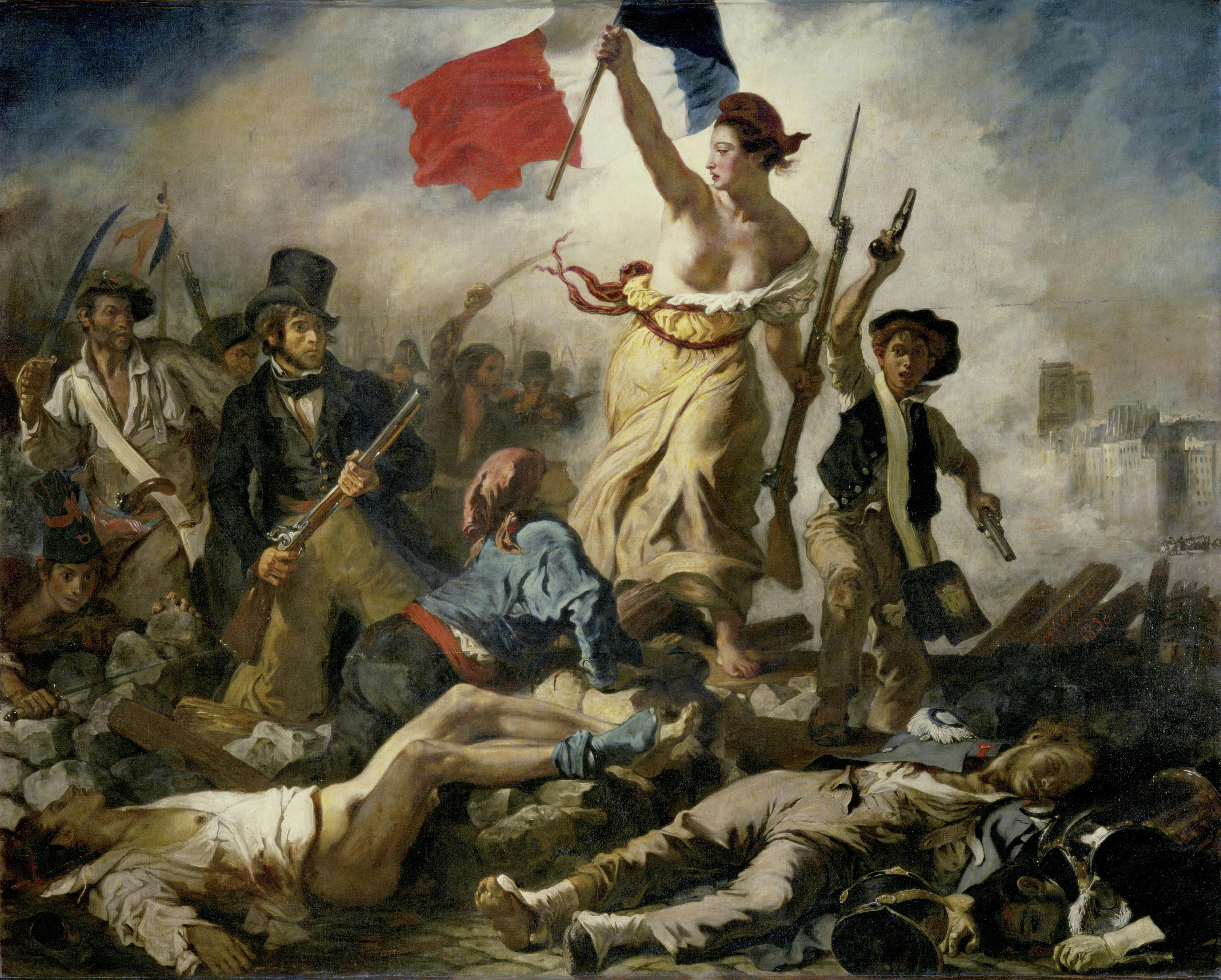
(資料來源:Le 28 Juillet. La Liberté guidant le peuple, Eugène Delacroix)
1776年7月4日深夜,費城,一間印刷坊的燈還亮著。排字工人班傑明趴在排版台前,一個字一個字地將那份文件嵌進金屬鉛字框裡。那份文件只有幾頁,但每排完一個句子,他都必須停下來重讀一遍,因為他從來沒見過這樣的文字。「我們認為這些真理是不言而喻的:所有人生而平等,他們被賦予若干不可讓渡的權利,其中包括生命、自由以及追求幸福的權利。」班傑明出生的時候是奴隸,十五年前才用積蓄贖回了自己的自由。他讀完這段話,放下了手中的鉛字,在黑暗裡站了很久,然後輕聲問了一個沒有人聽見的問題:「那,包括我嗎?」
On the night of July 4, 1776, in Philadelphia, the lights in a print shop were still burning. A typesetter named Benjamin leaned over his composing table, setting a document in metal type, one letter at a time. The document was only a few pages long — but after every sentence, he had to stop and read it again, because he had never seen words like these before. "We hold these truths to be self-evident: that all men are created equal, that they are endowed with certain unalienable Rights, that among these are Life, Liberty and the pursuit of Happiness." Benjamin had been born into slavery and had bought his own freedom fifteen years before using his savings. When he finished reading, he put down the type in his hands and stood in the darkness for a long time. Then, quietly, he asked a question that no one heard: "Does that include me?"
啟蒙運動的政治影響,最終以兩場震撼世界的革命具體呈現出來:美國獨立革命(1776年)與法國大革命(1789年)。
The political impact of the Enlightenment ultimately took the form of two earth-shaking revolutions: the American Revolution in 1776, and the French Revolution in 1789.
美國的建國者們——傑弗遜、富蘭克林、麥迪遜——幾乎人人都是啟蒙運動的信徒。美國獨立宣言是洛克自然權利理論的政治實踐:生命、自由、追求幸福的權利被宣稱為「不言而喻的真理」。美國憲法的三權分立架構,直接來自孟德斯鳩的設計。在這個意義上,美國這個國家,本身就是一個啟蒙運動的政治實驗。
America's founding fathers — Jefferson, Franklin, and Madison — were nearly all followers of Enlightenment thought. The Declaration of Independence was a direct political application of Locke's theory of natural rights: the rights to life, liberty, and the pursuit of happiness were declared "self-evident truths." The separation of powers in the U.S. Constitution came directly from Montesquieu's design. In this sense, the United States itself was a political experiment of the Enlightenment.
法國大革命則更加激烈,也更加血腥。盧梭的「公意」理論在1789年的巴黎街頭化為了現實——「自由、平等、博愛」的口號響徹雲霄,王室被推翻,貴族被送上斷頭台,舊制度徹底崩潰。然而,革命很快吞噬了它自己的孩子:恐怖統治時期,以自由之名,數以千計的人被送上了斷頭台,其中包括最初的革命者自身。這段歷史,讓後人不得不思考:理性與自由的理想,在現實的政治操作中,究竟能走多遠?
The French Revolution was more intense — and far more violent. Rousseau's theory of the "general will" became reality on the streets of Paris in 1789. "Liberty, Equality, Fraternity" rang out across the city, the monarchy was overthrown, aristocrats were sent to the guillotine, and the old order collapsed entirely. But the Revolution soon devoured its own children: during the Reign of Terror, thousands of people were sent to the guillotine in the name of liberty — including the original revolutionaries themselves. This history forces us to ask a difficult question: how far can the ideals of reason and freedom actually travel in the reality of political action?
啟蒙運動造就百科全書與知識的民主化/The Encyclopédie and the Democratization of Knowledge
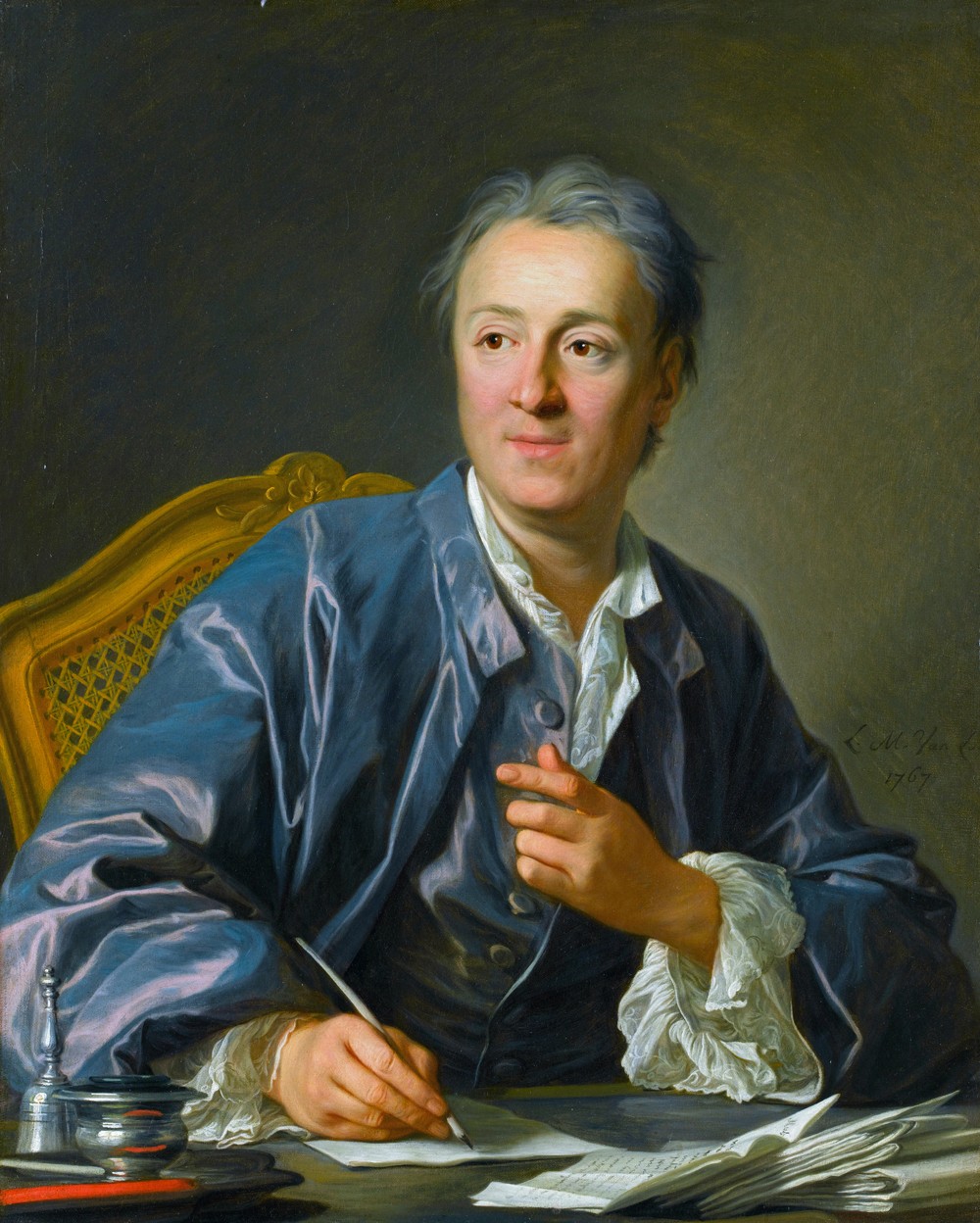
(資料來源:Denis Diderot, Louis-Michel van Loo)
1751年,巴黎,一間堆滿稿紙的小閣樓。狄德羅已經連續工作了十六個小時,他的眼睛充滿血絲,桌上的咖啡早已冰涼。他的共同主編達朗貝爾今天又一次提醒他,這個計畫已讓他們欠下了一屁股的債,隨時可能被政府查禁。狄德羅放下了鵝毛筆,望著窗外漆黑的巴黎街道,想到了一件事:那些街道上,有裁縫,有鐵匠,有麵包師,有清道夫——他們一生都在做自己的工作,卻從來沒有一本書認真記錄過他們的手藝,認真說過他們的技術值得被記下來、被尊重、被傳承。他重新拿起鵝毛筆。《百科全書》不只是知識的倉庫,他想,它是一份宣言:所有人的知識,都值得被寫下來。
In 1751, in a small Paris attic buried under stacks of manuscripts, Diderot had been working for sixteen straight hours. His eyes were red, and the coffee on his desk had long gone cold. His co-editor D'Alembert had reminded him again that day: this project had buried them in debt, and at any moment the government could shut it down. Diderot put down his quill and stared at the dark Paris streets below. He thought of the people on those streets — tailors, blacksmiths, bakers, street cleaners — who had spent their entire lives doing their work, yet for whom no book had ever seriously recorded their skills, or declared that their craft was worth preserving and passing on. He picked up his quill again. The Encyclopédie is not just a warehouse of knowledge, he thought. It is a declaration: every person's knowledge is worth writing down.
啟蒙運動最偉大的集體成就,也許是那部由狄德羅(Denis Diderot)與達朗貝爾(Jean le Rond d'Alembert)主編、歷時二十餘年、收錄了超過七萬篇文章的《百科全書》(Encyclopédie,1751–1772)。這部鉅著的野心,遠不只是匯集知識——它要將一切人類知識,從哲學到鞋匠的技藝,從天文學到廚房的料理方式,全部平等地呈現出來,打破知識貴族化的壁壘。
The Enlightenment's greatest collective achievement may have been the Encyclopédie — edited by Denis Diderot and Jean le Rond d'Alembert, completed over more than twenty years, and containing over seventy thousand articles (1751–1772). The ambition of this massive work went far beyond collecting knowledge. It aimed to present all human knowledge on equal terms — from philosophy to the skills of a shoemaker, from astronomy to kitchen cooking — breaking down the walls that kept knowledge in the hands of the privileged few.
《百科全書》的出版過程充滿阻礙:它被天主教會列為禁書,法國政府多次試圖查禁,出版商也幾度在壓力下試圖放棄。但狄德羅咬牙撐了下去,秘密修改、繼續出版。
The publication of the Encyclopédie was full of obstacles. It was placed on the Catholic Church's list of forbidden books, the French government repeatedly attempted to ban it, and publishers nearly abandoned the project several times under pressure. But Diderot held on, secretly revising and continuing to publish.
《百科全書》最終成為有史以來最重要的出版計畫之一,它讓啟蒙思想觸及了法國社會各個角落,也讓那個時代的讀書人意識到:知識本身是一種政治力量。伏爾泰、盧梭、孟德斯鳩都是《百科全書》的撰稿人。這本書就像一個思想市集,把整整一個時代最銳利的頭腦聚集在同一個計畫之下,共同宣告:世界是可以用理性來理解的,舊有的權威不再是唯一的答案。
The Encyclopédie ultimately became one of the most important publishing projects in history. It brought Enlightenment ideas into every corner of French society, and helped the educated readers of that era realize: knowledge itself is a form of political power. Voltaire, Rousseau, and Montesquieu were all contributors to the Encyclopédie. The book functioned like a marketplace of ideas, bringing together the sharpest minds of an entire generation under one project, and jointly declaring: the world can be understood through reason, and old authority is no longer the only answer.
啟蒙運動向外擴散/The Spread of the Enlightenment
1762年,聖彼得堡,宮殿裡的一間書房。剛剛登上俄羅斯皇位的葉卡捷琳娜二世,在燭光下讀完了伏爾泰寄來的最新一封信。伏爾泰在信裡,以他一貫的恭維與機鋒,稱她為「北方的哲人君主」。她放下信,輕輕地笑了——她知道那是半真半假的奉承,也知道伏爾泰的每一封信其實都是一次試探:你真的願意改革嗎?她確實廢除了一些酷刑,確實建立了一些學校,確實在信裡用啟蒙的語言談論自由與理性。但她的農奴依然是農奴,她的王位依然靠武力鞏固,那些窗戶後面的俄羅斯,依然是那個古老而黑暗的俄羅斯。後來,歷史學家稱她為「開明專制」的代表——那也許是啟蒙運動最誠實的一個諷刺:理性的語言,一旦進了宮殿,有時候就只剩語言了。
In 1762, in a palace study in Saint Petersburg, Catherine II — who had just taken the Russian throne — finished reading the latest letter from Voltaire by candlelight. In the letter, Voltaire had called her, with his usual mix of flattery and wit, "the philosopher-queen of the North." She put the letter down and smiled quietly. She knew the praise was half sincere and half strategic, and that every letter from Voltaire was a test: are you truly willing to reform? She did abolish some forms of torture. She did establish some schools. She did use the language of the Enlightenment — freedom and reason — in her correspondence. But her serfs remained serfs. Her throne was still held by force. The Russia behind those palace windows was still the same ancient, dark Russia. Later, historians would call her a model of "enlightened despotism" — perhaps the most honest irony the Enlightenment ever produced: once the language of reason entered the palace, sometimes only the language remained.
啟蒙思想從法國出發,迅速向歐洲各地與大西洋彼岸擴散,但它在每一個地方落地的方式,都與當地的歷史土壤發生了複雜的交融與變形。
Enlightenment ideas spread rapidly from France to the rest of Europe and across the Atlantic, but the way they took root in each place was shaped — and sometimes distorted — by the local historical conditions they encountered.
在英國,啟蒙思想較為溫和,更強調漸進式的改革而非革命。洛克、休謨(David Hume)、亞當·斯密(Adam Smith)等思想家,發展出了以經驗主義為基礎的哲學,以及自由市場的經濟理論。斯密在《國富論》中提出的「看不見的手」,至今仍是現代經濟學的基礎概念之一。
In England, Enlightenment thinking was relatively moderate, emphasizing gradual reform rather than revolution. Thinkers such as Locke, David Hume, and Adam Smith developed a philosophy rooted in empiricism and a theory of free-market economics. Smith's concept of the "invisible hand" — introduced in The Wealth of Nations — remains one of the foundational ideas of modern economics.
在德國,啟蒙運動被稱為 Aufklärung,由萊布尼茲(Leibniz)、腓特烈大帝(Frederick the Great)以及最終集啟蒙哲學之大成的康德(Immanuel Kant)所代表。康德著名的論文〈什麼是啟蒙?〉開頭寫道:「啟蒙就是人從他自己造成的不成熟狀態中走出來。」這句話,也許是整個啟蒙運動最精煉的自我定義。
In Germany, the Enlightenment was known as the Aufklärung, represented by Leibniz, Frederick the Great, and ultimately Immanuel Kant, who brought Enlightenment philosophy to its highest point. Kant's famous essay "What Is Enlightenment?" opened with the words: "Enlightenment is man's emergence from his self-imposed immaturity." This sentence may be the most precise self-definition the Enlightenment ever produced.
在北美殖民地,啟蒙思想遇到了最肥沃的土壤。傑弗遜的書架上擺著洛克、孟德斯鳩與伏爾泰,富蘭克林與伏爾泰在巴黎的沙龍裡相遇。1776年的獨立宣言與1787年的美國憲法,是啟蒙政治哲學有史以來最成功的制度化實踐。
In the American colonies, Enlightenment ideas found their most fertile ground. Jefferson's bookshelf held Locke, Montesquieu, and Voltaire. Franklin and Voltaire met in the salons of Paris. The Declaration of Independence in 1776 and the U.S. Constitution of 1787 were the most successful institutional realizations of Enlightenment political philosophy in history.
啟蒙運動的擴散,也有賴於新的社交空間與傳播媒介。沙龍(salon)是18世紀巴黎知識交流的主要場所:有教養的女主人邀請哲學家、藝術家、政治家聚集在她的客廳裡,自由討論思想。咖啡館(coffeehouse)在英國扮演了相似的角色——在一杯咖啡的時間裡,律師、商人、學者並肩而坐,交換意見,閱讀報紙。這些空間創造了一種前所未有的「公共領域」:人們可以在國家與教會的控制之外,自由地表達與辯論。
The spread of the Enlightenment also depended on new social spaces and means of communication. The salon was the primary gathering place for intellectual exchange in 18th-century Paris: educated hostesses invited philosophers, artists, and politicians into their drawing rooms for free and open discussion of ideas. The coffeehouse played a similar role in England — over a cup of coffee, lawyers, merchants, and scholars sat side by side, exchanging opinions and reading newspapers. These spaces created a kind of public sphere that had never existed before: people could express and debate ideas freely, outside the control of the state and the Church.
啟蒙運動的影響與遺產/The Legacy of the Enlightenment
多年以後,那位老教授又站在台灣某所大學的講台上——這一次,他講的是啟蒙運動。台下,一個女學生正在滑手機,刷到了一則新聞:某個國家的政府剛剛宣布,限制某個網路平台上的言論。她的手指頓了一下,然後又繼續滑。教授在黑板上寫下了一句康德的話:「要有勇氣運用你自己的理解!」——Sapere aude。他轉過身,望著那個還在滑手機的女學生,想起了三百年前那些坐在巴黎咖啡館裡的人,他們在毫無保護的情況下,把自己的名字印在那些危險的書頁上。他沒有說話,只是靜靜地等著。終於,她抬起頭,看見了黑板上的那句話。她沒有放下手機——但她把那則新聞截了圖,存進了手機裡。也許,那就已經夠了。
Many years later, the old professor stood again at the front of a university classroom in Taiwan — this time to lecture on the Enlightenment. In the back row, a young woman was scrolling through her phone. She had come across a news item: a government somewhere had just announced new restrictions on speech on an internet platform. Her finger paused for a moment — and then kept scrolling. The professor wrote a sentence from Kant on the blackboard: "Have the courage to use your own understanding!" — Sapere aude. He turned and looked at the young woman still on her phone. He thought of the people three hundred years ago who had sat in Parisian cafés, printing their names on dangerous pages without any protection at all. He didn't say anything. He just waited quietly. At last, she looked up and saw the words on the board. She didn't put her phone down — but she took a screenshot of the news article and saved it. Maybe, he thought, that was already enough.
啟蒙運動的遺產,是現代世界最根本的政治、法律與道德語彙。我們今天所說的人權、民主、言論自由、政教分離、法律面前人人平等——這些概念,在啟蒙運動之前,沒有一個是普通人可以理所當然主張的。
The legacy of the Enlightenment is the most fundamental political, legal, and moral vocabulary of the modern world. Human rights, democracy, freedom of speech, the separation of church and state, equality before the law — none of these were ideas that ordinary people could take for granted before the Enlightenment.
啟蒙思想直接推動了現代民主國家的建立。美國憲法與法國《人權宣言》是最直接的制度產物,而它們所確立的基本原則,後來成為全世界憲政民主制度的模板。兩百多年後,當台灣在1990年代完成民主化轉型,當各國憲法中寫入基本人權保障,其思想源頭,都可以追溯到那個在巴黎咖啡館與沙龍裡慷慨激昂辯論的時代。
Enlightenment thought directly drove the establishment of modern democratic states. The U.S. Constitution and the French Declaration of the Rights of Man were its most direct institutional products, and the principles they established later became a template for constitutional democracies around the world. More than two hundred years later, when Taiwan completed its democratic transition in the 1990s, and when constitutions around the world enshrined the protection of basic human rights, the intellectual origins of those documents could all be traced back to the age of passionate debate in Parisian cafés and salons.
啟蒙運動也奠定了現代科學精神的基礎:觀察、實驗、質疑、修正。它奠定了現代教育的理念:教育不只是知識的灌輸,而是培養獨立思考能力的過程。它奠定了現代新聞自由的精神:社會需要一個不受政府控制的公共空間,讓不同聲音可以被聽見。
The Enlightenment also established the foundation of the modern scientific spirit: observe, experiment, question, revise. It laid the groundwork for modern educational philosophy: education is not simply the filling of students with facts, but the cultivation of independent thinking. It established the spirit of modern press freedom: society needs a public space, free from government control, where different voices can be heard.
當然,啟蒙運動也有它的矛盾與局限。那些高喊「所有人生而平等」的啟蒙思想家,許多同時是奴隸主;那些主張「自然權利」的革命者,大多不將女性、工人與殖民地人民包括在內。啟蒙的「理性」在殖民主義的旗幟下,也曾被用來為帝國侵略提供藉口:「落後的民族需要被文明與理性所教化。」這些矛盾,是啟蒙遺產最沉重的部分,也是今天的我們必須繼續面對與反思的課題。
Of course, the Enlightenment also had its contradictions and limitations. Many of the thinkers who proclaimed "all men are created equal" were themselves slaveholders. The revolutionaries who argued for "natural rights" mostly excluded women, workers, and colonized peoples. The Enlightenment's "reason," under the flag of colonialism, was also used to justify imperialist aggression: "backward peoples need to be civilized and guided by rational, enlightened nations." These contradictions are the heaviest part of the Enlightenment's legacy, and they are questions that we must continue to face and reflect on today.
那麼,身為台灣的大學生,啟蒙運動離我們有多遠?其實,從來就沒有遠過。每當我們理所當然地說「我有表達的自由」,每當我們期待法律公正地對待每一個人,每當我們質疑一個政策而不必為此承擔後果——我們都站在那些巴黎咖啡館裡的人的肩膀上。啟蒙運動告訴我們:理性不是天賦,是選擇;自由不是禮物,是爭取來的;而勇敢地問「為什麼」,永遠是改變世界的第一步。
As university students in Taiwan, how far away is the Enlightenment? The truth is — it was never far. Every time we take for granted the freedom to express our views, every time we expect the law to treat every person fairly, every time we question a policy without fear — we are standing on the shoulders of those people in the Parisian cafés. The Enlightenment tells us: reason is not something we are born with — it is a choice we make. Freedom is not something handed to us — it is something fought for. And the courage to ask "Why?" is always the first step toward changing the world.