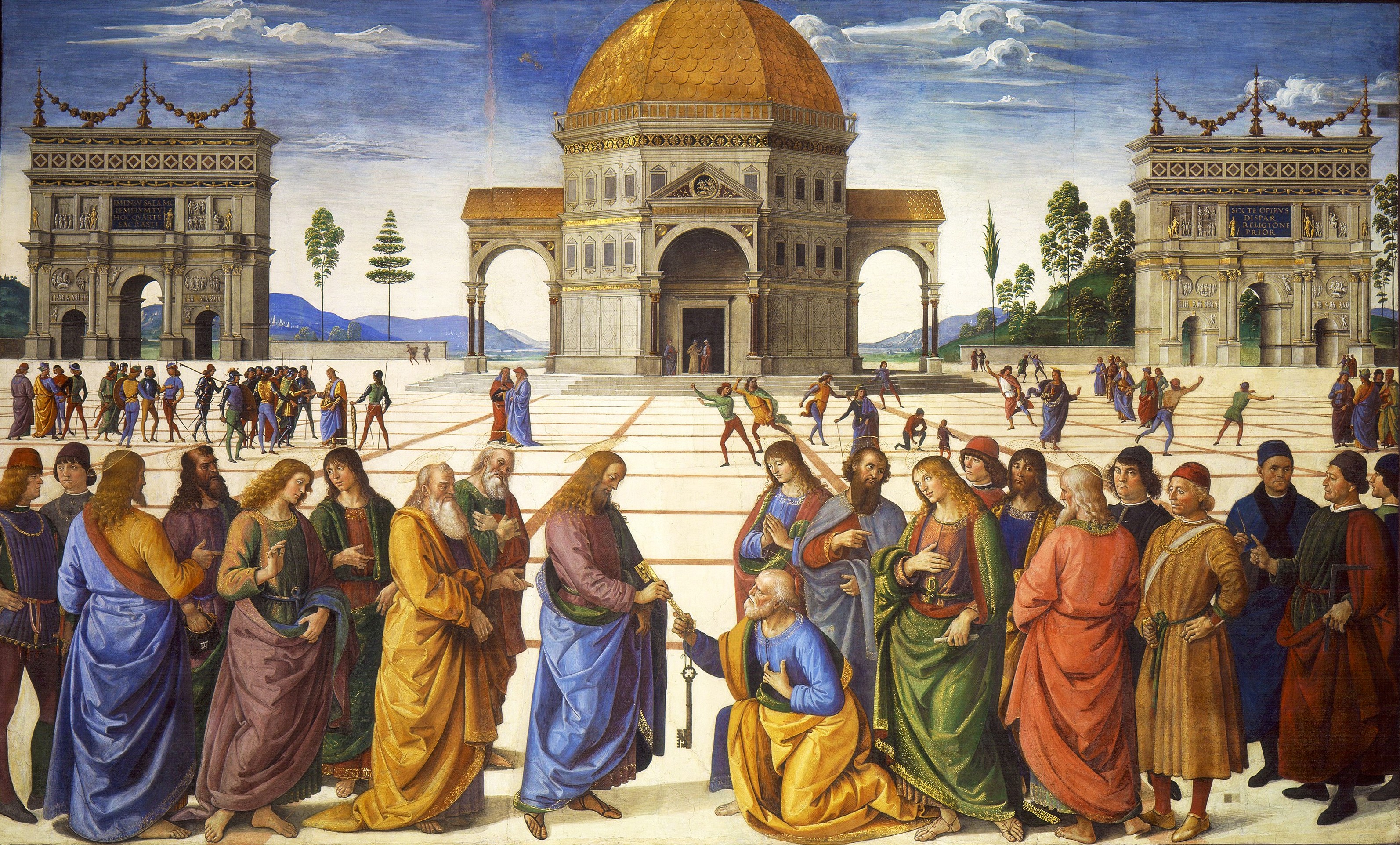
1350年,一位年邁的佛羅倫斯修士在修道院的地窖裡整理舊物,偶然翻出一捲塵封已久的羊皮紙卷軸。他以為那不過是另一份無聊的教會帳冊,卻在昏黃的燭火下,看見了久違的拉丁文詩句——那是古羅馬詩人奧維德的詩。他的手微微顫抖,不是因為寒冷,而是因為那些文字裡有一種他從未在禱告中感受過的東西:對人的讚美,對生命的渴望,對美的無限迷戀。那一夜,他一個人在地窖裡讀到天亮,眼眶濕潤,卻說不清自己在哭什麼。也許,那就是文藝復興最初的火星——一個人,在黑暗裡,重新發現了另一個更光亮的世界。
In 1350, an elderly Florentine monk was sorting through old storage in a monastery cellar when he discovered a dusty, forgotten scroll. He assumed it was just another dull Church record — but in the dim candlelight, he recognized the Latin verses of Ovid, the ancient Roman poet. His hands trembled — not from the cold, but because those words carried something he had never felt in prayer: a celebration of people, a hunger for life, an endless love of beauty. That night, alone in the cellar, he read until dawn, his eyes wet with tears he could not explain. Perhaps that moment was the first spark of the Renaissance — one person, alone in the dark, rediscovering a brighter world that had always been there, waiting.
「文藝復興」這個詞來自法語「Renaissance」,字面意思是「再生」或「重生」。它指的是大約從14世紀延續至17世紀,發生在歐洲的一場深刻的文化與思想運動。在這三百年間,歐洲人重新燃起對古希臘與羅馬文明的熱情,開始用全新的眼光看待人類自身的價值與潛能。文藝復興的核心精神,是一種被稱為「人文主義(Humanism)」的思想——它主張人本身就有尊嚴、有理性、有創造力,不需要永遠活在神的陰影之下。這場運動徹底改變了歐洲的藝術、文學、科學與哲學,也為現代世界奠定了基礎。
The word "Renaissance" comes from French, and it means "rebirth" or "new life." It refers to a major cultural and intellectual movement that began in Europe around the 14th century and lasted until the 17th century. During these three hundred years, Europeans rediscovered their passion for ancient Greek and Roman civilization and began to see human beings in a completely new way. The central idea of the Renaissance was a philosophy called Humanism — the belief that people have dignity, reason, and the ability to create, and do not need to live entirely in the shadow of religion. This movement transformed European art, literature, science, and philosophy, and laid the foundation for the modern world.
文藝復興的歷史背景與起源/Historical Background and Origins
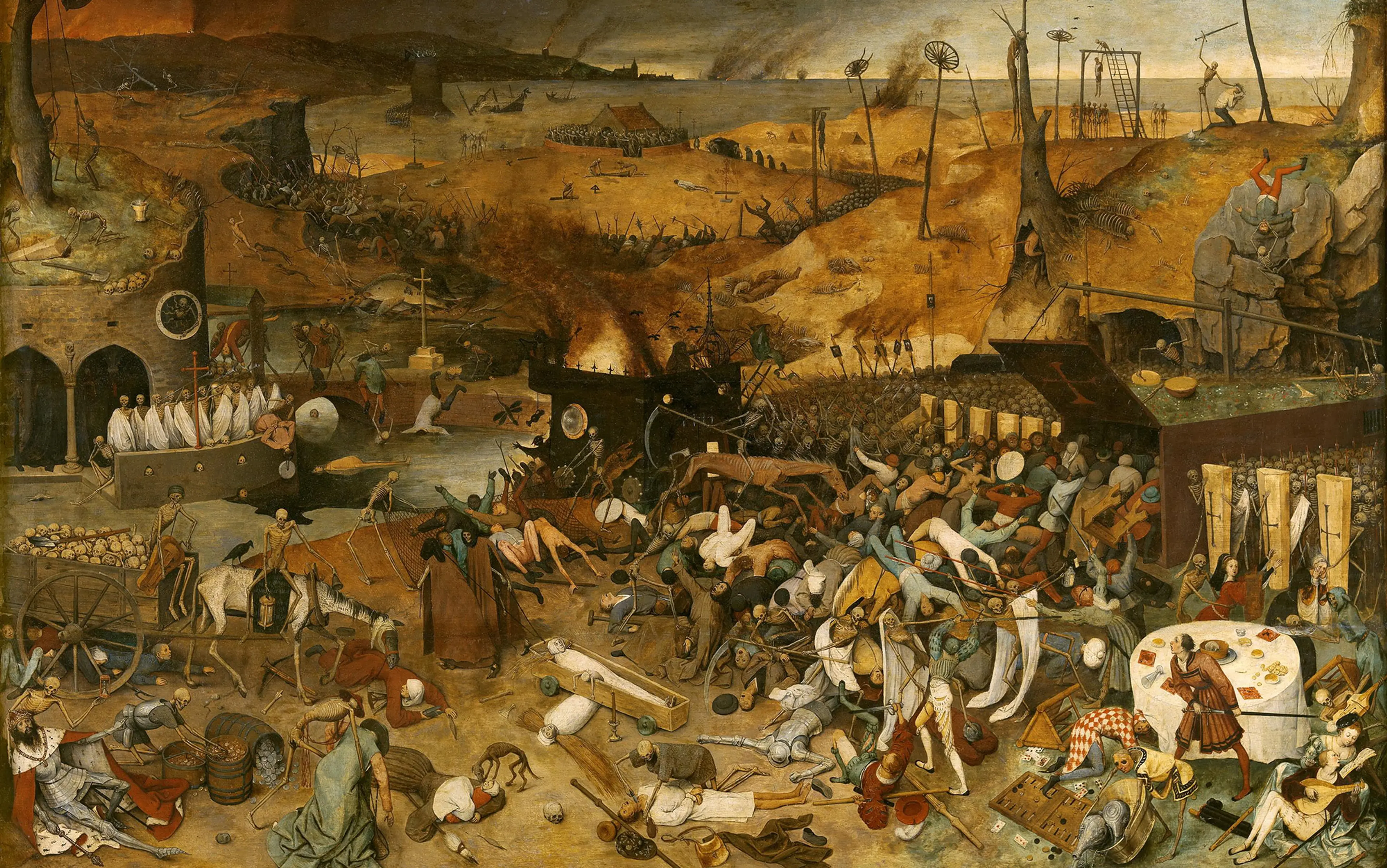
(資料來源:The Triumph of Death, Pieter Bruegel)
1348年,黑死病剛剛掠過佛羅倫斯。一個名叫喬凡尼的年輕皮革商人站在城市邊緣的亂葬崗前,望著那些被草草掩埋的屍體——那裡有他的母親,有他七歲的女兒,有他最要好的夥伴。神父說:「這是上帝的旨意,你要謙卑接受。」但喬凡尼沒有跪下,他只是靜靜地看著遠方,心裡只有一個問題在燃燒:「如果真有一個慈悲的上帝,祂怎麼可能允許這一切發生?」 這個問題沒有讓他失去信仰,卻讓他開始懷疑——那些握著真理的人,真的掌握真理嗎?許多年後,歷史學家說,文藝復興就是從這樣的問題裡長出來的。
In 1348, the Black Death had just swept through Florence. A young leather merchant named Giovanni stood at the edge of the city, staring at a field of hasty graves. His mother was buried there. His seven-year-old daughter. His closest friend. A priest told him: "This is God's will. Accept it with humility." But Giovanni did not kneel. He simply stared into the distance, one question burning inside him: "If God is truly merciful, how could He allow all of this?" The question did not destroy his faith — but it made him doubt the people who claimed to hold all the answers. Many years later, historians would say: the Renaissance grew from exactly this kind of question.
要理解文藝復興為何會發生,我們必須先認識它之前那個時代——中世紀。在中世紀的歐洲,天主教會幾乎掌控了所有的知識與權力。書籍由教士保管,教育以神學為核心,質疑教義可能招來迫害甚至死亡。14世紀中期,一場毀滅性的黑死病橫掃歐洲,奪走了近三分之一的人口,人們開始懷疑:如果上帝真的全能,為什麼讓這場災難發生?這種懷疑的種子,悄悄動搖了教會的絕對權威。
To understand why the Renaissance happened, we must first look at the period before it — the Middle Ages. In medieval Europe, the Catholic Church controlled nearly all knowledge and power. Books were kept by priests, education focused on religious studies, and questioning Church teachings could lead to punishment or even death. Then, in the mid-14th century, a devastating plague known as the Black Death swept across Europe, killing nearly one-third of the population. People began to ask: if God is truly all-powerful, why did He allow such a disaster? These questions quietly began to shake the Church's absolute authority.
文藝復興之所以從義大利率先展開,並非偶然。義大利的城市——尤其是佛羅倫斯、威尼斯與羅馬——因地中海貿易而累積了龐大財富。富裕的商人階級有能力資助藝術家與學者,讓思想得以自由發展。義大利本身也是古羅馬文明的故土,廢墟、雕像、古代文獻隨處可見,這些遺跡不斷提醒著人們:曾經有過一個偉大而以人為本的文明。在這些條件的推動下,一個叫做麥地奇家族(Medici Family)的佛羅倫斯銀行世家成為了文藝復興最重要的贊助者。他們用金錢支持達文西、米開朗基羅、波提切利等無數藝術家,讓佛羅倫斯成為那個時代的文化首都。
It was no accident that the Renaissance began in Italy. Italian cities — especially Florence, Venice, and Rome — had accumulated enormous wealth through Mediterranean trade. A prosperous merchant class had the financial means to support artists and scholars, allowing ideas to develop freely. Italy was also the homeland of ancient Roman civilization, where ruins, statues, and old manuscripts were everywhere. These remains constantly reminded people that a great, human-centered civilization had once existed. Driven by these conditions, a powerful banking family from Florence — the Medici Family — became the most important patrons of the Renaissance. They used their wealth to support countless artists, including Leonardo da Vinci, Michelangelo, and Botticelli, turning Florence into the cultural capital of the age.
文藝復興催生人文主義思想/Humanist Philosophy
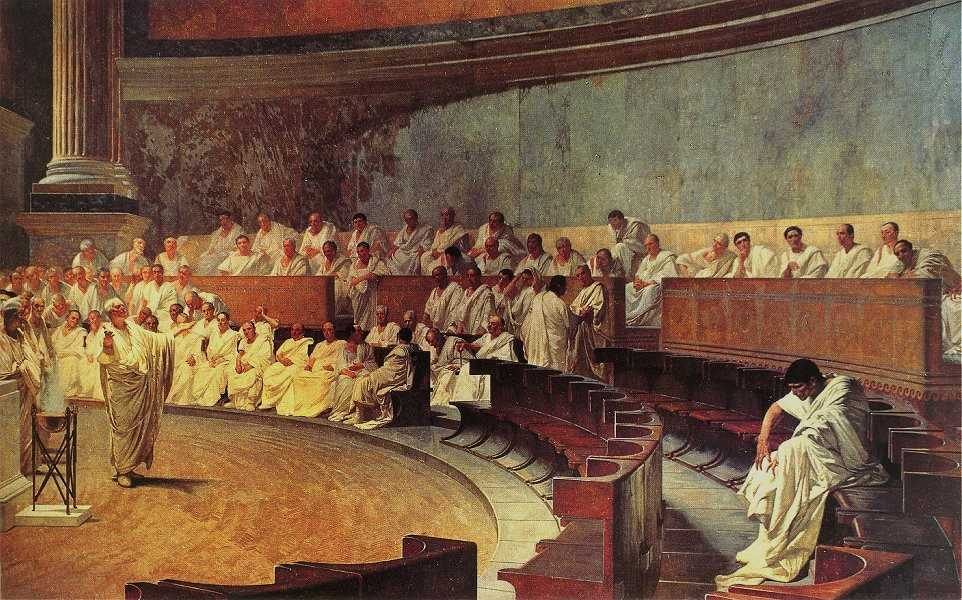
(資料來源:Cicero Denounces Catiline in the Roman Senate, Cesare Maccari)
1396年,一個十五歲的佛羅倫斯男孩第一次走進了一位人文主義學者的課堂。那位老師沒有講神學,沒有讀聖經,他打開的是西塞羅的演講稿,然後問了學生一個從未有老師問過他的問題:「你覺得,一個人活在這個世界上,最重要的事是什麼?」男孩愣住了。他從小被告知答案只有一個:服從上帝,等待天堂。但那天下午,窗外的光照進來,他第一次意識到,也許「現在這一生」也值得好好想清楚。那個男孩後來成為一名詩人,他寫道:「我曾以為人生是通往天堂的等待室,直到那一個下午,我才知道,人生本身就是目的地。」
In 1396, a fifteen-year-old Florentine boy walked into a Humanist scholar's classroom for the first time. The teacher did not open the Bible or lecture on theology. Instead, he unrolled a speech by Cicero and asked the students a question no teacher had ever asked him before: "What do you think is the most important thing for a person to do while alive in this world?" The boy froze. Since childhood, he had been told there was only one answer: obey God and wait for heaven. But that afternoon, as light poured through the window, he realized for the first time that perhaps this life, right now, was also worth thinking about carefully. That boy later became a poet, and wrote: "I once believed life was a waiting room for heaven — until that afternoon, when I understood that life itself is the destination."
中世紀的世界觀以「神」為宇宙的中心。人類被視為渺小、罪惡、需要救贖的存在。然而,文藝復興的人文主義思想卻大膽地將「人」推上了舞台的中央。人文主義者相信,人類天生具備理性與道德能力,可以透過學習、思考與創造來實現自身的潛能。這不是要否定宗教,而是主張:即使在信仰上帝的同時,人也可以、也應該好好地活在這個世界上,探索知識、享受美麗、追求榮耀。
The medieval worldview placed God at the center of the universe. Human beings were seen as small, sinful creatures in need of salvation. However, the Humanist philosophy of the Renaissance boldly moved people to the center of the stage. Humanists believed that human beings naturally possess reason and moral ability, and can fulfill their potential through learning, thinking, and creating. This was not a rejection of religion, but rather an argument that even while believing in God, people could and should live fully in this world — exploring knowledge, appreciating beauty, and pursuing excellence.
這樣的思想直接影響了教育方式。文藝復興之前,大學課程以神學為重心。人文主義者則力推一套新的課程,稱為「人文學科(the humanities)」,涵蓋文學、歷史、修辭、哲學與語言。他們相信,接受這樣的教育,才能培養出真正有智慧、有品德、能對社會做出貢獻的人。這個教育理念,直到今天仍深深影響著西方大學的課程設計。
This way of thinking directly changed education. Before the Renaissance, university courses focused mainly on theology. Humanists pushed for a new curriculum called the humanities, which included literature, history, rhetoric, philosophy, and languages. They believed that this kind of education would produce people who were truly wise, moral, and capable of contributing to society. This educational philosophy continues to influence Western university programs to this day.
文藝復興帶來藝術革命/The Art Revolution
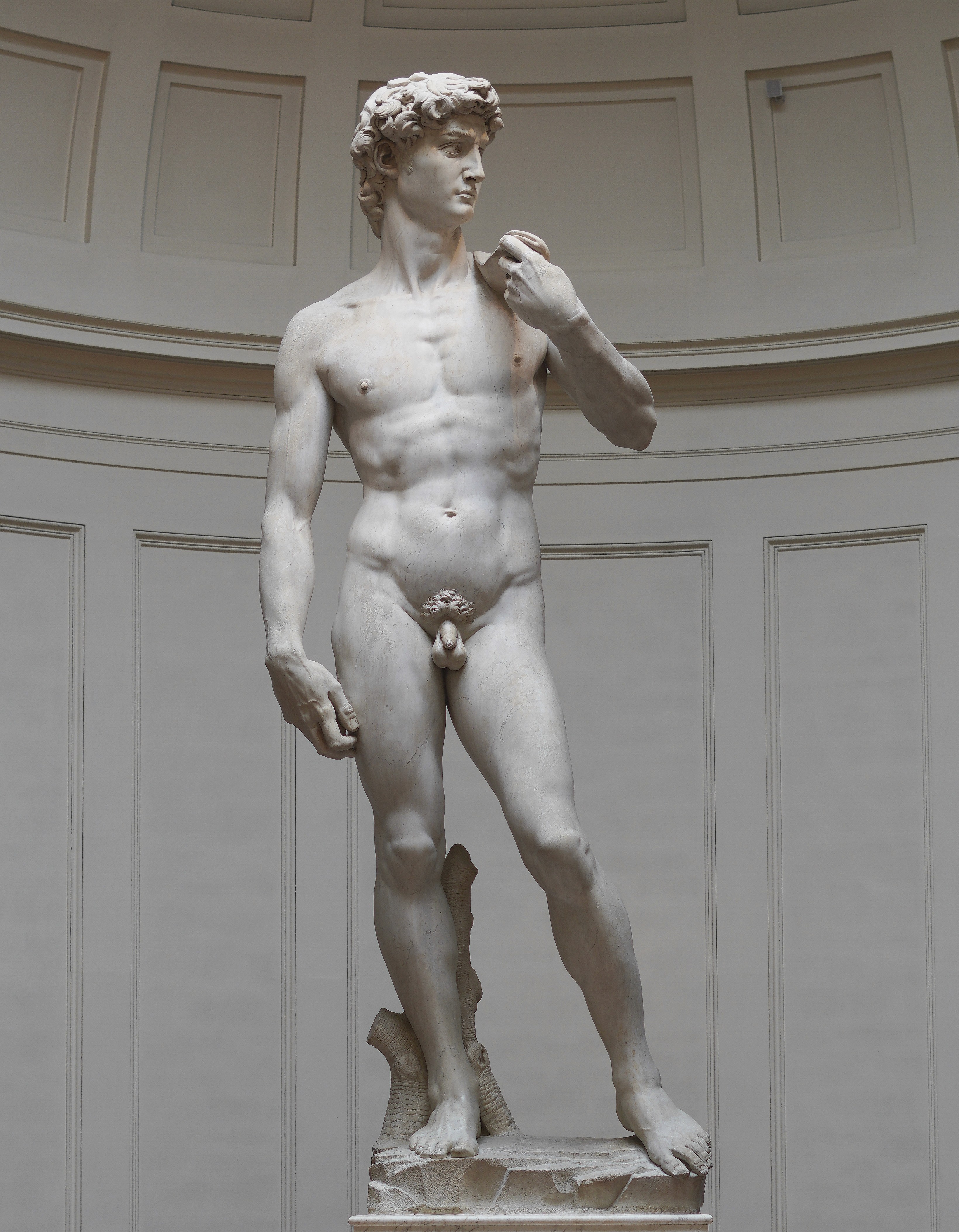
(資料來源:David, Michelangelo)
1501年,一塊被三位雕刻師放棄的巨大大理石孤零零地立在佛羅倫斯的一個工作坊庭院裡,已經在風吹日曬中等待了二十六年。大家都說那塊石頭「壞掉了」——有裂縫,比例奇怪,無法雕成任何東西。那一年,一個二十六歲的年輕雕刻師走進庭院,繞著那塊石頭走了一圈,然後平靜地說:「裡面有一個大衛,我只需要把多餘的部分去掉。」他一個人,花了兩年,幾乎不讓任何人進入工作坊。1504年,《大衛像》在廣場揭幕的那一天,圍觀的佛羅倫斯市民鴉雀無聲——那個少年英雄的眼神裡,有一種從未在任何神像上見過的東西。那是人的眼神,活生生的,充滿恐懼與決心。一個老婦人在人群中低聲說:「那不是大理石,那是一個真實的人。」那個年輕雕刻師,名叫米開朗基羅。
In 1501, a massive block of marble stood abandoned in a Florentine workshop courtyard — left untouched for twenty-six years. Three sculptors had already given up on it. Everyone agreed the stone was "ruined" — cracked, strangely proportioned, impossible to carve into anything. That year, a twenty-six-year-old sculptor walked into the courtyard, circled the marble once, and said quietly: "There is a David inside. I only need to remove everything that is not David." For two years, he worked almost entirely alone, allowing almost no one inside. When the David was unveiled in the piazza in 1504, the crowd of Florentines fell completely silent. In the young hero's eyes was something no one had ever seen in a religious statue before — a human gaze, alive with fear and determination. An old woman in the crowd whispered: "That is not marble. That is a real person." The young sculptor's name was Michelangelo.
文藝復興對人類文明最直觀、最震撼的貢獻,也許就是藝術。中世紀的繪畫風格平面、僵硬,人物表情木然,目的是傳達宗教訊息,而非呈現真實的世界。文藝復興藝術家卻做了一件革命性的事:他們決定如實描繪這個世界。
Perhaps the most vivid and powerful contribution of the Renaissance to human civilization was its art. Medieval paintings were flat and stiff, with expressionless figures, designed to communicate religious messages rather than show the real world. Renaissance artists did something revolutionary: they decided to paint the world as it actually looked.
這場藝術革命的關鍵技術是「透視法(linear perspective)」的發明。透視法讓藝術家能夠在二維的畫面上製造出三維空間的深度感,讓觀者彷彿真的站在畫中的場景前。除了空間感,藝術家們也開始深入研究人體解剖學,精確描繪肌肉、骨骼與動態,讓畫中人物充滿生命力。人體之美,在文藝復興時代第一次被視為藝術的最高主題。
The key technical breakthrough of this artistic revolution was the invention of linear perspective. Perspective allowed artists to create the illusion of three-dimensional depth on a two-dimensional surface, making viewers feel as if they were truly standing inside the scene. Beyond space and depth, artists also began studying human anatomy carefully, accurately depicting muscles, bones, and movement, giving their figures a powerful sense of life. For the first time, the beauty of the human body was celebrated as the highest subject of art.
這個時代孕育了三位至今仍無人能及的藝術巨匠。達文西(Leonardo da Vinci)是藝術家、科學家、發明家的完美結合,他的《蒙娜麗莎》與《最後的晚餐》是人類藝術史上最著名的作品。米開朗基羅(Michelangelo)以驚人的技藝雕刻出《大衛像》,又以四年時間獨自完成了西斯廷禮拜堂的天花板濕壁畫,描繪了從創世到末日的宏大敘事。拉斐爾(Raphael)則以柔美的筆觸與完美的構圖,創作出《雅典學院》,將古希臘哲學家與文藝復興人文主義融為一體,成為那個時代精神的完美象徵。
This era produced three artistic masters whose work remains unmatched to this day. Leonardo da Vinci was the perfect combination of artist, scientist, and inventor. His Mona Lisa and The Last Supper are among the most famous works in the history of human art. Michelangelo carved the extraordinary David from a single block of marble, and then spent four years alone painting the ceiling of the Sistine Chapel — a massive work depicting stories from the Creation to the Last Judgment. Raphael, with his graceful brushwork and flawless composition, created The School of Athens, which blended ancient Greek philosophy with Renaissance Humanism, making it a perfect symbol of the spirit of the age.
文學與語言——文藝復興促進知識流動/Literature and Language
1601年,倫敦環球劇場。一個賣魚的婦人、一個銀行家的學徒、三個剛下工的碼頭工人,擠在劇場的露天區,仰頭看著舞台上那個穿著黑衣的王子獨自站在燈下。然後,他開口了:「To be, or not to be, that is the question.」沒有人聽不懂。那個賣魚婦人後來對女兒說,她不知道那句話是什麼意思,但她在那一刻掉了眼淚,因為「那個人說出了我心裡說不清楚的某個東西。」莎士比亞寫的,從來不是貴族的故事——或者說,他寫的是每一個人的故事。文學在文藝復興裡第一次走下了神壇,走進了所有人的心裡。
In 1601, at the Globe Theatre in London, a fishwife, a banker's apprentice, and three dock workers just off their shift pressed together in the open yard, looking up at the stage. A prince in black stood alone in the light — and then he spoke: "To be, or not to be, that is the question." No one failed to understand. The fishwife later told her daughter that she didn't know exactly what the words meant, but she had wept in that moment, because "that man said something I have always felt but could never put into words." Shakespeare never wrote only for the nobility — or rather, he wrote for every single person. In the Renaissance, literature stepped down from its altar for the first time and walked into the hearts of everyone.
文藝復興不只改變了繪畫,也徹底革新了文學。在這個時代之前,嚴肅的學術與文學作品幾乎都以拉丁文書寫——一種只有受過高等教育的人才看得懂的「精英語言」。文藝復興的作家們卻開始用普通人的日常語言寫作,將文學帶入了更廣大的世界。
The Renaissance did not only transform painting — it also completely renewed literature. Before this era, serious academic and literary works were written almost entirely in Latin, a language only accessible to the highly educated. Renaissance writers began using the everyday languages of ordinary people, bringing literature into a much wider world.
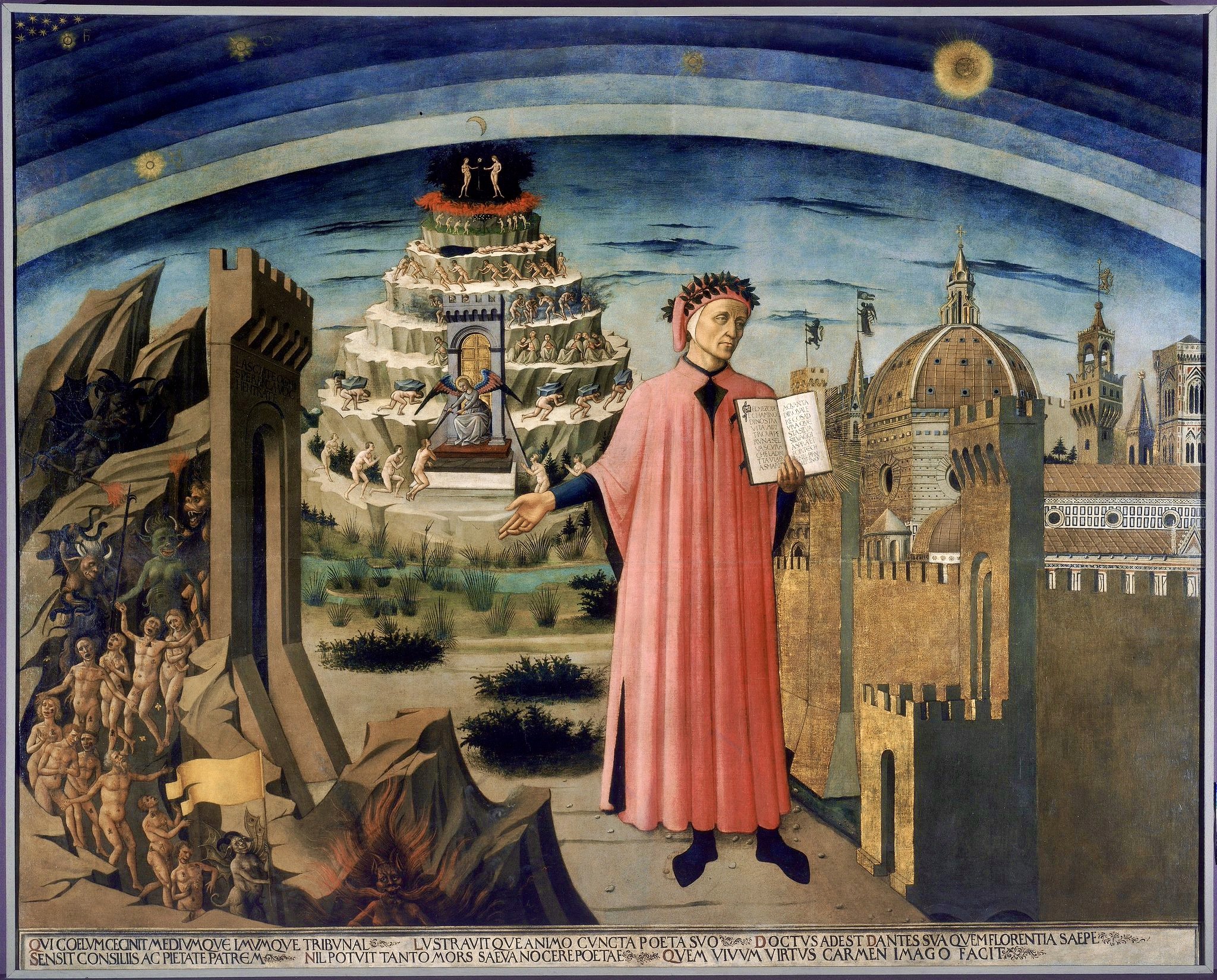
(資料來源:Dante and His Poem, Domenico di Michelino)
義大利詩人但丁(Dante Alighieri)是這場語言革命的先驅。他用義大利托斯卡尼方言寫下了史詩《神曲》(Divine Comedy),描述詩人穿越地獄、煉獄與天堂的旅程,充滿了對人性、道德與救贖的深刻思考。佩脫拉克(Petrarch)被譽為「人文主義之父」,他的十四行詩開創了歐洲抒情詩的新傳統。薄伽丘(Boccaccio)則以《十日談》(Decameron)描繪了黑死病期間一群人聚在一起說故事的場景,筆下的人物鮮活、世俗,充滿對現實生活的觀察,大膽突破了中世紀文學的道德框架。
Italian poet Dante Alighieri was a pioneer of this language revolution. He wrote his epic poem The Divine Comedy in the Tuscan dialect of Italian, describing a poet's journey through Hell, Purgatory, and Heaven, full of deep reflections on human nature, morality, and salvation. Petrarch is known as the "Father of Humanism," and his sonnets established a new tradition of lyric poetry across Europe. Boccaccio wrote the Decameron, a collection of stories told by a group of people sheltering from the Black Death, featuring vivid, worldly characters full of sharp observations about real life — boldly breaking free from the moral constraints of medieval literature.
文藝復興的文學精神也越過了阿爾卑斯山,來到了英國。莎士比亞(William Shakespeare)是北方文藝復興最耀眼的代表。他的戲劇探討愛、權力、嫉妒、背叛與死亡,語言豐富得令人咋舌。《哈姆雷特》中那句「To be, or not to be, that is the question」,至今仍是人類文學史上最著名的一句話,完美地體現了文藝復興對「人的存在意義」的深切追問。
The literary spirit of the Renaissance also crossed the Alps and reached England. William Shakespeare is the most brilliant representative of the Northern Renaissance. His plays explore love, power, jealousy, betrayal, and death in language of extraordinary richness. The line from Hamlet — "To be, or not to be, that is the question" — remains one of the most famous sentences in all of human literature, perfectly capturing the Renaissance's deep questioning of the meaning of human existence.
文藝復興引發科學與哲學的覺醒/The Awakening of Science and Philosophy
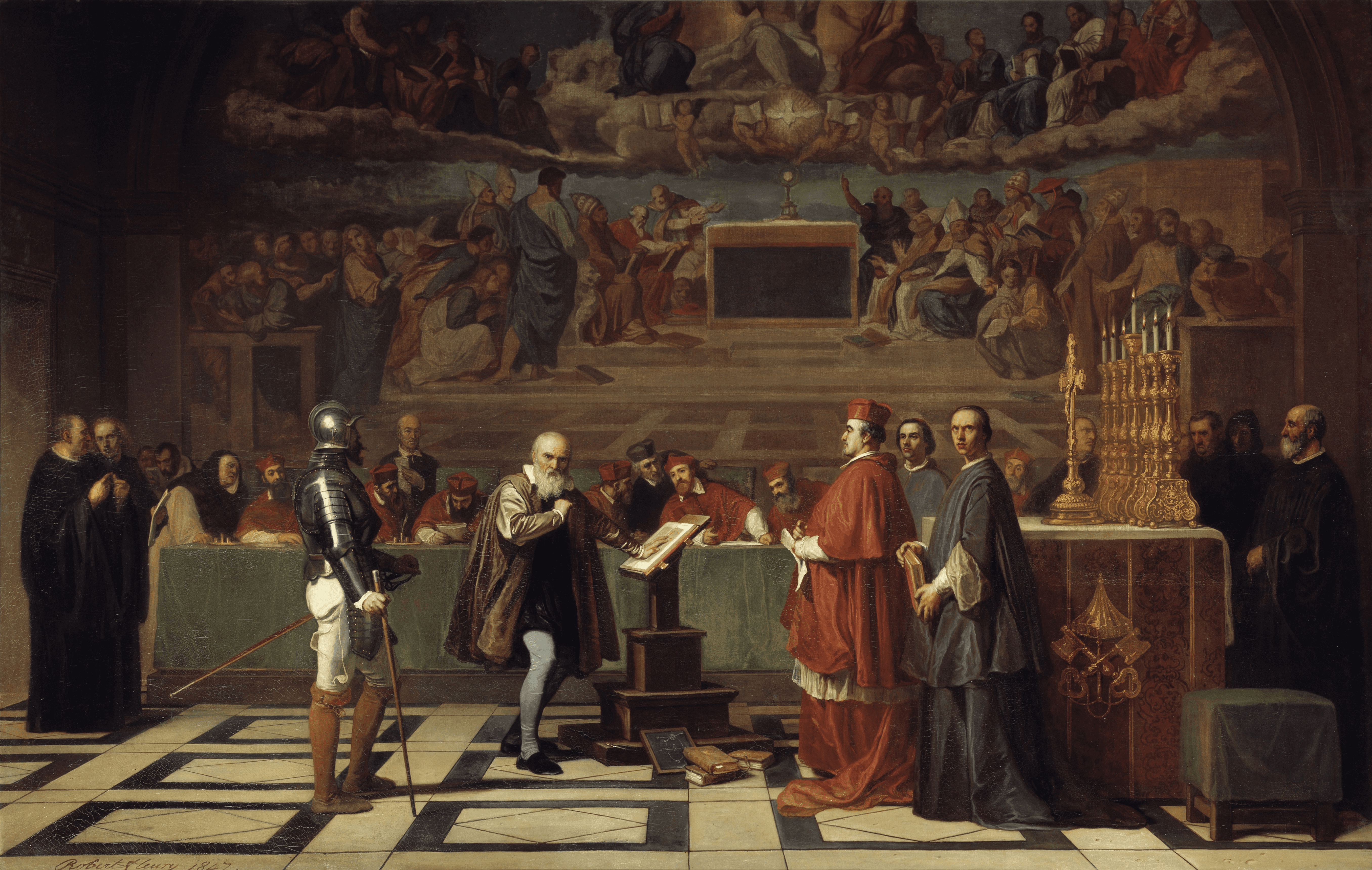
(資料來源:Galileo before the Holy Office, Joseph Nicolas Robert Fleury)
1633年6月22日,羅馬。七十歲的伽利略跪在宗教裁判所的法庭上,低著頭,用顫抖的聲音宣讀那份他被迫準備的聲明:「我放棄、詛咒、痛恨地球繞著太陽運行的學說……」法官們滿意地點頭。那一刻,全場寂靜。但根據一個流傳數百年的故事,就在他緩緩站起身來的那一瞬間,他的嘴唇幾乎沒有動地,輕聲說了一句話:「Eppur si muove. ——但地球還是在動的。」沒有人能確定這句話是否真的說過,但這句話流傳下來,比任何法庭判決都活得更久。因為有些真理,即使你跪下來否認它,它依然在那裡,默默地轉動著。
On June 22, 1633, in Rome, a seventy-year-old man knelt before the Inquisition and read in a trembling voice the statement they had forced him to prepare: "I abjure, curse, and detest the doctrine that the Earth moves around the Sun…" The judges nodded with satisfaction. Silence filled the room. But according to a story passed down for centuries, as Galileo slowly rose to his feet, his lips barely moving, he whispered: "Eppur si muove — And yet it moves." No one can be certain those words were truly spoken — but they have outlasted every court verdict ever handed down. Because some truths, even when you kneel and deny them, remain exactly where they are, quietly turning.
文藝復興對人類理性的推崇,直接孕育了近代科學的誕生。當人們開始相信自己有能力觀察、測量、理解這個世界,教會所宣稱的「絕對真理」就不再是唯一的答案。波蘭天文學家哥白尼(Copernicus)提出「日心說」,主張地球繞著太陽轉,而非太陽繞著地球轉,直接挑戰了教會長久以來維護的宇宙觀。義大利科學家伽利略(Galileo)以望遠鏡觀測星空,提出了大量支持哥白尼的證據,卻因此遭到宗教裁判所的審判,被迫公開否認自己的發現——但據說他在低頭認罪後,仍小聲說道:「但地球還是在動的。」
The Renaissance's respect for human reason directly gave birth to modern science. When people began to believe that they had the ability to observe, measure, and understand the world, the "absolute truths" declared by the Church were no longer the only answers. Polish astronomer Copernicus proposed the heliocentric model — the idea that the Earth orbits the Sun, not the other way around — directly challenging the Church's long-held view of the universe. Italian scientist Galileo used a telescope to study the night sky and gathered strong evidence in support of Copernicus. For this, he was put on trial by the Inquisition and forced to publicly deny his findings — yet legend says that even as he bowed his head in submission, he quietly murmured: "And yet it moves."
在哲學領域,兩位思想家的名字格外值得記住。馬基維利(Machiavelli)在《君王論》(The Prince)中拋棄了中世紀那套「好人才能當好君王」的道德說教,冷靜分析權力的本質,主張統治者必要時可以不擇手段。這本書震驚了當時的讀者,卻也開創了現代政治學的先河。伊拉斯莫斯(Erasmus)則代表了另一種聲音——他以幽默尖銳的筆觸批評教會的腐敗與人類的愚蠢,在不否定信仰的前提下,主張以理性與教育來改革社會,成為溫和改革派人文主義的標竿。
In the field of philosophy, two thinkers deserve special attention. Machiavelli threw away the medieval idea that only a good man can be a good ruler. In The Prince, he calmly analyzed the nature of power and argued that a ruler must sometimes do whatever is necessary to hold on to it. This book shocked readers of his time, but it also launched the foundations of modern political science. Erasmus represented a different voice — with sharp humor, he criticized the corruption of the Church and the foolishness of people. Without rejecting faith, he argued for reforming society through reason and education, and became a model for moderate, reform-minded Humanism.
文藝復興向外擴散/The Spread of the Renaissance
1455年,美因茨。一個工人在古騰堡的印刷坊裡,親眼看著第一批印好的《聖經》從機器上被取下來——整整齊齊,一頁一頁,每個字都清晰如刻。他小心翼翼地拿起一頁,湊近燈光看了很久,然後轉向旁邊的同事,說了一句話:「以前,這一頁要一個修士抄寫一整天。現在,我們一個下午就印了兩百本。」那一刻,沒有人意識到這意味著什麼。但從那天起,知識開始流動——跨越城市,跨越國界,跨越階層。那台機器印出的,不只是文字,而是一個新的時代。
In 1455, in Mainz, a worker in Gutenberg's printing workshop watched as the first printed pages of the Bible came off the press — clean, even, every letter as sharp as if carved in stone. He picked up one page carefully, held it close to the light, and studied it for a long moment. Then he turned to his colleague and said: "Before this, one monk spent an entire day copying a single page. This afternoon, we printed two hundred copies." In that moment, no one fully understood what it meant. But from that day on, knowledge began to move — across cities, across borders, across the boundaries of class. What that machine printed was not just words. It was a new age.
(資料來源:gettyimages.com)
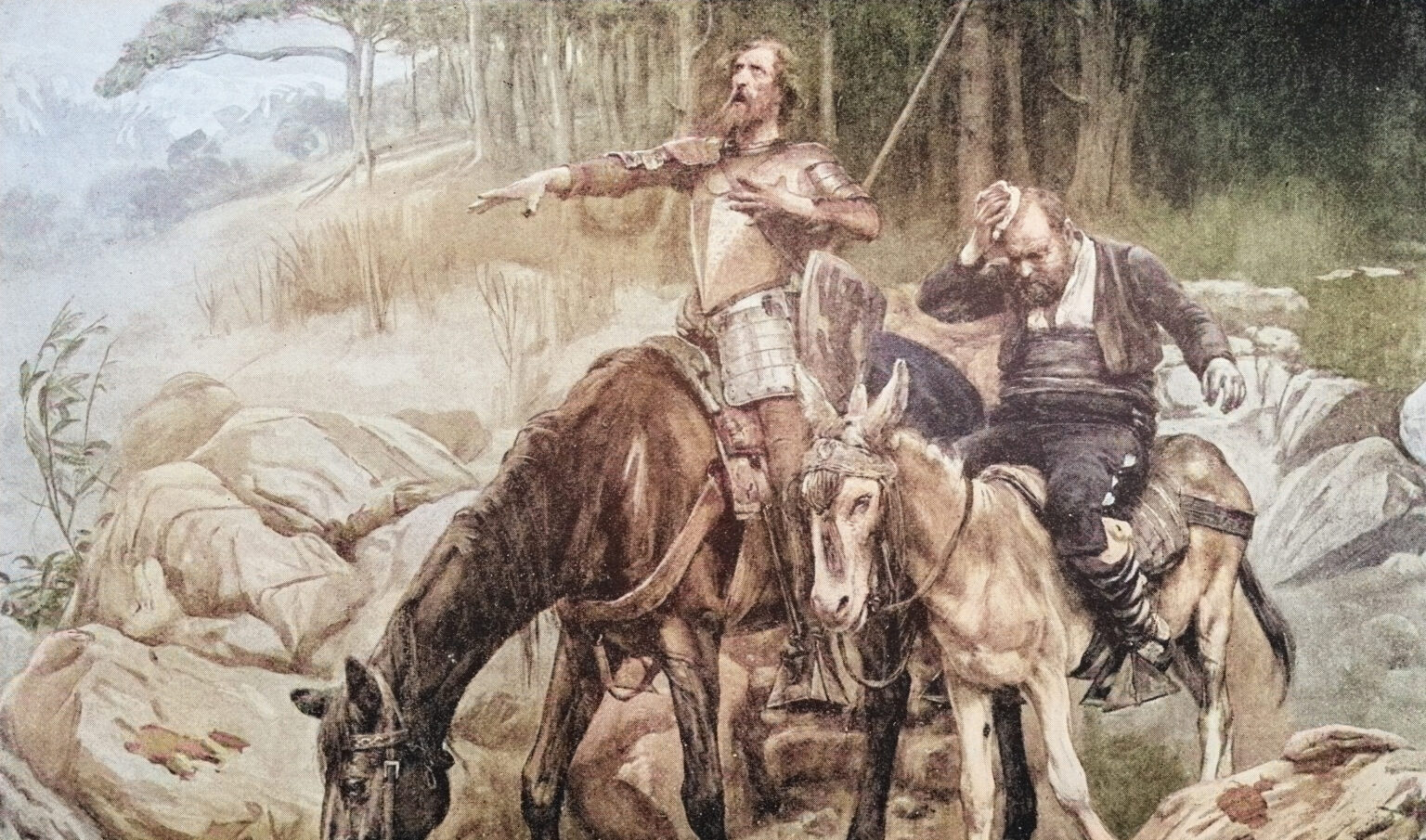
文藝復興從義大利的城市出發,像漣漪一樣向外擴散,逐漸席捲整個歐洲。它傳入法國時,帶動了法國宮廷藝術與文學的繁榮;進入德國時,與宗教改革的浪潮相互激盪;抵達英國時,孕育出了莎士比亞那個光輝燦爛的文學時代;在西班牙,則催生了賽萬提斯(Cervantes)與不朽的《唐吉訶德》。
Starting from the cities of Italy, the Renaissance spread outward like ripples on water, gradually sweeping across all of Europe. When it reached France, it inspired a flourishing of royal art and literature. In Germany, it combined powerfully with the waves of religious reform. In England, it gave birth to the brilliant literary age of Shakespeare. In Spain, it produced Cervantes and the immortal Don Quixote.
北方的文藝復興與義大利有所不同。北方藝術家更關注日常生活的細節,荷蘭畫家尤其擅長描繪普通人的家庭場景、市集百態與自然風光,風格務實而細膩,與義大利那種宏偉壯觀的歷史畫風形成對比。北方的人文主義者,如伊拉斯莫斯,也更強調道德改革與宗教批判,而非純粹的美學追求。
The Northern Renaissance was somewhat different from Italy's. Northern artists were more interested in the details of everyday life. Dutch painters in particular excelled at depicting ordinary people's home scenes, busy market places, and natural landscapes, developing a style that was practical and precise — a contrast to Italy's grand and heroic historical paintings. Northern Humanists, like Erasmus, also placed more emphasis on moral reform and religious criticism, rather than purely aesthetic goals.
這場思想的大傳播,離不開一項改變世界的發明:德國人古騰堡(Johannes Gutenberg)在15世紀中期發明的活字印刷機。在此之前,書籍必須由人工一字一句抄寫,極為昂貴且稀少。印刷機的出現讓書籍大量生產成為可能,知識不再是貴族與神職人員的專利,普通市民也開始能夠閱讀、思考、質疑。印刷機是文藝復興思想傳播最強大的引擎,也是人類走向現代文明最關鍵的技術之一。
This great spread of ideas could not have happened without a world-changing invention: the printing press, invented by German craftsman Johannes Gutenberg in the mid-15th century. Before this, books had to be copied by hand, word by word — they were extremely expensive and rare. The printing press made it possible to produce books in large quantities. Knowledge was no longer the exclusive property of nobles and priests; ordinary citizens could now read, think, and question. The printing press was the most powerful engine of the Renaissance's spread, and one of the most important technologies in humanity's journey toward modern civilization.
文藝復興的影響與遺產/The Legacy of the Renaissance
多年以後,一位老教授站在台灣某所大學的講台上,望著台下那些低頭滑手機的學生,想到了一件事。五百年前,有一群人在瘟疫、貧窮和壓迫之中,決定用一個問題改變世界:「人,可以成為什麼?」他們沒有網路,沒有民主,沒有言論自由——他們只有勇氣,和無法熄滅的好奇心。他輕輕敲了敲講台,等學生們抬起頭,然後說了一句話:「文藝復興告訴我們,歷史不是被王和神改變的,是被那些敢於問『為什麼』的普通人改變的。你們,也是普通人。」教室裡,有人放下了手機。
Many years later, a professor stood at the front of a university classroom in Taiwan, looking out at students bent over their phones. He thought of something. Five hundred years ago, a group of people living through plague, poverty, and oppression decided to change the world with a single question: "What can a human being become?" They had no internet, no democracy, no freedom of speech — only courage, and a curiosity that could not be extinguished. He tapped the lectern gently, waited for the students to look up, and said: "The Renaissance tells us that history is not changed by kings or gods. It is changed by ordinary people who are brave enough to ask 'Why?' You are ordinary people, too." In the back of the room, someone put down their phone.
文藝復興對歐洲歷史最直接的衝擊,是引發了16世紀的宗教改革。當人文主義的批判精神與印刷機的傳播力量結合在一起,馬丁·路德(Martin Luther)的《九十五條論綱》才能在數週之內傳遍整個歐洲,點燃了新教改革的烈火。沒有文藝復興對教會的質疑,就難有宗教改革對教會的分裂。
The Renaissance's most direct impact on European history was that it triggered the 16th-century Reformation. When the critical spirit of Humanism combined with the power of the printing press, Martin Luther's Ninety-Five Theses was able to spread across all of Europe within just a few weeks, igniting the fire of the Protestant Reformation. Without the Renaissance's questioning of the Church, the Reformation's splitting of the Church would have been far more difficult to achieve.
從更長遠的視角來看,文藝復興奠定了今日西方文明的核心價值:個人尊嚴、理性思考、言論自由、科學探索、民主精神。現代大學的通識教育、現代科學的實驗方法、現代藝術對個人表達的重視,乃至現代政治對人權的強調,都可以追溯到文藝復興這場思想解放運動。
From a longer perspective, the Renaissance laid the foundation for the core values of today's Western civilization: individual dignity, rational thinking, freedom of expression, scientific inquiry, and democratic spirit. Modern university liberal arts education, the experimental method of modern science, the value that modern art places on personal expression, and even modern politics' emphasis on human rights — all of these can be traced back to the great intellectual liberation of the Renaissance.
那麼,身為台灣的大學生,為什麼我們今天還需要認識文藝復興?因為它告訴我們一件事:當一個時代的人開始勇敢地問「為什麼?」,歷史就會改變方向。文藝復興的人們面對黑死病、面對教會的壓制、面對知識的匱乏,沒有選擇沉默,而是選擇用藝術、文字與思想重新定義自己的世界。這種精神,在任何時代都值得學習。
So why, as university students in Taiwan today, do we still need to understand the Renaissance? Because it teaches us one important thing: when the people of an era are brave enough to ask "Why?", history changes direction. The people of the Renaissance faced the Black Death, religious oppression, and a shortage of knowledge — and instead of choosing silence, they chose to redefine their world through art, words, and ideas. That spirit is worth learning from, in any age.