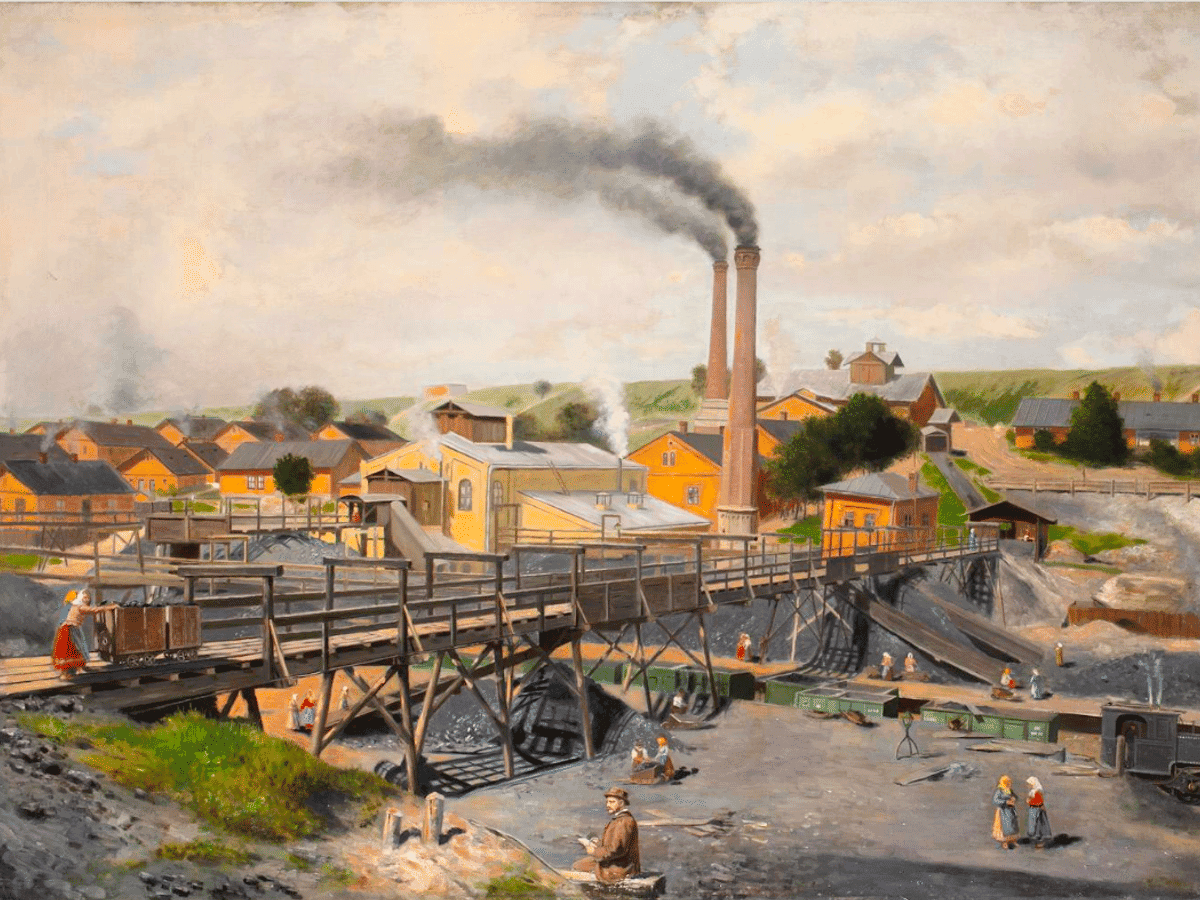
1780年代,英格蘭蘭開夏郡,一座棉紡織工廠的大門在清晨五點打開了。走進去的,不再是農夫,而是工人——他們在轟鳴的機器旁站上十二個小時,領著固定的工資,生產出任何手工作坊都無法企及的布匹數量。這扇工廠的大門,也許是人類歷史上最重要的一扇門。它的開啟,標誌著一個舊世界的終結,與一個我們今天所熟悉的現代世界的開始。
In the 1780s, in Lancashire, England, the doors of a cotton mill opened at five in the morning. The people walking in were no longer farmers — they were workers who would stand beside roaring machines for twelve hours a day, earning fixed wages and producing more cloth than any hand workshop could ever match. That factory door may have been the most important door ever opened in human history. Its opening marked the end of one world, and the beginning of the modern world we know today.
什麼是工業革命?/What Is the Industrial Revolution?
「工業革命」(The Industrial Revolution)是指大約從18世紀中期延續至19世紀中期,首先在英國發生,隨後擴及歐洲與北美的一場深刻的經濟與社會轉型。在這段期間,生產方式從以手工與農業為主,轉向以機器、工廠與大規模生產為主;能源來源從人力與畜力,轉向煤炭與蒸汽機;社會結構也從農村為主,逐漸轉向都市化的工業社會。
The Industrial Revolution refers to a profound economic and social transformation that began in Britain around the mid-18th century and later spread to Europe and North America, continuing until the mid-19th century. During this period, production shifted from handcraft and farming to machines, factories, and mass manufacturing. Energy sources changed from human and animal power to coal and steam engines. Society itself gradually transformed from rural and agricultural to urban and industrial.
工業革命不是一夜之間發生的事件,而是一系列技術創新、社會變遷與經濟條件交織累積的結果。它改變了人類的工作方式、生活方式、城市面貌,乃至整個地球的環境,是近代史上影響最為深遠的轉型之一。
The Industrial Revolution did not happen overnight. It was the result of many layers of technological innovation, social change, and economic conditions building on one another over time. It transformed the way people worked, lived, and organized their cities — and even changed the environment of the entire planet. It remains one of the most far-reaching transformations in modern history.
從英國開始——工業革命的起源/The Origins of the Industrial Revolution
歷史學家劍橋大學的艾倫·麥克法蘭(Alan Macfarlane)曾用「密碼鎖」來比喻工業革命的起源問題。他說:「大概有二十個不同的條件,必須同時具備,工業革命才能發生。」這些條件包括:驅動工廠運作的技術與能源、提供廉價勞動力的龐大城市人口、便利的運輸系統、願意購買大量工業產品的中產階級消費市場,以及一個允許市場自由運作的政治體制。
Historian Alan Macfarlane, a professor at Cambridge University, once compared the origins of the Industrial Revolution to a combination lock. He said: "There are about twenty different factors, and all of them need to be present before the revolution can happen." These factors include technology and power to run factories, large urban populations to provide cheap labor, easy transportation systems, a middle-class consumer market willing to buy mass-produced goods, and a political system that allows a market economy to function freely.
問題在於:荷蘭、法國、日本等國,也具備了其中許多條件,但工業革命並未在那些地方發生。這說明這些條件雖然必要,卻還不足夠。還缺少某一兩個關鍵因子,才能真正「開鎖」。
The problem is that countries like the Netherlands, France, and Japan also met many of these conditions — yet the Industrial Revolution did not begin in those places. This suggests that while those factors were necessary, they were not enough on their own. One or two key missing pieces were still needed to truly "open the lock."
英國之所以率先發生工業革命,有幾個關鍵的優勢:
Britain had several key advantages that allowed it to start the Industrial Revolution first.
第一,英國擁有豐富的煤炭與鐵礦資源,為蒸汽機提供了燃料,也為機器提供了材料。
First, Britain had rich reserves of coal and iron ore, providing fuel for steam engines and materials for machines.
第二,英國有相對成熟的金融體系與銀行業,商人可以借貸資金來投資新技術。
Second, Britain had a relatively developed financial system and banking sector, allowing merchants to borrow money to invest in new technology.
第三,英國的政治體制相對穩定,財產權受到法律保護,給予了發明家與企業家足夠的動機去創新。
Third, Britain's political system was relatively stable, and property rights were protected by law — giving inventors and entrepreneurs strong motivation to innovate.
第四,英國龐大的殖民地帝國提供了原料來源與商品銷售市場,讓大規模生產有了出路。
Fourth, Britain's vast colonial empire provided sources of raw materials and markets to sell goods, giving large-scale production somewhere to go.
茶與啤酒——撐起工業革命的勞動力/Tea, Beer, and the Revolution
(資料來源:history.com)
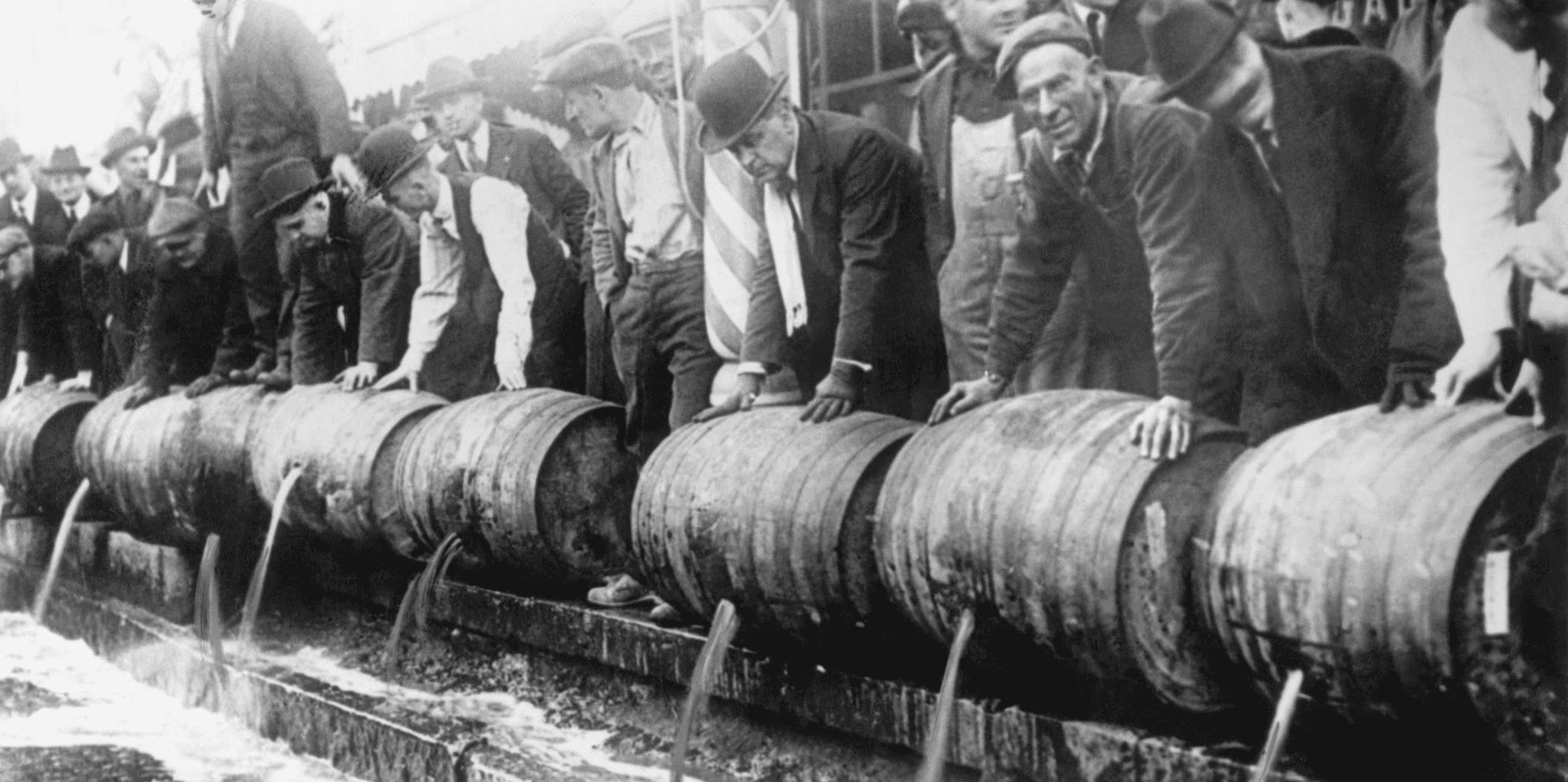
在所有解釋工業革命的理論中,麥克法蘭教授提出的其中一個「缺少因子」格外出人意料:茶與啤酒。
Among all the theories explaining the Industrial Revolution, one of the "missing factors" proposed by Professor Macfarlane is especially surprising: tea and beer.
他的推論從一個人口謎題開始。大約在1650年至1740年之間,英國的人口幾乎沒有增長。然而,1740年代前後,嬰兒死亡率突然在二十年內下降了一半,城市與農村都是如此,各個階層皆然。人口開始快速增長。這批新生的人口,恰好在工業革命啟動時提供了大量的工廠勞動力。
His reasoning begins with a population puzzle. Between roughly 1650 and 1740, Britain's population barely grew. But around the 1740s, the infant mortality rate suddenly dropped by half within just twenty years — in both cities and rural areas, and across all social classes. The population began to grow rapidly. This new generation of people grew up just in time to provide the factory labor the Industrial Revolution needed.
但嬰兒死亡率的下降,究竟是什麼原因?麥克法蘭排除了細菌突變、醫學進步與環境改善等可能,最後把目光鎖定在飲食上。然而,當時的身高與體重資料顯示,英國人的食物並沒有變好,反而更差了。那麼,讓嬰兒更容易存活的,似乎不是食物,而是——飲料。
But what caused the drop in infant mortality? Macfarlane ruled out sudden changes in bacteria, advances in medicine, and improvements in the environment. He eventually focused on food and drink. However, records of height and weight from that period showed that food had not improved — in fact, it had actually gotten worse. So what was keeping more babies alive seemed to be not food, but drink.
麥克法蘭的論點是:茶葉中的單寧酸(tannin)具有殺菌效果,啤酒中的啤酒花(hops)同樣有抗菌作用,而這兩種飲料都需要以沸水製作——沸水本身就能殺死水中的病原體。在沒有現代衛生設施的城市裡,人口密集帶來的最大威脅是水源汙染與水媒疾病,尤其是痢疾(dysentery)。大量飲用茶或啤酒的英國人,在不知不覺中保護了自己免受這些疾病的侵害,讓城市人口得以在惡劣的衛生條件下持續增長與存活。
Macfarlane's argument is this: the tannin in tea has antiseptic properties, and the hops in beer have similar antibacterial effects. Both drinks are made with boiled water — and boiling water itself kills the pathogens in it. In cities without modern sanitation systems, the greatest danger of living close together was contaminated water and water-borne diseases, especially dysentery. By drinking tea or beer, the British were unknowingly protecting themselves from these diseases, allowing urban populations to survive and grow even in poor sanitary conditions.
麥克法蘭還注意到,17至18世紀的日本同樣發展出了大城市,卻沒有衛生設施,但水媒疾病對日本人口的威脅,遠比英國輕微——原因很可能就是茶文化在日本的高度普及。反觀歐洲其他國家,沒有一個國家像英國人那樣大量飲茶,這也許正是為什麼工業革命沒有率先在法國或荷蘭發生。
Macfarlane also noticed that 17th and 18th-century Japan had also developed large cities without any sanitation system, yet water-borne diseases had a much weaker hold on the Japanese population than in Britain — most likely because of the widespread culture of tea drinking in Japan. In contrast, no other European nation drank tea in the same quantities as the British, which may be exactly why the Industrial Revolution did not begin in France or the Netherlands first.
工業革命的技術革命——蒸汽機的誕生/The Invention of the Steam Engine
(資料來源:Bild Maschinenhalle Escher Wyss 1875)
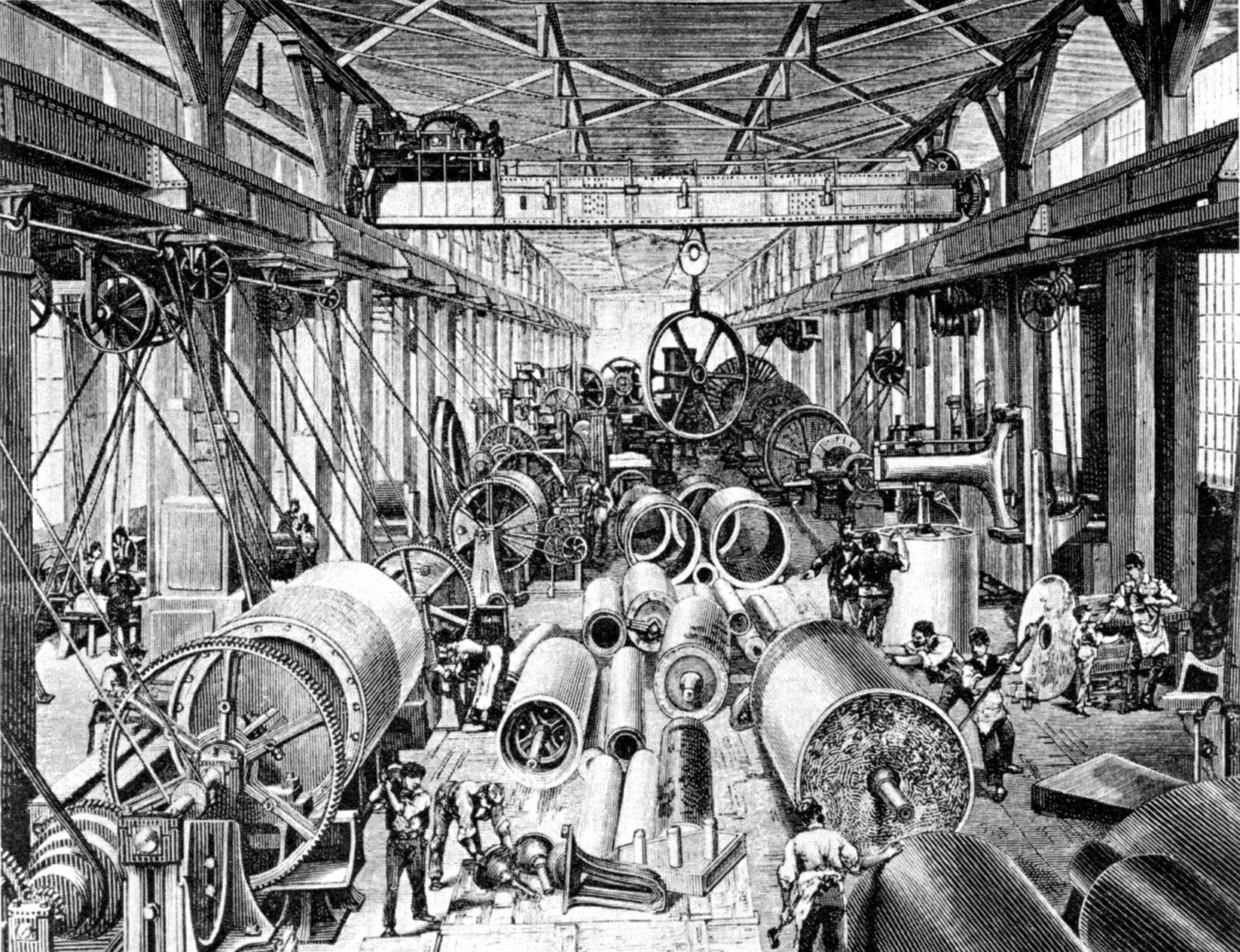
除了人口條件的成熟,工業革命最直接的推動力,是一連串的技術突破。其中最關鍵的,是蒸汽機的發明與改良。
Beyond the right population conditions, the most direct driving force of the Industrial Revolution was a series of technological breakthroughs. The most important of these was the invention and improvement of the steam engine.
早在1712年,英國工程師托馬斯·紐科門(Thomas Newcomen)就已發明了初代蒸汽機,用來抽取煤礦坑道中的積水。然而,這台機器效率極低,耗煤量龐大。1769年,詹姆斯·瓦特(James Watt)對蒸汽機進行了革命性的改良,大幅提升了效率,並使其能夠轉化為旋轉動力,驅動各種機械。這個改良,讓蒸汽機從礦場走進了紡織廠、鋼鐵廠、麵粉廠,成為工業革命的核心動力來源。
As early as 1712, British engineer Thomas Newcomen had already invented an early steam engine, used to pump water out of coal mine tunnels. However, this machine was extremely inefficient and consumed enormous amounts of coal. In 1769, James Watt made revolutionary improvements to the steam engine, greatly increasing its efficiency and allowing it to produce rotating power that could drive all kinds of machinery. This improvement took the steam engine out of the mines and into textile mills, iron foundries, and flour mills, making it the central power source of the Industrial Revolution.
蒸汽機之後,技術突破接連而來。紡紗機(spinning jenny)、水力織布機(power loom)讓紡織業的生產速度提升了數十倍;高爐技術(blast furnace)的改良使鋼鐵的大量生產成為可能;蒸汽火車頭(steam locomotive)與鐵路網絡的建設,讓貨物得以快速、便宜地在全國各地流通。這些技術彼此強化,形成了一個加速循環:更多的煤帶動更多的蒸汽機,更多的蒸汽機生產更多的鋼鐵,更多的鋼鐵建造更多的鐵路,更多的鐵路運送更多的煤。
After the steam engine, technological breakthroughs came one after another. The spinning jenny and the power loom increased the speed of textile production by many times. Improvements in blast furnace technology made large-scale steel production possible. The development of the steam locomotive and railway networks allowed goods to move quickly and cheaply across the entire country. These technologies reinforced each other, creating an accelerating cycle: more coal powered more steam engines, more steam engines produced more steel, more steel built more railways, and more railways transported more coal.
工業革命與社會變遷——城市與社會階級/Urbanization and Social Class
(資料來源:La sortie du bourgeois, Jean Béraud)
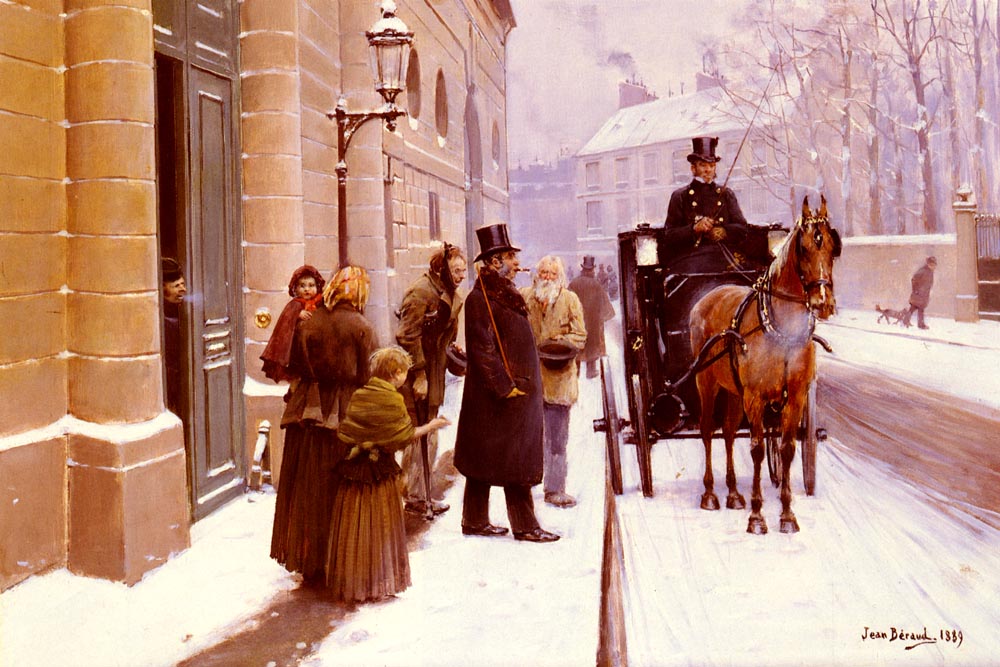
工業革命不只改變了生產技術,也從根本上重塑了英國的社會結構。工廠集中在煤礦與交通便利的地區,大量農村人口湧入城市尋找工作,曼徹斯特、伯明罕、利物浦等工業城市在數十年間從小鎮迅速膨脹為數十萬人口的大城市。
The Industrial Revolution did not just change production technology — it also fundamentally reshaped Britain's social structure. Factories were built in areas with coal and good transportation, and large numbers of rural people moved to cities in search of work. Industrial cities like Manchester, Birmingham, and Liverpool grew rapidly from small towns to cities of hundreds of thousands of people within just a few decades.
然而,城市化的速度,遠遠超過了城市基礎設施的發展能力。工人的居住條件極為惡劣:擁擠的廉租公寓、沒有乾淨飲水、缺乏汙水處理、街道骯髒充滿垃圾。工廠內的勞動條件同樣嚴苛:一天工作十二至十六小時,童工現象普遍,工資低廉,工傷事故頻繁。這樣的社會現實,催生了後來的勞工運動與社會改革立法。
However, the speed of urbanization far outpaced the development of city infrastructure. Workers lived in extremely poor conditions: overcrowded cheap housing, no clean water, no sewage systems, and dirty, garbage-filled streets. Working conditions inside factories were also harsh: twelve to sixteen hour work days were common, child labor was widespread, wages were low, and workplace accidents were frequent. This social reality eventually gave birth to the labor movement and social reform legislation.
另一方面,工業革命也創造出了一個新的社會階層——工業資產階級(industrial bourgeoisie)。工廠主、鐵路建設商、銀行家與貿易商在這個時代積累了前所未有的財富,逐漸在政治上也獲得了更大的影響力。英國社會從原本由土地貴族主導,開始轉向由工業資本家主導,這個權力結構的轉移,也反映在1832年英國改革法案(Reform Act)對選舉制度的改革之中。
On the other hand, the Industrial Revolution also created a new social class — the industrial bourgeoisie. Factory owners, railway builders, bankers, and merchants accumulated unprecedented wealth during this era and gradually gained greater political influence as well. British society shifted from being dominated by the landed aristocracy to being led by industrial capitalists. This transfer of power was reflected in the electoral reforms of the 1832 Reform Act.
麥克法蘭的研究還提出了一個有趣的反向問題:17世紀的日本已經擁有大型城市、高識字率,甚至期貨市場,從許多條件來看,似乎相當接近工業革命的起跑點。那麼,為什麼日本沒有率先工業化?
Macfarlane's research also raises an interesting reverse question: 17th-century Japan already had large cities, high literacy rates, and even a futures market. In many ways, it seemed quite close to the starting line of an industrial revolution. So why didn't Japan industrialize first?
答案之一,在於日本當時的政策選擇。日本的統治者在那個時代刻意放棄了許多省力技術,包括役用動物的大規模使用,擔心這些技術會取代人力,造成失業與社會不穩定。用麥克法蘭的話說,日本在進入19世紀的時候,已經「放棄了車輪」——它選擇了社會穩定,而非技術效率。這個選擇延遲了日本的工業化,直到明治維新(1868年)之後,日本才以驚人的速度追上了西方。
One answer lies in the policy choices Japan made at that time. Japan's rulers deliberately gave up many labor-saving technologies, including the widespread use of working animals, out of concern that these technologies would replace human workers and cause unemployment and social instability. In Macfarlane's words, Japan entered the 19th century having "abandoned the wheel" — it chose social stability over technological efficiency. This choice delayed Japan's industrialization until after the Meiji Restoration in 1868, when Japan caught up with the West at a remarkable speed.
這個例子告訴我們:技術與資源的條件,並不能完全決定一個國家的發展走向。政治決策、社會文化,以及統治者對「進步」的態度,同樣扮演著關鍵角色。工業革命不只是一個技術問題,更是一個社會選擇的問題。
This example teaches us that technology and resources alone do not fully determine the direction of a nation's development. Political decisions, social culture, and a government's attitude toward "progress" also play key roles. The Industrial Revolution was not just a technical question — it was also a question of social choices.
工業革命的影響與遺產/The Legacy of the Industrial Revolution
工業革命對人類文明的影響是全方位的,且延續至今。在經濟上,它建立了現代資本主義的基本架構:工廠生產、工資勞動、大規模貿易與資本積累。在科學上,它推動了工程學、化學、物理學的快速發展,也奠定了今天工業技術的基礎。在政治上,它催生了現代勞工運動,推動了民主改革,也帶動了後來的社會主義思潮。在環境上,大量燃燒煤炭開始了人類對大氣層的大規模影響,這條線一直延伸到今天的氣候變遷議題。
The Industrial Revolution had an all-encompassing impact on human civilization that continues to the present day. Economically, it established the basic structure of modern capitalism: factory production, wage labor, large-scale trade, and the accumulation of capital. Scientifically, it drove rapid developments in engineering, chemistry, and physics, and laid the groundwork for today's industrial technology. Politically, it gave birth to the modern labor movement, promoted democratic reforms, and inspired later socialist thought. Environmentally, the large-scale burning of coal began humanity's major impact on the atmosphere — a line that extends directly to today's climate change.
工業革命也讓世界權力格局發生了根本性的重組。率先工業化的歐洲國家,憑藉著技術與軍事優勢,大幅擴張了殖民地,將工業生產的模式與影響力輸出到全球各地。在19世紀,「工業化程度」幾乎直接等於「國家力量」,而這個邏輯,在某種程度上,直到今天仍然成立。
The Industrial Revolution also fundamentally reorganized the global balance of power. European nations that industrialized first used their technological and military advantages to greatly expand their colonial empires, exporting the model of industrial production and their influence across the globe. In the 19th century, the degree of industrialization was almost directly equal to national power — and this logic, in some ways, still holds true today.
對台灣的大學生而言,工業革命的意義,不只是一段已經結束的歷史。今天,我們正站在另一場可能同樣深刻的轉型的邊緣:人工智慧與自動化革命。兩百多年前的工業革命告訴我們,技術的突破往往比社會、制度、與人心的準備走得更快;它帶來巨大的財富,也帶來巨大的不平等;它創造了新的工作,也消滅了舊的工作。面對今天的技術浪潮,理解工業革命的歷史,也許是思考未來最好的起點。
For university students in Taiwan, the Industrial Revolution is not just a chapter of finished history. Today, we stand at the edge of another transformation that may be equally profound: the revolution of artificial intelligence and automation. The Industrial Revolution of two hundred years ago tells us that technological breakthroughs often move faster than society, institutions, and human beings are ready for. It brought enormous wealth — and enormous inequality. It created new jobs and destroyed old ones. Faced with today's wave of technology, understanding the history of the Industrial Revolution may be the best starting point for thinking about the future.