一樣的故事,不一樣的結局——試著「逆思維」
你知道嗎?其實龜兔賽跑的故事不是只有一天,不是我們所熟悉的努力就會有回報的故事。
Did you know? The story of the Tortoise and the Hare didn't just happen in one day, and it isn't merely the familiar tale of hard work bringing rewards.
「溫水煮青蛙」這個故事也是「錯」的。如果我們把青蛙丟進滾燙的鍋裡,牠會嚴重燙傷,不一定逃得掉;如果把青蛙放在慢慢煮沸的鍋裡,當水溫開始升到熱得難受時,牠會立刻跳出去。我們一直以為青蛙沒有領悟到眼前的危險,結果缺乏質疑精神和重新思考能力的,反而是我們自己。
The "boiling frog" story is also "wrong." If you throw a frog into a pot of boiling water, it will be severely scalded and may not escape; if you place a frog in a pot where the water is slowly heated, it will jump out as soon as the water becomes unbearably hot. We've always believed that the frog fails to recognize the danger, but in reality, it is we who lack the spirit of questioning and the ability to rethink.
棉花糖實驗的「延遲滿足」,相信大家也耳熟能詳。
The "Marshmallow Experiment" on delayed gratification is also a story that many people are familiar with.
棉花糖實驗是迄今最廣為人知的心理學實驗之一,實驗內容是先將棉花糖放在孩子面前,並告訴他如果可以忍住不吃這顆棉花糖,15分鐘後就會再多給他一顆,然後實驗人員離開房間,觀察孩子獨處時,是否會為了獲取更高額的獎勵,抵擋住眼前的誘惑。通過考驗的孩子則代表自制力強,追蹤研究發現他們日後在SAT考試(學術水準測驗考試)表現較佳。
The Marshmallow Experiment is one of the most well-known psychological experiments to date. In the experiment, a marshmallow is placed in front of a child, and they are told that if they can resist eating it for 15 minutes, they will receive an additional one. The experimenter then leaves the room to observe whether the child, when left alone, can resist the immediate temptation to gain a higher reward. The children who pass this test are considered to have strong self-control, and follow-up studies found that they performed better on the SAT (Scholastic Assessment Test).
然而,美國加州大學爾灣分校的研究人員對此結果有所存疑,於是他們便照著同樣的實驗方法重做一遍。原始實驗的研究對象是史丹佛大學附設幼兒園中的80多位小朋友,新團隊將實驗規模擴大到900多名不同文化、種族背景的孩童身上,結果卻跌破大家眼鏡,真正影響孩子不吃棉花糖的因素其實更單純,也更殘酷。
However, researchers at the University of California, Irvine, had doubts about these results, so they replicated the experiment using the same methodology. The original experiment involved over 80 children from the nursery school at Stanford University, but the new team expanded the study to over 900 children from diverse cultural and racial backgrounds. The results were surprising — the factors that actually influence whether a child eats the marshmallow are much simpler and, in fact, more stark.
「逆思維」核心概念:「再想想」的重要性

(資料來源:nextbigideaclub.com)
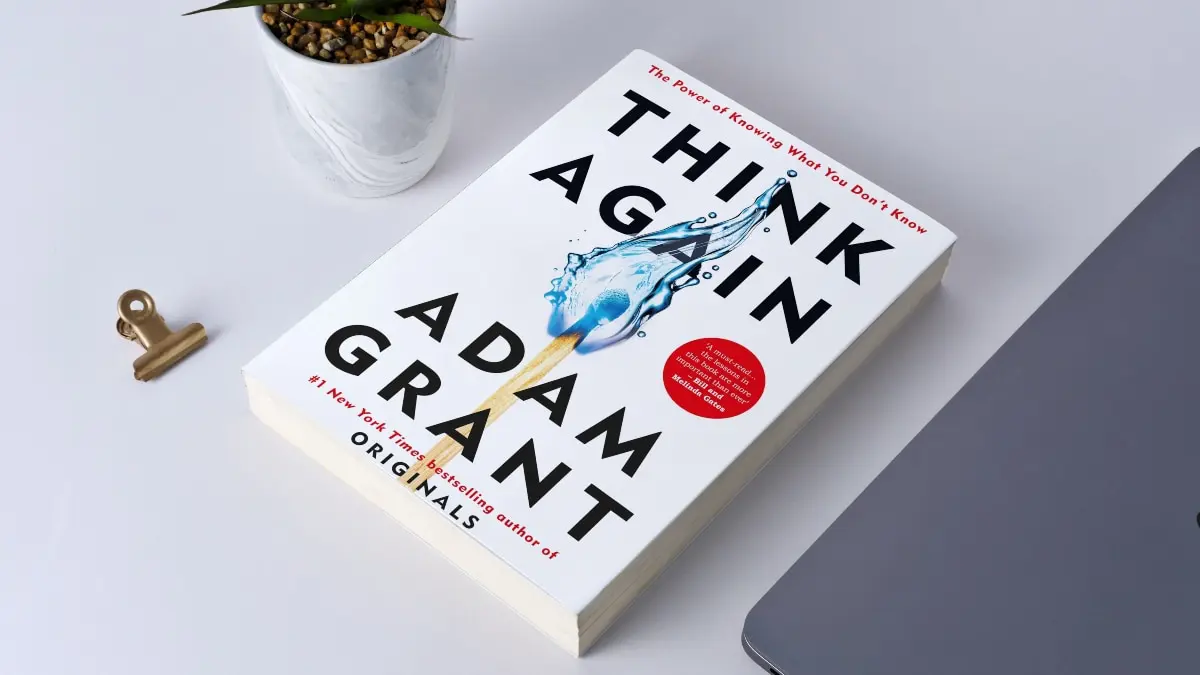
《逆思維》的作者是華頓商學院最年輕的終身聘教授亞當.格蘭特(Adam Grant),在他的學術生涯當中,他發現人們習慣用最舒適的方式來思考,很少去懷疑或挑戰自己的信念,導致堅持己見、自以為聰明、離不開同溫層的情形不斷發生。在這本書中,他想告訴我們「重新思考」的方法和重要性。
The author of Think Again, Adam Grant, is the youngest tenured professor at the Wharton School of Business. Throughout his academic career, he discovered that people tend to think in the most comfortable way, rarely questioning or challenging their own beliefs. This often leads to stubbornness, overconfidence, and an inability to step outside of their echo chambers. In this book, he aims to teach us the methods and importance of "rethinking."
這本書分成三大部分,第一個部分談我們「個人」如何重新思考,我們必須具備科學家的思考精神、區分清楚信心和自傲的差別,以及擁抱建設性的衝突。第二的部分談「人際」之間重新思考,我們要如何和別人進行一場良好的辯論,如何透過正確的聆聽來促成別人的改變。第三部分談「集體」重新思考的方式,消除意見極端對立來達成對話,扭轉僵化的教育和職場文化。
The book is divided into three main parts. The first part focuses on how we, as individuals, can rethink. It emphasizes the need to adopt a scientist’s mindset, clearly distinguish between confidence and arrogance, and embrace constructive conflict. The second part discusses "interpersonal" rethinking, exploring how we can engage in meaningful debates with others and foster change through effective listening. The third part addresses "collective" rethinking, focusing on how to bridge extreme differences in opinion to facilitate dialogue and transform rigid educational and workplace cultures.
如何培養「逆思維」? 10 大關鍵行動

(資料來源:blackbeltinthinking.com)
像名科學家一樣思考/Think Like a Scientist
創業者常常因為擁有清晰願景、充滿信念而受到欽佩。但更成功的創業者,是那些知道自己有盲點的人:他們不把想法宣稱為不可動搖的真理,而是把它們表述為「假設」,並願意驗證。例如:黑莓機的發明者 Mike Lazaridis,如果能把「人們更喜歡實體鍵盤而非觸控螢幕」視為一個假設,而不是把它當成無可置疑的真理,或許結果會更好。
Entrepreneurs are often admired when they have a clear vision and brim with conviction. But more successful are the entrepreneurs who are aware of their blind spots and do not proclaim their ideas as incontrovertible truths but formulate them as hypotheses. For example: Mike Lazaridis, the inventor of the BlackBerry, would have been better off formulating his conviction that people prefer a physical keyboard to a touchscreen as a hypothesis instead of seeing it as an incontrovertible truth.
小心愚昧之巔/Beware of Mount Stupid
鄧寧-克魯格效應描述一種現象:人們一開始學某個領域時,往往很快就變得過度自信,但其實離真正的專家還很遠。現實中,很多人都卡在「愚昧之巔」——也就是自信超過能力的地方。例如:經常觀看足球等團隊運動的人,容易產生過度自信,常覺得自己比職業球隊的教練或總教練更懂。
The Dunning Kruger effect describes the phenomenon of becoming overconfident as soon as you start studying a subject before you really become an expert. In reality, people are often stranded on Mount Stupid – where confidence exceeds competence. For example: People who regularly watch a team sport such as football tend to develop overconfidence and often think they are smarter than the coach or manager of a professional sports team.
培養建設性的衝突/Foster Constructive Conflict
大多數人喜歡被想法相近、觀點類似的人包圍,因此我們很少真正質疑自己的看法。久而久之,我們的信念會變得更堅固,即使客觀來看它可能是錯的。例如:被視為動力飛機發明者的萊特兄弟,擁有一種建設性的爭論文化。他們能做到不把爭執當成私人恩怨,而是把焦點放在任務本身,因此進展很快,也能迅速找出潛在的設計問題。
Most people enjoy being surrounded by others who think alike and have similar views. As a result, we rarely question our opinions. Instead, our beliefs become solidified, even if, objectively speaking, they would be wrong. For example: The Wright brothers, who are considered the inventors of the motorized airplane, had a constructive argument culture. By managing not to take their disputes personally, but to focus on the task at hand, they made rapid progress and were able to identify potential design problems quickly.

(資料來源:Invincible)
使用更少的論點/Use Fewer Arguments
當我們覺得別人走偏了、想鼓勵對方重新思考時,往往會一次丟出越多論點越好。但不幸的是:如果對方連其中一個論點都不覺得有說服力,通常就會把整套說法全盤否定。例如:在一封募款信中,「捐款能為大學的學生、職員與教職員帶來好處」這個理由說服了6.5%的校友;同樣地,「回饋會讓自己感覺很好、更快樂」也說服了6.5%。然而,當兩個理由同時出現在同一封信裡,許多校友反而感到資訊過載,最後捐款的人不到3%。因此,想說服別人時,我們應該只選最強的論點就好。
When other people are on the wrong track in our opinion, and we try to encourage them to reconsider their opinions, we tend to present as many arguments as possible. Unfortunately, if someone does not find a single argument convincing, they usually reject the whole case. For example: The argument that you do good for the students, staff, and faculty of a university when you donate convinced 6.5% of alumni. Similarly, 6.5% of alumni were persuaded by the argument that giving back feels good and makes them happy. However, when both arguments were listed in the same email, many alumni felt overwhelmed. Only less than 3% of them still donated money. Therefore, we should limit ourselves only to our strongest arguments when we want to convince other people.
讓人們說服自己/Let People Convince Themselves
但阻礙你扭轉別人「錯誤」看法的,不只是不該放太多論點。人們最容易被說服的對象,其實是他自己。因此,要說服別人,你應該聚焦共同點、帶著真誠好奇去提問,並肯定對方有意願與能力去改變。例如:為了說服某所大學籃球隊的季票持有者來看主場比賽,最有力的不是一段「論證」,而是一個簡單問題:「你有打算來看嗎?」結果到場率不只從77%上升,甚至來到85%。
But it is not only the number of arguments that are a hindrance when you want to dissuade someone from a “wrong” opinion. People are best persuaded by themselves. Therefore, to convince people, you should focus on commonalities, ask questions with genuine curiosity, and confirm the others that they have the will and ability to change. For example: To convince season-ticket holders of a college basketball team to come to the home game, the strongest argument was not a real argument, but a simple question: Are you planning to attend? Suddenly not only 77% but 85% of the fans came to the home game.
擁抱複雜性/Embrace Complexity
很多議題會被簡化,以配合強烈立場;社群媒體與演算法也會強化這種趨勢。但真相往往更複雜。例如:幾年前有一項研究探討咖啡攝取對認知能力的影響。雖然媒體都在報導同一份研究,有人寫成「咖啡有害」,也有人寫成「咖啡對大腦有益」。然而,只要掌握一點技巧,你仍能寫出既有懸念、又能呈現複雜性的標題。《華盛頓郵報》就寫道:「昨天的咖啡科學:它對大腦有益。今天:先別急……」。
In many cases, topics are simplified to fit a strong opinion. Social media and algorithms reinforce this trend. However, the truth is often more complex. For example: A few years ago, a study appeared on the cognitive effects of coffee consumption. Although the media reported on the same study, some wrote that coffee was harmful, while others wrote that coffee was good for the brain. With a little skill, however, it is possible to find headlines that create suspense while still expressing complexity. The Washington Post wrote, "Yesterday's coffee science: It's good for the brain. Today: Not so fast...".
培養迭代式的方法/Foster Iterative Approaches
很多人仍認為,創業成功靠的是一個天才般的點子,然後堅定不移地執行。但其實有一項能力,比最初的好點子更重要:以迭代方式工作、並能果斷淘汰壞點子的能力。領導者應思考如何打造環境,讓迭代成為常態。例如:在愛達荷州的一所學校裡,孩子們學習以迭代方式完成作品。老師不是只評分「做得好或不好」,而是讓孩子接受同學多輪回饋,並能多次修改與改善作品,從而培養面對回饋的能力。
Many people still think that entrepreneurs are successful when they have a brilliant idea and implement it steadfastly. However, another skill is much more important than the initial brilliant idea: the ability to work iteratively and to discard bad ideas. Leaders should consider how to create an environment where iterative work becomes the norm. For example: In a school in Idaho, children learn to work iteratively. Instead of evaluating the successful or less successful completion of a task, the children receive several rounds of feedback from their classmates and can improve their work several times. This fosters the ability to deal with feedback.

(資料來源:rittmanmead.com)
建立學習型文化/Create Learning Cultures
任何人們一起工作的組織,都會形成一種文化。在心理安全感高的文化裡,人敢表達意見、也敢承認錯誤;在心理安全感低的文化裡,人會害怕犯錯,甚至害怕承認錯誤。例如:Google 研究「什麼造就成功團隊?」時發現:心理安全感的重要性凌駕於其他所有因素之上。作為領導者,建立心理安全感最好的方法之一,就是主動談自己的弱點,以及自己過去如何從建設性的批評中學習。
Any kind of organization in which people work together develops a culture. In cultures with a high level of psychological safety, people dare to express their opinions and admit mistakes. In cultures where psychological safety is low, people are afraid to make and admit mistakes. For example: When Google examined its organization concerning the question "What makes a successful team?", psychological safety overshadowed all other aspects. As a leader, the best way to establish psychological safety is to talk about your weaknesses and how you have learned from constructive criticism in the past.
推動「流程問責」/Promote Process Accountability
在學習文化中,員工也需要對自己的表現負責。但重要的是:員工不該只為結果負責,也應為「過程」負責。流程問責指的是:一個人做決策時是深思熟慮的,會辨識並評估替代方案。例如:在亞馬遜,重要決策通常以一份六頁的備忘錄為基礎。理念是:PowerPoint 的條列式簡報更容易掩蓋膚淺思考;而 memo 必須精準描述問題、考慮不同方案,並詳細說明新解法如何服務客戶。這能確保專案負責人對「思考與決策流程」負起責任。
In learning cultures, employees are also accountable for their performance. However, it is important that employees are not only accountable for the results of their work, but also the process. Process accountability means that someone acts thoughtfully and recognizes and evaluates alternatives. Example: At Amazon, decisions are made based on a six-page memo. The idea behind this is that in bullet points in a PowerPoint presentation, superficial thinking is less easily recognizable. The memo, on the other hand, must describe the problem precisely, consider alternatives, and explain in detail how the new solution will serve the customer. This ensures the process accountability of the project sponsor.
啟動反事實思考/Activate Counterfactual Thinking
很多人帶著偏見,或習慣用性別、膚色、年齡、出身或其他特徵來概括他人。仔細看會發現,這些偏見的成因往往非常任意。反事實思考能幫助我們拆解這些偏見。例如:你可以用問題啟動反事實思考,像是「如果你出生時是黑人、西語裔、亞裔或原住民,你的刻板印象會有什麼不同?如果你在農場長大而不是在城市,或是在世界另一端的文化中成長,你又會抱持什麼觀點?」這些問題的特殊之處在於:它們會促使人探索自己信念的來源,並重新思考自己對其他群體的態度。
Many people carry around prejudices or tend to generalize about people in terms of gender, skin color, age, origin, or other characteristics. The causes of these prejudices are usually very arbitrary upon closer examination. Counterfactual thinking can help break down these biases. For example: To activate counterfactual thinking, you might ask people questions like, “How would your stereotypes be different if you’d been born Black, Hispanic, Asian, or Native American? What opinions would you hold if you’d been raised on a farm versus in a city, or in a culture on the other side of the world?”. What is special about these questions is that they motivate people to explore the origins of their beliefs and rethink their attitudes toward other groups.
思考的四種職業心態:誰最符合「逆思維」?
作者指出一般人在「思考」和「談話」的時候,會進入三種職業心態:傳教士、檢察官、政治人物。當我們的深信不疑的信念處於危險當中,我們會進入「傳教士」模式:我們會向別人布道,保護並宣揚我們自己的理想。當我們在別人的論點當中看到瑕疵時,我們會進入「檢察官」模式:我們列舉出一堆理由來證明別人是錯的,並且期望自己可以打贏這個案子。當我們在尋求贏得群眾支持時,會轉換到「政治人物」模式:我們會試著爭取到選民的認同,到處遊說別人支持自己的政治理念。這三種思考模式的風險在於,我們深深相信自己的信念,宣揚我們是對的、控訴那些錯了的人,並以政治行動爭取其他人的支持,以至於我們根本忘了重新思考自己的觀點。作者則建議,我們可以採取第四種職業心態來進行思考和討論,也就是「科學家」的心態。
The author points out that when ordinary people are “thinking” and “talking,” we often slip into three professional mindsets: the missionary, the prosecutor, and the politician. When a belief we strongly hold feels threatened, we enter missionary mode: we preach to others, protecting and promoting our own ideals. When we spot flaws in someone else’s argument, we enter prosecutor mode: we list a host of reasons to prove the other person wrong, expecting to win the case. When we are trying to win public support, we switch into politician mode: we seek voters’ approval and lobby people everywhere to back our political ideas. The risk of these three ways of thinking is that we become so convinced of our own beliefs—proclaiming that we are right, accusing those who are wrong, and rallying others through political action—that we forget to reconsider our own views. The author therefore suggests adopting a fourth professional mindset for thinking and discussion: the scientist’s mindset.
在科學界,「重新思考」是基本功。科學家被要求對所知保持懷疑,對未知保持好奇,並根據新數據更新觀點。但「科學家」更像是一種類型,與傳教士、檢察官、政客這三種思維模式截然不同。科學家模式:核心是「尋找真理」。我們進行實驗、測試假設、發現新知。這不是白袍專屬,而是每個人都能在日常決策中運用的工具。
In the scientific community, “rethinking” is a fundamental skill. Scientists are expected to stay skeptical about what they know, remain curious about what they don’t know, and update their views in light of new data. But being a “scientist” here is less about a job title and more about a mode of thinking—one that is fundamentally different from the mindsets of the missionary, the prosecutor, and the politician. Scientist mode is centered on seeking the truth. We run experiments, test hypotheses, and discover